
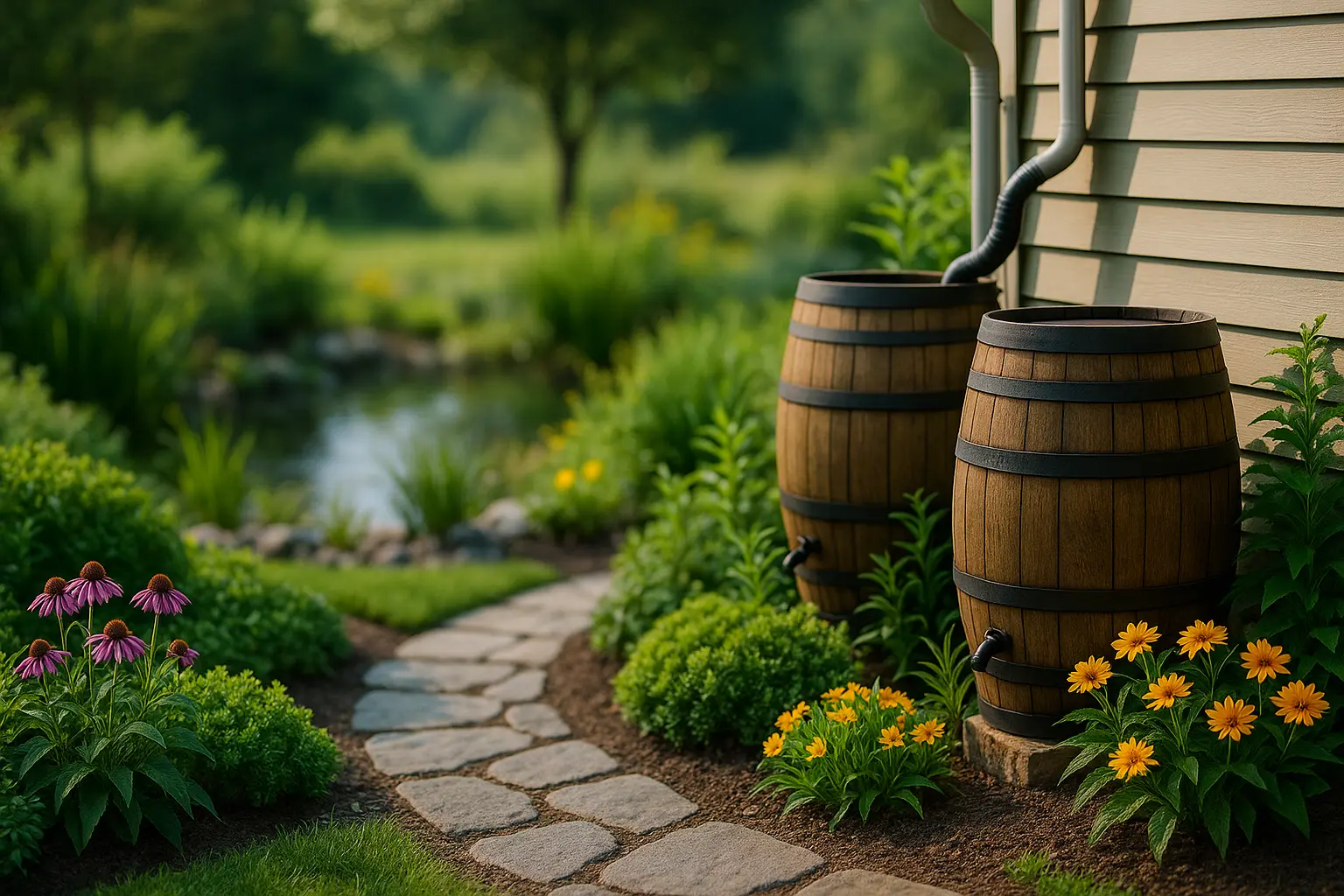
In the symphony of nature, rainwater is the gentle conductor, orchestrating life and growth from soil to the vibrant tapestries of gardens. As we step into an era where sustainable practices are no longer just a choice but a necessity, the integration of rainwater management solutions into garden design emerges as a harmonious blend of innovation and nature. Let’s explore the art and science of transforming our landscapes into thriving ecosystems through thoughtful rainwater management.
Understanding the Role of Rainwater in Gardens
Rain, often regarded as a routine element of nature, is, in reality, a powerful resource that can redefine the vitality of our gardens. By embracing rainwater harvesting techniques, we can ensure that our gardens remain lush even during dry spells.
The Science Behind Rainwater
Rainwater is inherently free of salts, minerals, and added chemicals, making it a pure source for plants. It naturally seeps into the soil, providing essential hydration that supports plant growth. Unlike treated water, rainwater helps to maintain the natural pH balance of the soil, fostering a healthier environment for a variety of flora.
Harnessing Stormwater for Sustainability
In urban areas, stormwater runoff can lead to erosion and flooding, causing potential damage to properties. By integrating rainwater collection systems into our garden design, we can mitigate these risks. These systems capture stormwater and utilize it efficiently, turning a potential menace into a sustainable asset.
Design Approaches for Rainwater Management
To effectively manage rainwater, we must consider the garden’s landscape and the area‘s natural flow patterns. Smart design options include rain gardens, swales, and permeable surfaces. These features channel rainwater into areas where it can be absorbed naturally, reducing runoff and boosting water conservation.
Designing Rainwater-Friendly Garden Features
When designing gardens that capitalize on rainwater, creativity and practicality should walk hand-in-hand. By incorporating features that naturally collect and direct rainwater, we enhance both the functionality and aesthetics of our outdoor spaces.
Rain Gardens as Natural Filters
A rain garden is a strategically designed feature that not only captures rainwater but also filters pollutants. Positioned in low-lying areas, these gardens absorb rainwater runoff, reducing the burden on urban drainage systems. By choosing native plants that thrive in wet conditions, we ensure a resilient and self-sustaining system.
Integrating Swales into the Landscape
Swales are shallow ditches designed to slow and redirect runoff. By planting these channels with grasses and perennial plants, swales can become attractive landscape features. They help in preventing erosion and direct water into areas where it can be absorbed, promoting a balanced ecosystem.
Permeable Surfaces for Optimal Absorption
Incorporating permeable materials such as gravel, permeable pavers, or porous concrete allows water to seep through, replenishing groundwater levels. These surfaces reduce the impact of heavy rains, ensuring that water is absorbed instead of pooling or running off.
Building a Sustainable Rainwater Collection System
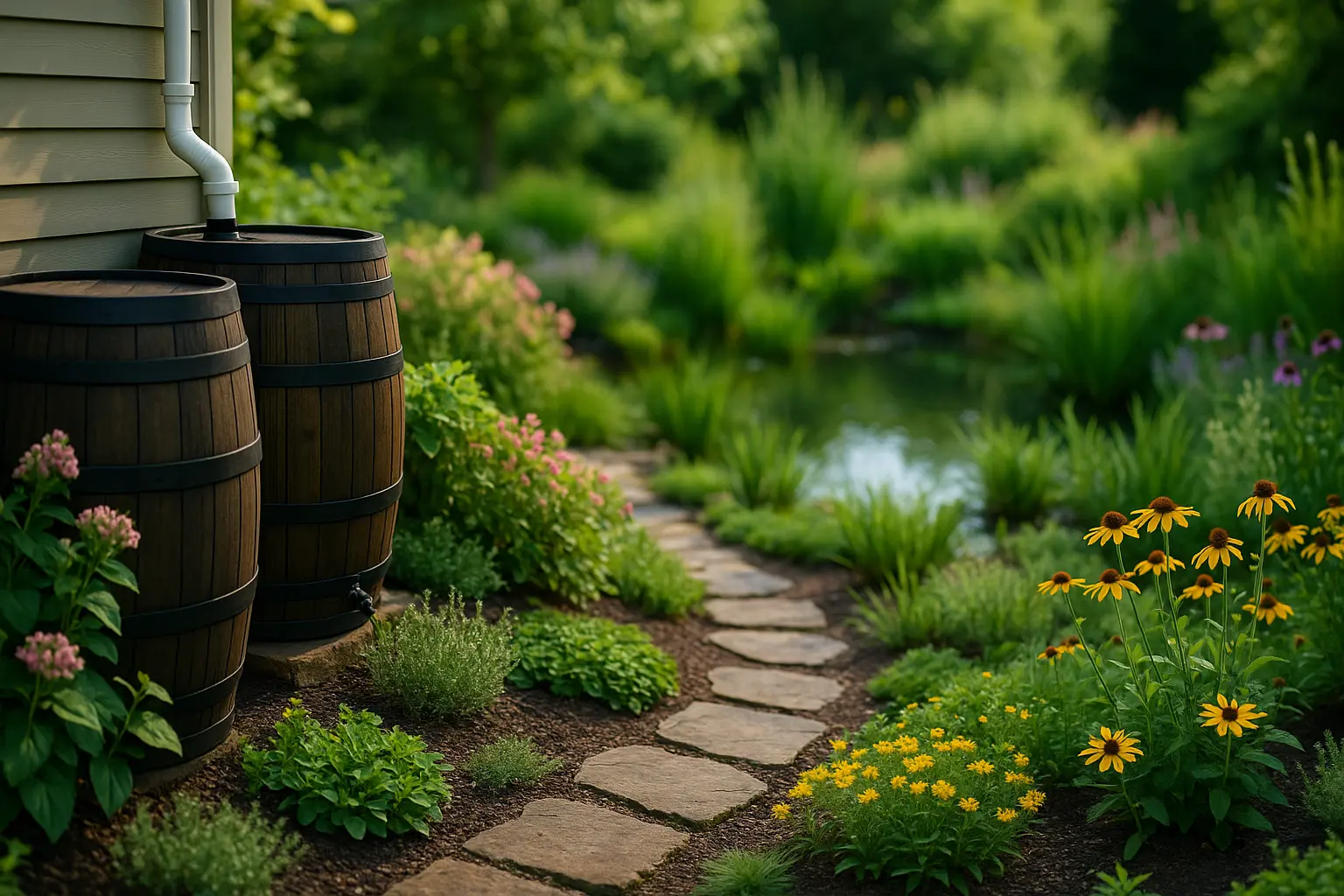
Creating a rainwater collection system in our gardens involves more than simply installing barrels underneath our gutters. It requires thoughtful planning and an understanding of the dynamics of our specific site.
Assessing Site Needs and Capabilities
Every garden is unique, and understanding the amount of rainwater it can use or manage is crucial. Consider factors such as the garden’s size, the average rainfall in the region, and the types of plants grown. This assessment helps in determining the capacity and scale of the system.
Choosing the Right Equipment
Selecting the appropriate collection equipment is essential. Options include rain barrels, cisterns, and tanks, each varying in size and complexity. The use of first-flush diverters ensures that initial runoff, which may contain debris, is excluded from the stored water.
Maintaining Your Rainwater Systems
Regular maintenance of rainwater systems is key to their efficiency. This includes cleaning and inspecting gutters, checking tanks for leaks, and ensuring that the water remains free of contaminants. A well-maintained system extends the life of the equipment and ensures a steady supply of water for your garden.
As we look toward the future of sustainable gardening, integrating rainwater management solutions into garden design stands as a beacon of innovation and responsibility. By transforming how we interact with the natural world, we not only create beautiful, thriving landscapes but also contribute to a healthier planet. Let us embrace this journey of transformation, where every drop of rain becomes an opportunity for growth and renewal.
FAQ
What are the benefits of incorporating rainwater management into garden design?
By integrating rainwater management solutions into your garden, you can effectively reduce water runoff, prevent soil erosion, enhance groundwater recharge, and ensure a sustainable water source for your plants. This approach not only conserves water but also promotes a healthier garden ecosystem.
How can I use rain barrels in my garden to manage rainwater?
Rain barrels can be installed under downspouts to collect rainwater from your roof. This stored water can then be used to irrigate your garden during dry periods, reducing your reliance on municipal water supplies and minimizing stormwater runoff.
What is a rain garden, and how does it help in water management?
A rain garden is a shallow, planted depression designed to absorb and filter rainwater runoff from impervious surfaces like roofs and driveways. By capturing and slowly releasing water into the ground, rain gardens reduce the burden on stormwater systems and help maintain local water quality.
Are there specific plants recommended for rain gardens?
Yes, it’s best to choose native plants that can thrive in both wet and dry conditions. Common choices include sedges, ferns, and certain grasses, as well as flowering plants like black-eyed Susans and purple coneflowers, which attract pollinators and enhance biodiversity.
How do permeable pavements contribute to rainwater management?
Permeable pavements allow rainwater to seep through the surface and infiltrate the ground beneath. This reduces surface runoff, minimizes flooding risks, and helps replenish local groundwater supplies, making them an eco-friendly alternative to traditional concrete and asphalt surfaces.