
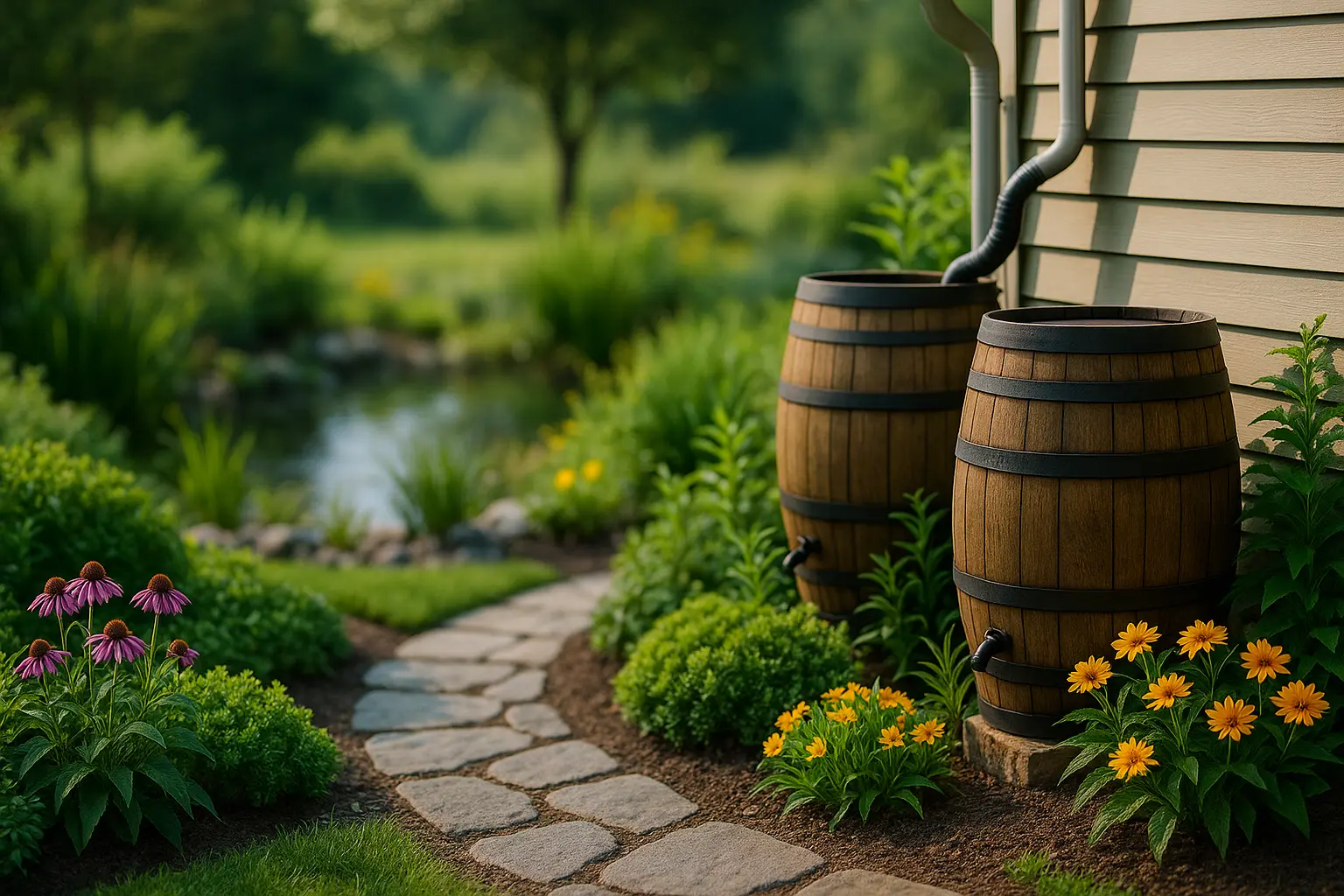
Most people treat rain as something to get rid of as quickly as possible: a gutter, a downspout, a drain, gone. That instinct makes sense during a storm, but it throws away a resource that a well-designed garden could actually use for weeks afterward.
Integrating rainwater management into a garden design means capturing, slowing, or filtering rainfall on-site instead of letting it run straight into the storm drain, using features like rain gardens, swales, and rain barrels. Research from the US Environmental Protection Agency shows that rain gardens without underdrains achieve an average volume reduction of around 89 percent across measured storm events, and can remove up to 90 percent of nutrients and chemicals from the runoff they capture.
- Rain gardens are shallow, planted depressions that capture and filter runoff from roofs, driveways, and patios.
- Swales are shallow channels that slow water down and spread it across the landscape instead of letting it concentrate in one spot.
- Permeable surfaces such as gravel or porous pavers let water soak through rather than pool or run off.
- A basic rain barrel or cistern setup can supply irrigation water during the next dry stretch.
Why rainwater deserves a design role, not just a drainage plan
Rainwater arrives free of the salts, minerals, and treatment chemicals found in tap water, which makes it gentler on soil pH and plant roots over time. In dense urban areas, uncontrolled stormwater runoff also contributes to erosion and localized flooding, since hard surfaces don’t allow water to soak in the way bare soil or lawn would. Designing a garden to slow that runoff down, rather than accelerating it toward a drain, reduces pressure on municipal systems while keeping the water where the plants can actually use it.
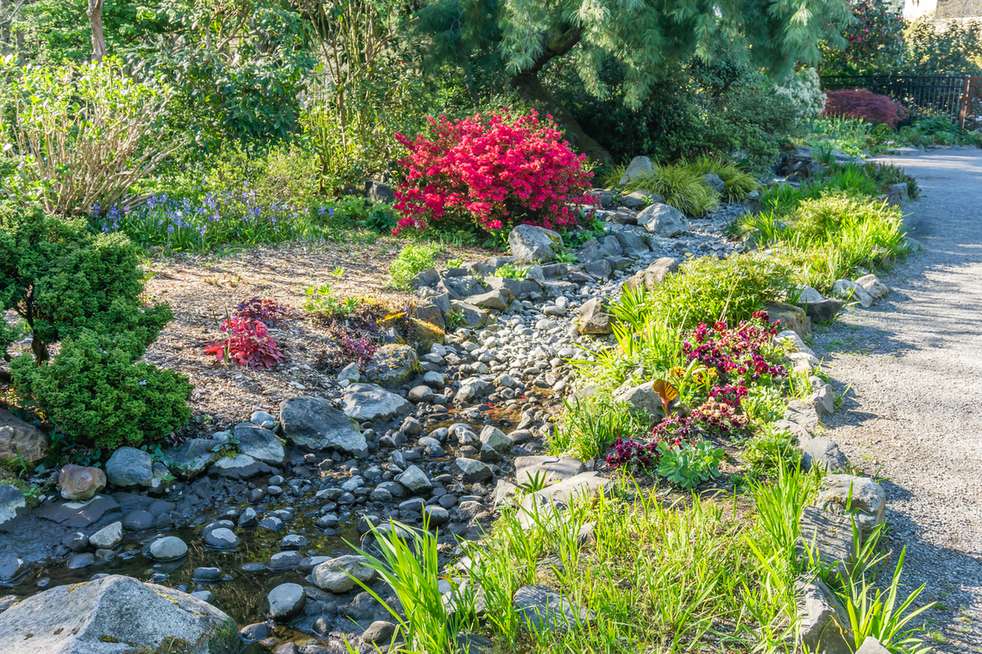
Comparing the main rainwater design options
Each of these techniques solves a slightly different part of the problem, and most gardens end up combining two or three of them rather than relying on just one.
| Feature | Function | Typical placement |
|---|---|---|
| Rain garden | Captures and filters runoff through planted soil | Low-lying area, near a downspout |
| Swale | Slows and redirects surface water along the contour | Sloped ground |
| Permeable paving | Lets water infiltrate instead of pooling on the surface | Driveways, paths, patios |
| Rain barrel or cistern | Stores water for later irrigation use | Under a downspout |
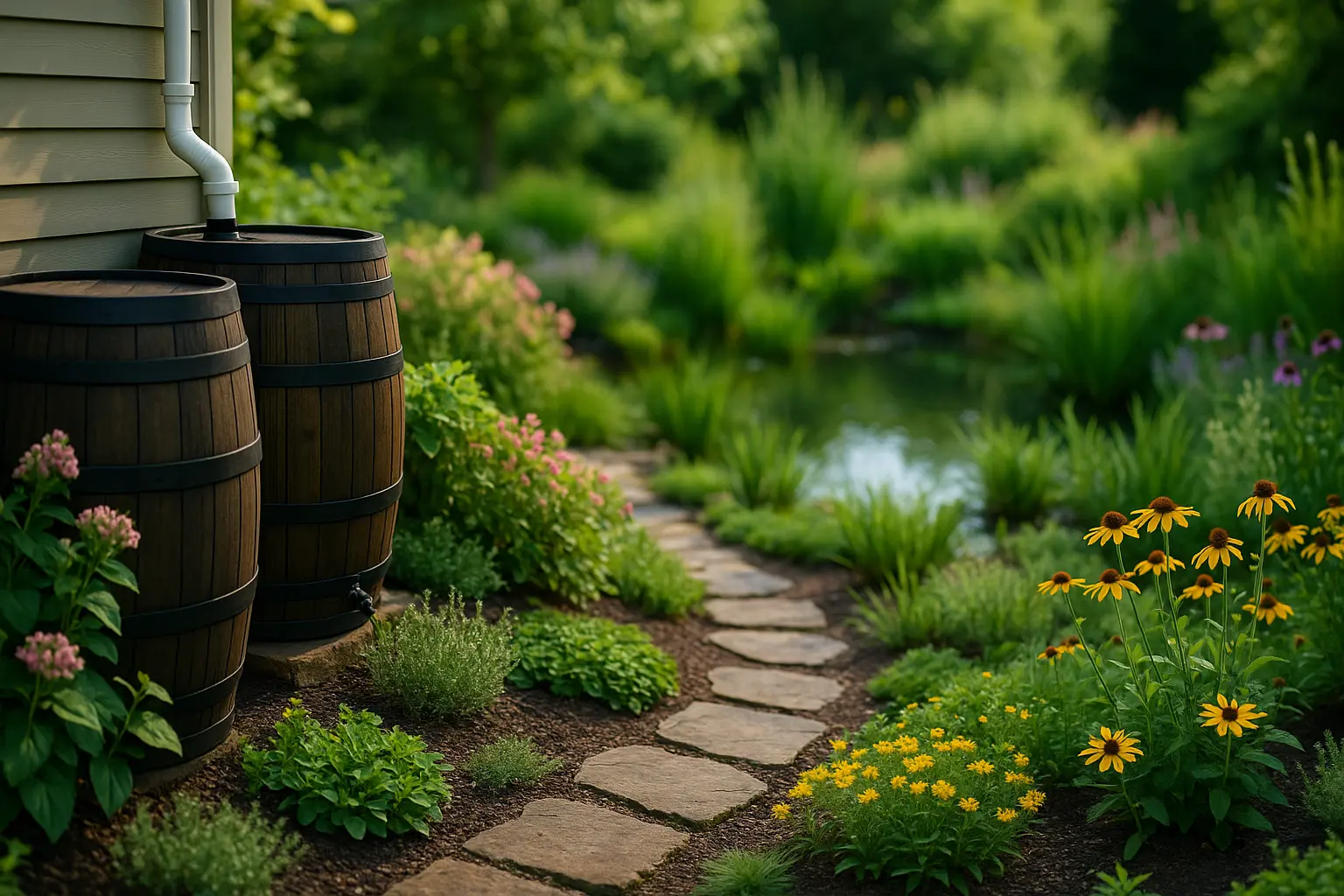
Building a rainwater system without overcomplicating it
A rainwater system doesn’t need to start big. The most effective approach follows a fairly predictable sequence.
- Assess the site: note the garden’s size, average local rainfall, and where water currently pools or runs off during a storm.
- Choose the right storage or infiltration method based on that assessment: a rain garden for a low spot, a swale for a slope, barrels for straightforward irrigation storage.
- Select native, wet-tolerant plants for any rain garden, since these species handle both standing water after a storm and dry spells between rains.
- Install a first-flush diverter on any collection barrel so the initial, debris-heavy runoff doesn’t contaminate stored water.
- Maintain the system by clearing gutters, checking for leaks, and confirming the rain garden is draining within the expected one to two days after a storm.
That last step matters more than most people expect. A rain garden that still holds standing water after two days usually has a drainage or soil compaction problem, not simply “too much rain,” and it’s worth checking before adding more plants on top of an issue that will keep recurring.
Which plants actually work in a rain garden
Native species adapted to both wet and dry conditions perform best, since a rain garden alternates between short periods of standing water and longer dry stretches between storms. Sedges, ferns, and certain ornamental grasses handle this swing well, and flowering natives such as black-eyed Susan or purple coneflower add pollinator value on top of their drainage function. Choosing plants this way avoids the common mistake of installing typical border perennials that rot at the roots the first time the rain garden actually does its job.
On the technology side, some properties are now pairing this kind of passive rainwater design with smart irrigation controllers that track soil moisture in real time, so stored rainwater only gets used when the soil genuinely needs it rather than on a fixed schedule that ignores recent rainfall. The hard landscaping choices matter just as much: permeable paving and other sustainable material choices reduce runoff before it ever reaches a rain garden or swale.
FAQ
Do I need a large garden to install a rain garden?
No. A rain garden can be sized to fit a small residential lot, as long as it’s positioned to receive runoff from a specific source such as a downspout or a sloped section of driveway.
How long should it take for a rain garden to drain after a storm?
Typically within one to two days. Standing water beyond that window usually points to a drainage or compacted soil issue that should be addressed rather than left as is.
Can rainwater collected in a barrel be used directly on vegetables?
Generally yes for soil irrigation, since rainwater carries no added chemicals, but a first-flush diverter should be used to keep roof debris and contaminants out of the stored water.
What’s the biggest mistake people make when building a rain garden?
Planting species that can’t tolerate occasional standing water. Ordinary border perennials often fail within a season, while native wet-tolerant species are built for exactly that fluctuation.
Published: July 29, 2026. Last updated: July 29, 2026.
Sources: US Environmental Protection Agency, “Using Rain Gardens to Reduce Runoff” and bioretention best management practice guidance.