
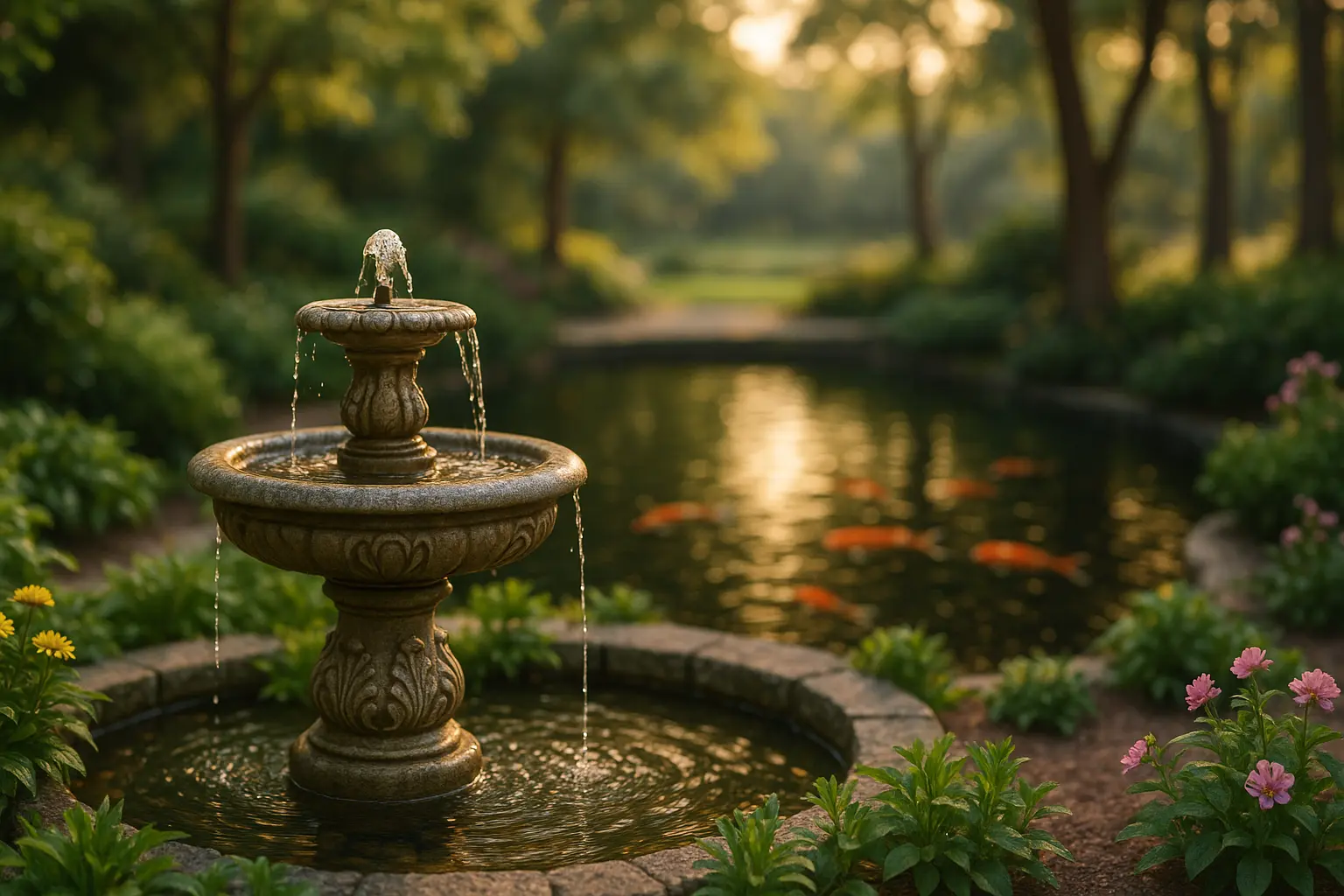
Stand near a garden fountain for more than a minute and something in the shoulders tends to loosen. That is not a coincidence of design, it is the specific effect moving water has been used for in gardens for centuries: masking background noise, cooling the immediate air, and giving the eye something to rest on that never sits perfectly still. Water features, whether a formal fountain, a wildlife pond or a modern rill, do work in a garden that no amount of planting alone replicates.
Fountains add movement, sound and a cooling microclimate to a garden, ponds function as genuine wildlife habitat that supports biodiversity, and both can be designed with recirculating systems that limit water use even in regions facing drought restrictions. The right choice between the two depends less on budget than on whether the goal is a focal point or a functioning ecosystem.
- Recirculating pumps mean most modern fountains reuse the same water in a closed loop rather than consuming fresh water continuously.
- Pond age matters for wildlife value; research on garden ponds found amphibians and dragonflies are less likely to appear in ponds under a year old.
- Native aquatic and shoreline plants do most of the water-quality and habitat work in a wildlife pond.
- Solar-powered pumps and pondless waterfalls both reduce a water feature’s ongoing resource demand.
What a fountain actually contributes beyond decoration
A fountain works as a focal point in almost any garden style, from classical stone basins to sleek, minimalist sheet-fall designs, but its contribution goes past visual anchoring. The sound of moving water functions as natural white noise, which is genuinely useful in gardens close to traffic or a busy street, masking background noise in a way silence alone cannot.
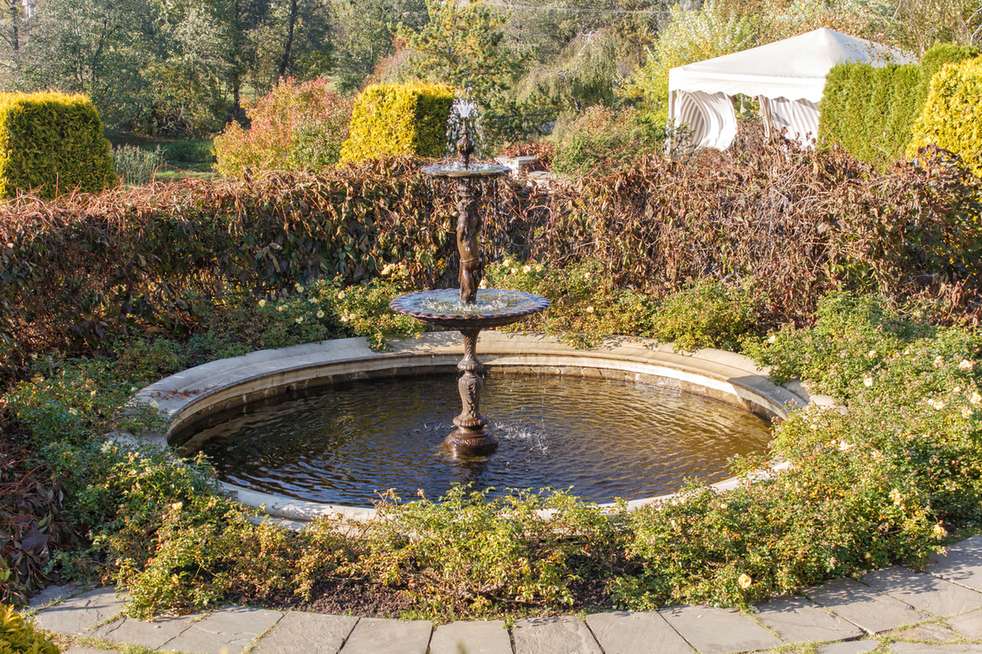
Fountains also affect the immediate microclimate around them. Moving water increases local humidity slightly and produces a mild cooling effect, a meaningful benefit in dense urban gardens where hardscape retains heat throughout the day. Positioning a fountain to catch afternoon sunlight adds a final layer, since light moving across the water’s surface creates reflections that shift throughout the day in a way static features cannot.
Ponds as functioning habitat, not just a design feature
A pond operates on entirely different terms than a fountain. Large-scale citizen science research on garden ponds, drawing on data from over 800 pond owners, found that pond age, size, and the presence of aquatic and shoreline vegetation all strongly influence which species actually use the pond. Amphibians and their tadpoles, dragonflies and damselflies, and birds were all found to be less likely to appear in newly installed ponds under a year old, since establishing vegetation and sediment takes time.
This means a pond’s ecological value grows over its first few seasons rather than arriving fully formed at installation. Native plants around the shoreline and within the water itself are what make this possible, since they are adapted to support the specific insects, amphibians and birds native to the region, unlike ornamental aquatic plants chosen purely for appearance.
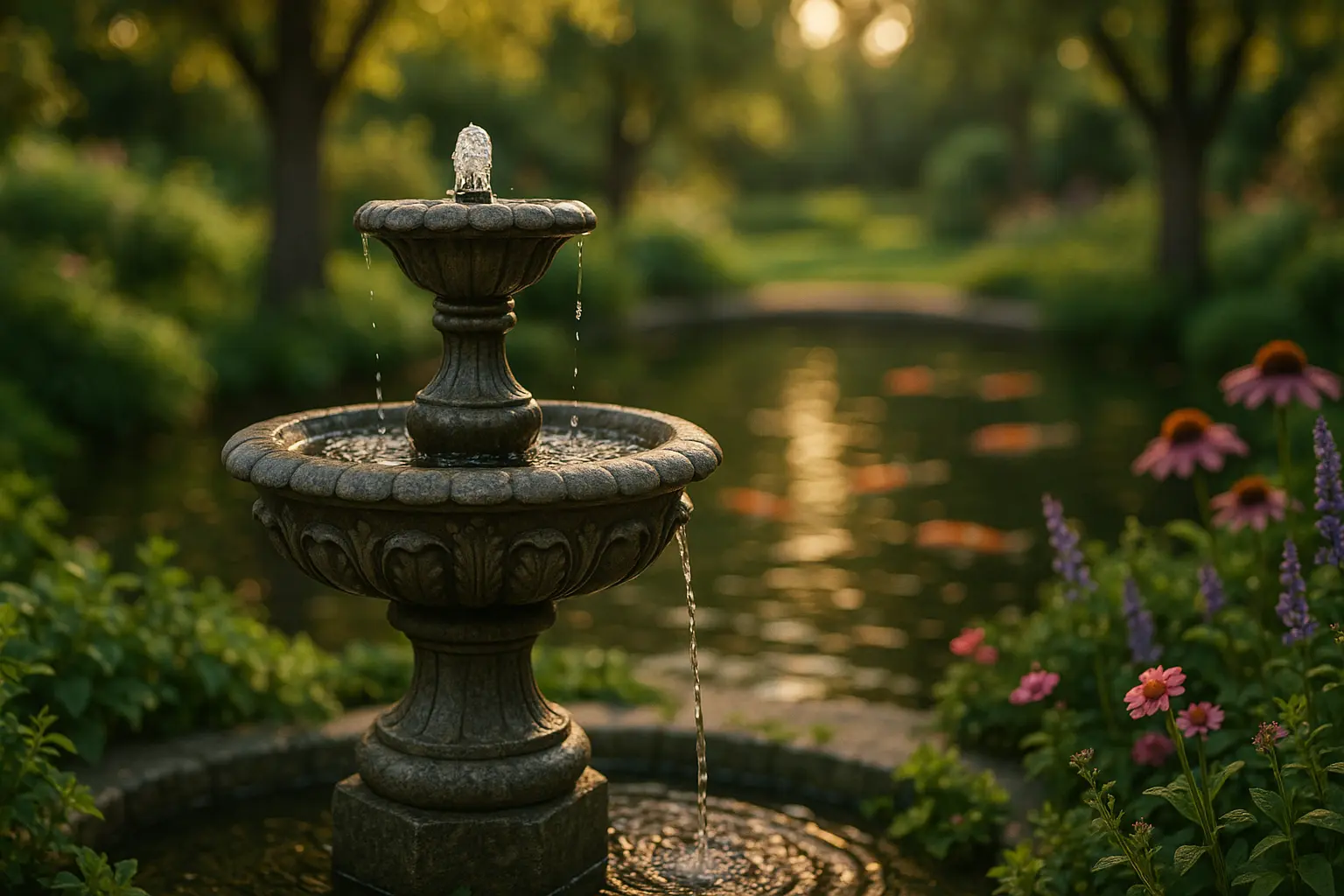
Beyond habitat, a well-sited pond also helps manage stormwater on the property, reducing runoff and supporting groundwater recharge in the same way permeable paving does elsewhere in a garden. Regular water quality checks remain necessary regardless of how established a pond becomes, since unchecked algae growth can undermine both its ecological function and its appearance.
Modern water features beyond the fountain and pond
Contemporary landscaping has expanded well past these two traditional forms. A rill, a narrow, linear channel of moving water, creates a directional line through a garden that guides the eye much like a path does. A rain curtain, where a thin sheet of water cascades down a vertical surface, adds a similar sense of movement in a footprint small enough for tightly bordered urban gardens.
These space-conscious features suit properties where a full pond is not practical, and they still deliver much of the sound and visual movement that make water features valuable in the first place. Well-executed water features are also frequently cited by real estate professionals as a factor that can support a property’s resale appeal, alongside broader landscaping quality.
Choosing between the main water feature types
| Feature type | Primary benefit | Maintenance level |
|---|---|---|
| Fountain | Sound, focal point, cooling effect | Low to moderate, pump upkeep |
| Wildlife pond | Biodiversity, habitat, runoff management | Moderate, builds up over seasons |
| Rill or rain curtain | Directional movement, small footprint | Low, minimal planting involved |
| Pondless waterfall | Sound and movement, no open water risk | Low, hidden reservoir recirculates |
Managing water use during drought restrictions
Water features face growing scrutiny in regions with drought restrictions, and several municipalities, particularly in parts of California, have limited outdoor fountains unless the water is recirculated. A closed-loop recirculating pump addresses most of this concern directly, since the same water cycles continuously rather than being drawn fresh. Covering a fountain when not in use reduces evaporation loss further, and solar-powered pumps cut the energy side of the equation as well. Pondless waterfalls sidestep the issue almost entirely, since their hidden reservoir recycles water without maintaining a large open surface exposed to evaporation.
A garden’s water budget rarely stops at the feature itself. Coordinating a water feature’s needs with the rest of the garden’s irrigation makes the whole system easier to manage, and smart irrigation systems that manage the same water budget increasingly handle both tasks from a single remote-controlled system rather than treating the fountain and the flower beds as separate water concerns.
Sound as a design element in its own right
The auditory dimension of a water feature deserves its own consideration, separate from how it looks. A gentle trickle over stones reads very differently than a bold, splashing cascade, and matching that sound profile to a garden’s intended mood, restful versus lively, matters as much as any visual decision. A closer look at how moving water shapes a garden’s soundscape beyond visual design covers this specifically, including how water sound interacts with other ambient elements like wind chimes.
FAQ
What are the main benefits of adding a water feature to a garden?
Water features add movement and sound, can attract wildlife, slightly raise local humidity for a cooling effect, and give a garden a sensory dimension that planting alone does not provide.
What should I consider before installing a pond?
Size, depth and placement relative to sunlight exposure for plant health, the type of wildlife the pond is meant to support, and the ongoing maintenance needed to keep the water clear and balanced.
Are there genuinely eco-friendly water feature options?
Yes. Solar-powered fountains, rainwater-fed ponds, and natural filtration using aquatic plants all reduce environmental impact compared with a mains-fed, chemically treated feature.
How long does it take for a new pond to actually support wildlife?
Research on garden ponds indicates the first year is typically the weakest for wildlife presence, since vegetation and sediment need time to establish. Most of the ecological benefit builds up over the following one to two seasons.
Can a water feature still work in a region with drought restrictions?
Recirculating systems, evaporation covers and pondless waterfall designs all allow a water feature to operate under most drought restriction rules, since they avoid the continuous fresh water draw that triggers bans in the first place.
A garden without any water at all still works, but it loses a dimension that plants and hardscape cannot fully replace: sound, movement and, in the case of a pond, an actual living ecosystem that develops its own momentum over time.
Sources: ScienceDirect / MyPond citizen science project, garden pond biodiversity research; Fountains USA and Natural Awakenings reporting on sustainable water feature practices.