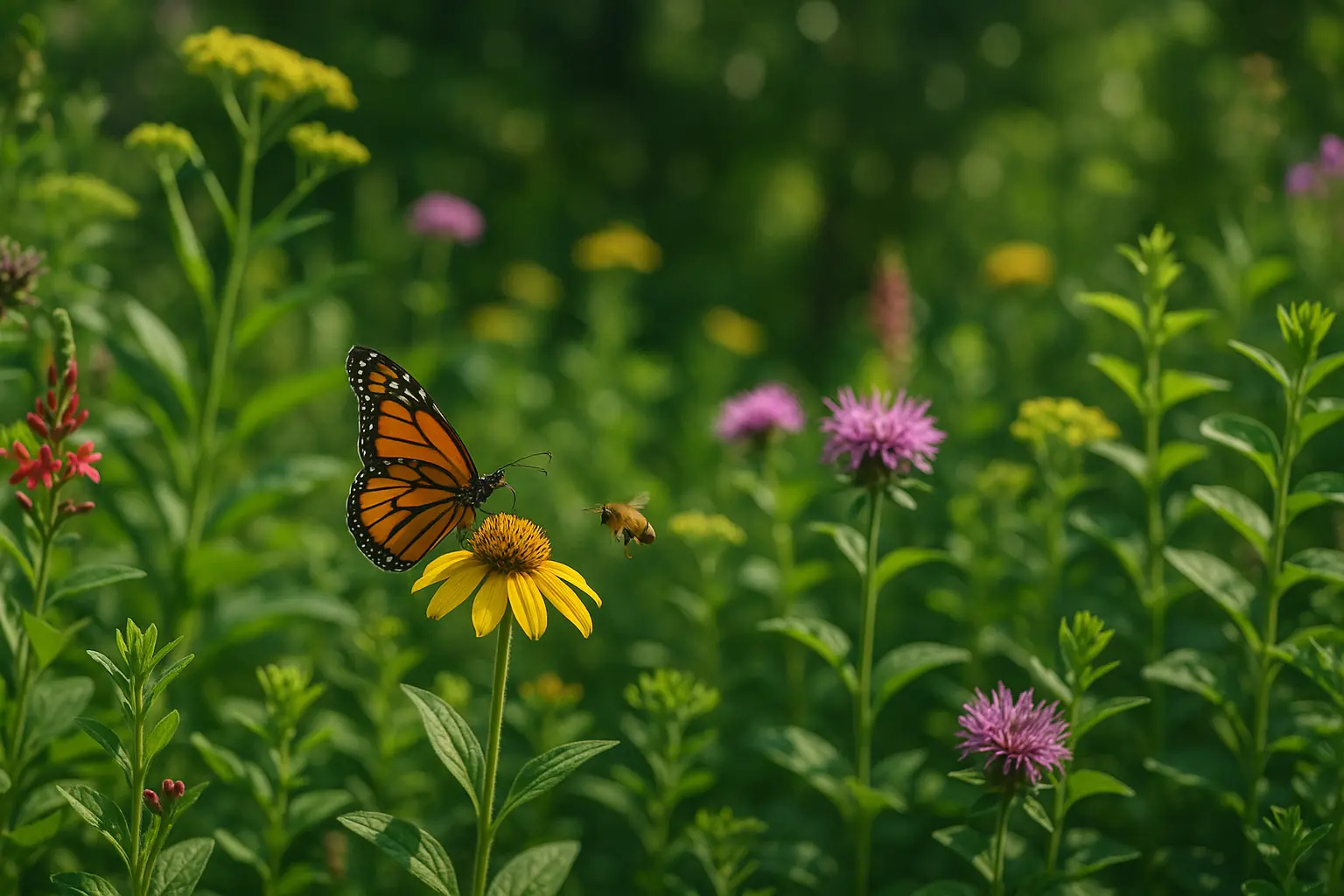
Here’s a statistic that changes how most people think about plant choice: entomologist Doug Tallamy’s research at the University of Delaware found that around 90 percent of what caterpillars eat comes from just 14 percent of native plant species in a given region, with roughly 5 percent of those “powerhouse” species alone accounting for about 75 percent of that food supply. In other words, most of the plants in a typical ornamental garden are doing almost nothing for the local food web, no matter how full or green the beds look.
Native plants are species that evolved naturally in a specific region over thousands of years, and using them in garden design directly supports local wildlife because insects, birds, and other animals depend on the specific plants they co-evolved with, not on greenery in general. Swapping ornamental, non-native plantings for regional natives also tends to lower long-term maintenance, since these species are already adapted to local soil, rainfall, and pest pressure.
- A small fraction of native plant species supports the large majority of caterpillar and moth larvae in a given region, according to Tallamy’s research.
- Deep root systems in many native species stabilize soil and reduce erosion better than shallow-rooted ornamentals.
- Choosing native plants over exotic ornamentals typically reduces water and chemical input needed to keep a garden healthy.
- Avoiding invasive species is just as important as adding natives, since invasives actively displace the wildlife-supporting plants already present.
What makes a plant “native,” and why the food web depends on it
A native plant is one that developed in a particular region over a long evolutionary timescale, alongside the insects and animals that now depend on it. That co-evolution is the key difference from an exotic ornamental: a caterpillar species that only recognizes one or two native host plants as food simply cannot switch to an imported shrub, no matter how lush it looks. Tallamy’s research team found that only about 10 percent of insect herbivores in a typical ecosystem are generalists able to feed on a wide range of plants; the rest are specialists tied to specific native hosts.
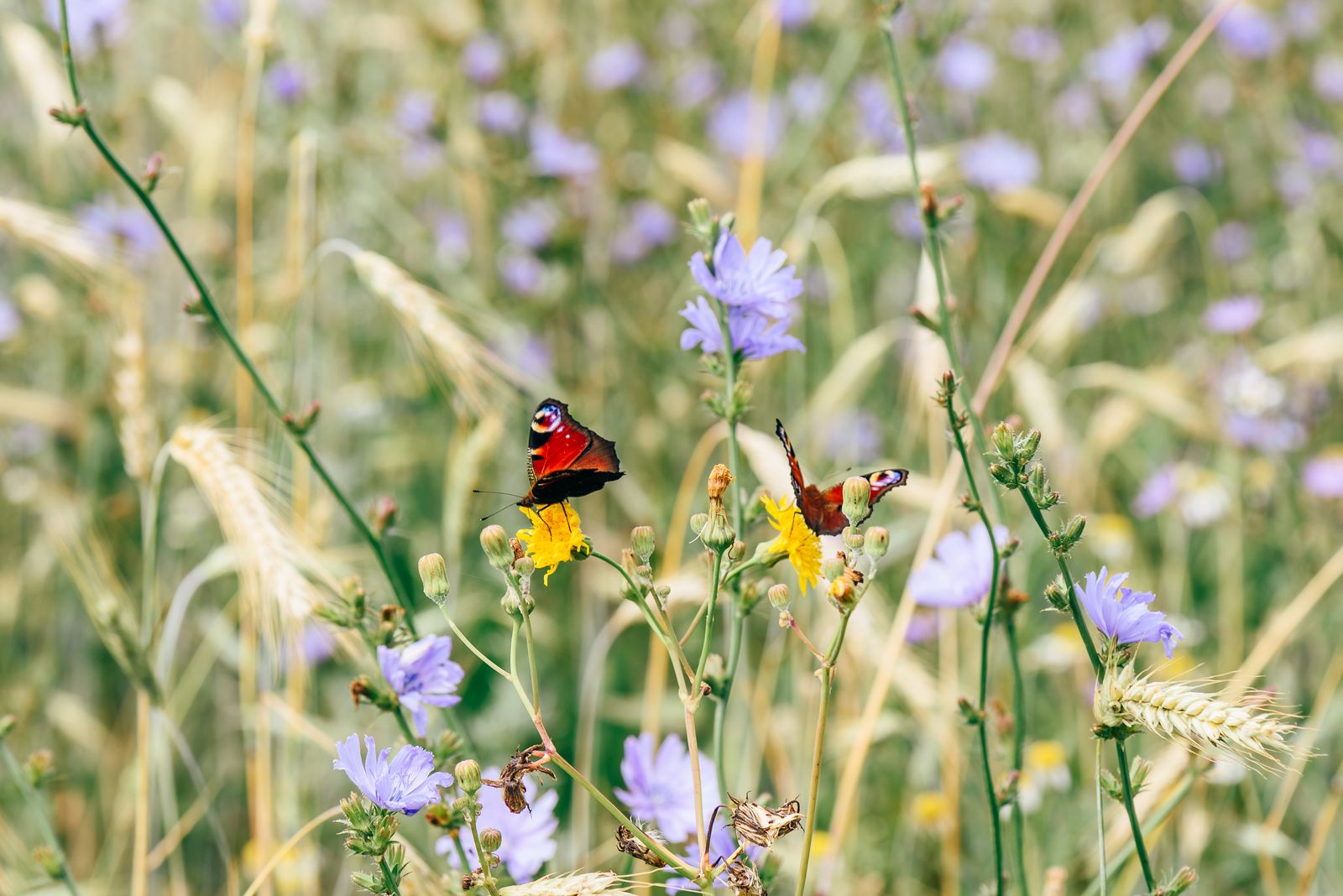
This matters beyond the insects themselves. Birds raising chicks rely overwhelmingly on caterpillars as a protein source, so a garden with few native host plants can look attractive while supporting almost no breeding bird activity. The chain runs from plant, to insect, to bird, and it breaks at the first link if the plant isn’t one the local insects can actually use.
Building a native plant garden step by step
Converting a garden to native planting works best as a staged process rather than a single overhaul.
- Research regional species through a local extension office, botanical garden, or native plant society rather than a generic online list, since “native” varies significantly even within a single country.
- Map sunlight, moisture, and soil variation across the plot, since even a small garden usually has more than one microclimate.
- Select a mix of layers: flowering perennials for pollinators, shrubs for shelter, and at least one tree species for long-term habitat value.
- Clear existing invasive species before planting, and amend soil with organic matter if it has been depleted by prior use.
- Group plants the way they’d occur naturally rather than in isolated single specimens, which mimics how these species actually grow and support each other in the wild.
Which native plants support which wildlife
Different plant types feed different parts of the local food web, and a garden built for wildlife needs a mix rather than a single category.
| Plant category | Wildlife supported | Example role |
|---|---|---|
| Native flowering perennials | Bees, butterflies | Nectar and pollen source |
| Native trees | Birds, caterpillar species | Nesting sites, larval host plant |
| Native shrubs | Small mammals, ground-feeding birds | Shelter, cover from predators |
| Native grasses and sedges | Ground insects, overwintering species | Structural cover, egg-laying sites |
Why “native” depends entirely on where you are
One of the most common mistakes in native planting is treating it as a single national category rather than a regional one. A plant considered native somewhere on the East Coast of the United States may be entirely absent from, or even mildly invasive in, a garden a few states over with a different soil type and rainfall pattern. The same applies across any country: regional flora shifted over thousands of years in response to very local conditions, so a species list pulled from a broad national gardening guide is often too coarse to be genuinely useful.
This is why local sourcing matters more than it might seem. A regional native plant society, a university extension office, or a botanical garden serving the specific climate zone in question will typically maintain lists calibrated to county or watershed level, which is a meaningfully different level of precision than a generic “native plants” search turns up. Nurseries specializing in regional natives also tend to propagate from local seed stock, which matters because plants grown from seed collected within the same region are often better adapted to local pest pressure and rainfall timing than the same species grown from seed sourced elsewhere. Asking a nursery directly where its seed stock originated, rather than assuming a plant labeled “native” was grown from local genetics, is a small extra step that noticeably improves how well the planting performs once it’s in the ground.
Why invasive species undo the benefit of native planting
Adding native plants without addressing existing invasive species is a common and costly mistake. Invasive plants outcompete natives for light, water, and space, and many of them offer little or no food value to local insects even while they occupy the same physical footprint a beneficial native plant would have used. Identifying invasive species specific to a given region, through a local agricultural extension or conservation group rather than a general internet search, is the first step before any new planting begins.
A native garden also pairs naturally with other wildlife-focused design choices already common on residential and public land. Projects built around the same native, textured plantings that make outdoor play spaces for kids more engaging tend to use this overlap deliberately, since a garden built to attract birds and insects also tends to give children more to observe and touch.
FAQ
Do native plants really need less water than ornamental species?
Generally yes, because native species are adapted to local rainfall patterns and soil conditions, which reduces the need for supplemental irrigation once the plants are established.
How do I find out which plants are actually native to my area?
Local resources are more reliable than generic online lists: cooperative extension offices, native plant societies, and regional botanical gardens all maintain lists specific to a given climate zone or county.
Can I mix native plants with existing ornamental beds?
Yes. A gradual transition, replacing a section at a time, is often more practical than removing an entire established garden at once, and still delivers meaningful wildlife benefit as native coverage increases.
Will a native plant garden look messier than a conventional one?
Not necessarily. Native plants can be arranged with the same structure and intentional layout as any other garden style; the difference lies in species selection, not in how tidy or wild the design looks.
Do native plants attract pests as well as beneficial wildlife?
Native plants support a broader range of insects overall, including some that gardeners consider pests, but they also support the predators and parasitoids that naturally keep those populations in check, which is part of why native gardens often need fewer pesticide treatments.
Published: July 29, 2026. Last updated: July 29, 2026.
Sources: Doug Tallamy, University of Delaware Department of Entomology and Wildlife Ecology, research on native plants and insect herbivore support.