
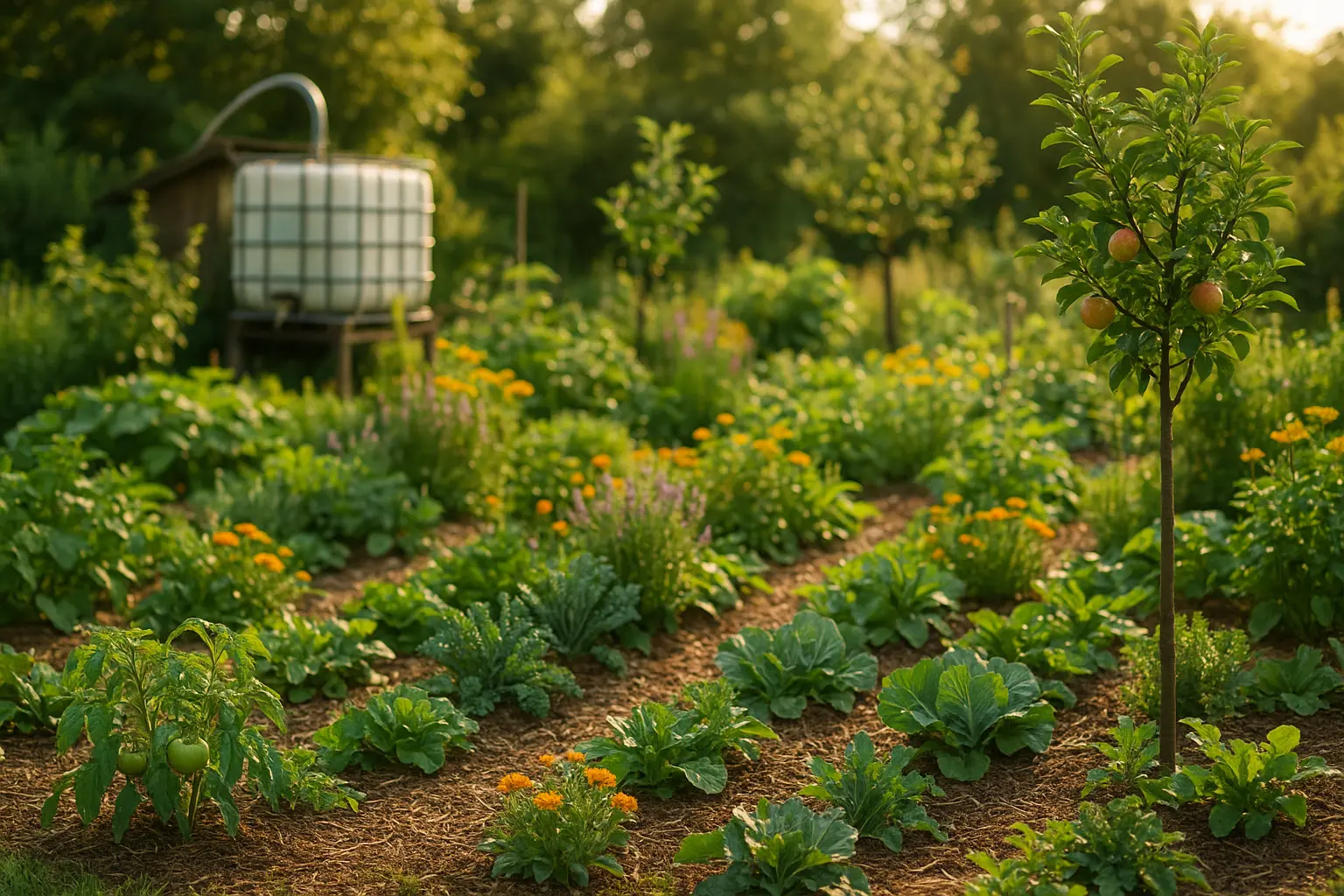
What actually keeps a garden alive when the weather stops cooperating: a heatwave that lasts three weeks longer than usual, a wet spring followed by a bone-dry August? Most ornamental gardens simply struggle through it with extra irrigation. A garden designed around permaculture principles is built to absorb that kind of swing without falling apart, because its structure was never dependent on perfectly average weather in the first place.
Permaculture is a design approach that copies patterns found in natural ecosystems to build gardens that need less water, less intervention, and recover faster from stress. Rather than treating soil, water, and plants as separate problems to manage, it treats them as one connected system, where a decision made about mulching also affects how much irrigation the garden needs six weeks later.
- Permaculture design rests on a small set of guiding principles, including observation before intervention and obtaining a yield from every planted element.
- Passive water harvesting techniques such as swales and mulching reduce a garden’s dependence on irrigation during dry spells.
- Healthy, living soil built through composting and cover cropping is the foundation that makes the rest of the system work.
- Resilience comes from redundancy: several small interventions working together outperform one large, fragile solution.
Which permaculture principles matter most for a resilient garden
Not all twelve principles set out by David Holmgren in his design framework carry equal weight for a home or public garden. Four of them do the heaviest lifting when the goal is resilience rather than pure aesthetics.
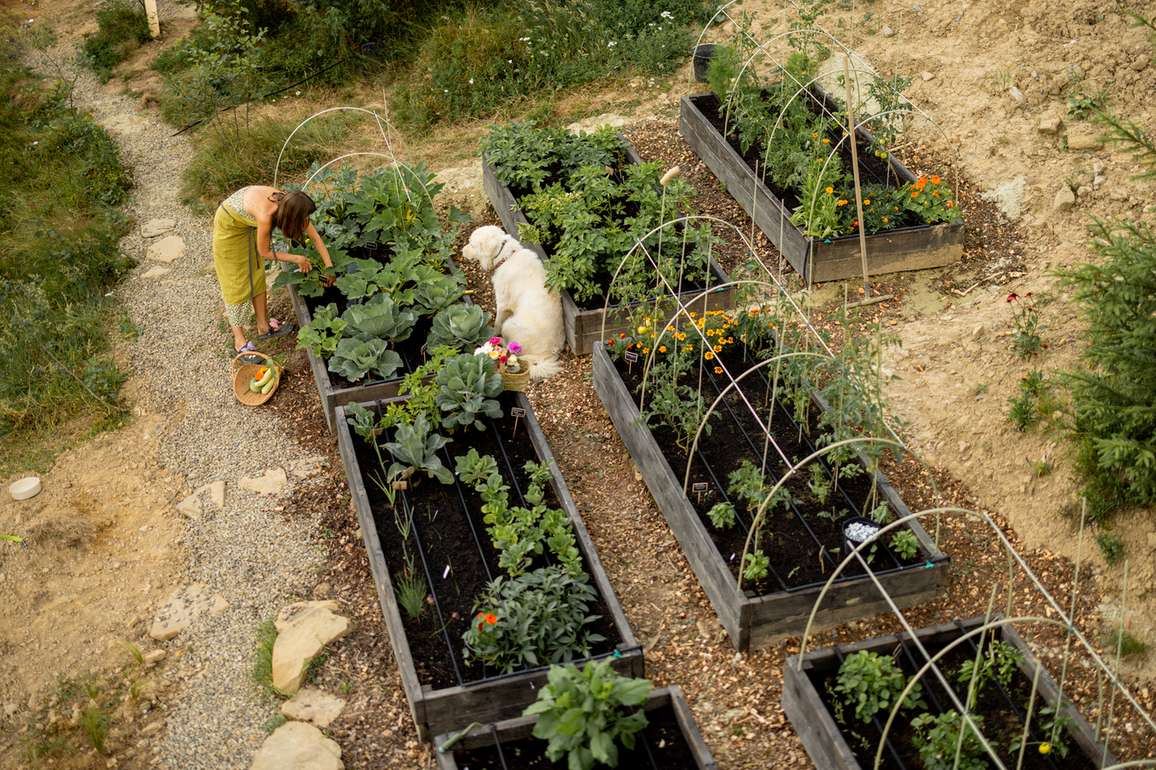
Observe and interact comes first, and it’s the one most gardeners skip. Spending a full season watching how sunlight moves across a plot, where water pools after rain, and which corners dry out fastest tells you more than any generic planting guide. Catch and store energy follows directly from that observation: once you know where water naturally collects, you can design the garden to hold onto it rather than let it run off. Obtain a yield means every element, even a hedge or a groundcover, should give something back, whether that’s food, mulch material, or habitat. Integrate rather than segregate pushes plants to work in combinations rather than isolated rows, so a nitrogen-fixing legume planted next to a heavy feeder reduces the need for fertilizer on both.
Grouping plants into guilds instead of single-species rows
A plant guild is a small group of species planted together because each one performs a different function that supports the others, rather than a decorative mix chosen for color alone. A classic example pairs a fruit tree with a nitrogen-fixing shrub at its base, a ground-covering herb to suppress weeds, and a deep-rooted plant that pulls nutrients up from lower soil layers. None of these plants would need much attention alone, but grouped together they reduce the workload for the whole bed: less weeding, less fertilizer, and better resistance if one species has a bad season.
This is also where the Holmgren principle of small and slow solutions becomes practical rather than abstract. Converting an entire garden to guild planting in one season usually overwhelms both the budget and the gardener’s ability to observe what’s actually working. Starting with a single bed, watching how it performs through one full year of weather, and only then expanding the approach tends to produce a more resilient result than a full redesign done all at once. It also means mistakes stay small and contained rather than spreading across an entire property before anyone notices something isn’t working.
Zone planning, another common permaculture practice, sorts a property by how often each area needs attention: high-maintenance beds like salad greens close to the house, and low-maintenance elements like an orchard or a woodlot further out. This isn’t a rigid formula so much as a reminder that a garden’s layout should match how often someone is actually willing to walk out and tend it, since even the best-designed guild fails if it sits too far from daily foot traffic to get noticed when something goes wrong.
Managing water without relying on irrigation
Water is usually the first resource that fails a garden under stress, and it’s also where permaculture techniques show the clearest, most measurable benefit.
| Technique | How it works | Best suited for |
|---|---|---|
| Swales | Shallow trenches on contour that slow and spread runoff | Sloped gardens, orchards |
| Mulching | Organic cover reduces evaporation and feeds soil as it breaks down | Nearly all garden beds |
| Greywater reuse | Redirects water from sinks or showers to irrigate beds | Homes with suitable plumbing access |
| Drought-tolerant species | Native or adapted plants reduce baseline water demand | Any climate, particularly arid regions |
None of these techniques works well in isolation. A swale without mulch still loses water to evaporation once it soaks in. Drought-tolerant plants surrounded by bare soil still struggle in extreme heat. The resilience comes from stacking two or three of these together on the same bed.
Why soil health determines whether any of this works
Soil is the part of the system that’s easiest to ignore and hardest to fix once neglected. Composting and cover cropping are the two techniques permaculture relies on most to rebuild it. Composting turns kitchen and garden waste into nutrient-rich humus, while cover crops such as clover suppress weeds and add organic matter between growing seasons.
Avoiding chemical fertilizers and pesticides matters here for a specific reason: both disrupt the soil microorganisms that permaculture design depends on to cycle nutrients naturally. A garden that switches to companion planting instead of pesticide, using a scent-repellent herb next to a vulnerable vegetable, keeps that microbial layer intact. No-till practices protect the same structure by minimizing physical disturbance, which improves water infiltration and lets roots penetrate more easily.
A permaculture bed is judged less by how it looks in June and more by how quickly it recovers after a dry July. That recovery speed is almost entirely a function of what’s happening below the surface.
This is also where the design connects to a wider trend worth watching. Some landscapers are now pairing these traditional soil and water techniques with soil-moisture sensors that flag exactly when a bed needs water, rather than watering on a fixed schedule. That kind of monitoring doesn’t replace the underlying permaculture logic, it simply confirms whether the swales and mulch are doing their job.
The same “obtain a yield” principle also pushes many permaculture gardens toward folding productive, edible plantings into the overall layout, rather than keeping food crops in a separate vegetable patch cut off from the rest of the design.
FAQ
Is permaculture only relevant for large rural properties?
No. The same principles apply at balcony or small backyard scale: observing sun and water patterns, mulching beds, and combining plants that support each other work regardless of plot size.
How long does it take to see results from permaculture techniques?
Soil-building methods like composting and cover cropping typically show visible improvement in plant vigor within one to two growing seasons, since building organic matter and microbial activity is a gradual process rather than an instant fix.
Does permaculture mean giving up on a tidy, ornamental look?
Not necessarily. Swales, mulch, and mixed plantings can be arranged with the same attention to layout and structure as any ornamental bed. The difference is functional, not purely visual.
What’s the single easiest permaculture technique to start with?
Mulching. It requires no structural change to the garden, reduces water loss immediately, and begins improving soil the moment it’s applied.
Published: July 29, 2026. Last updated: July 29, 2026.
Sources: David Holmgren’s permaculture design principles (permacultureprinciples.com), horticultural research on soil-building and cover cropping practices.