
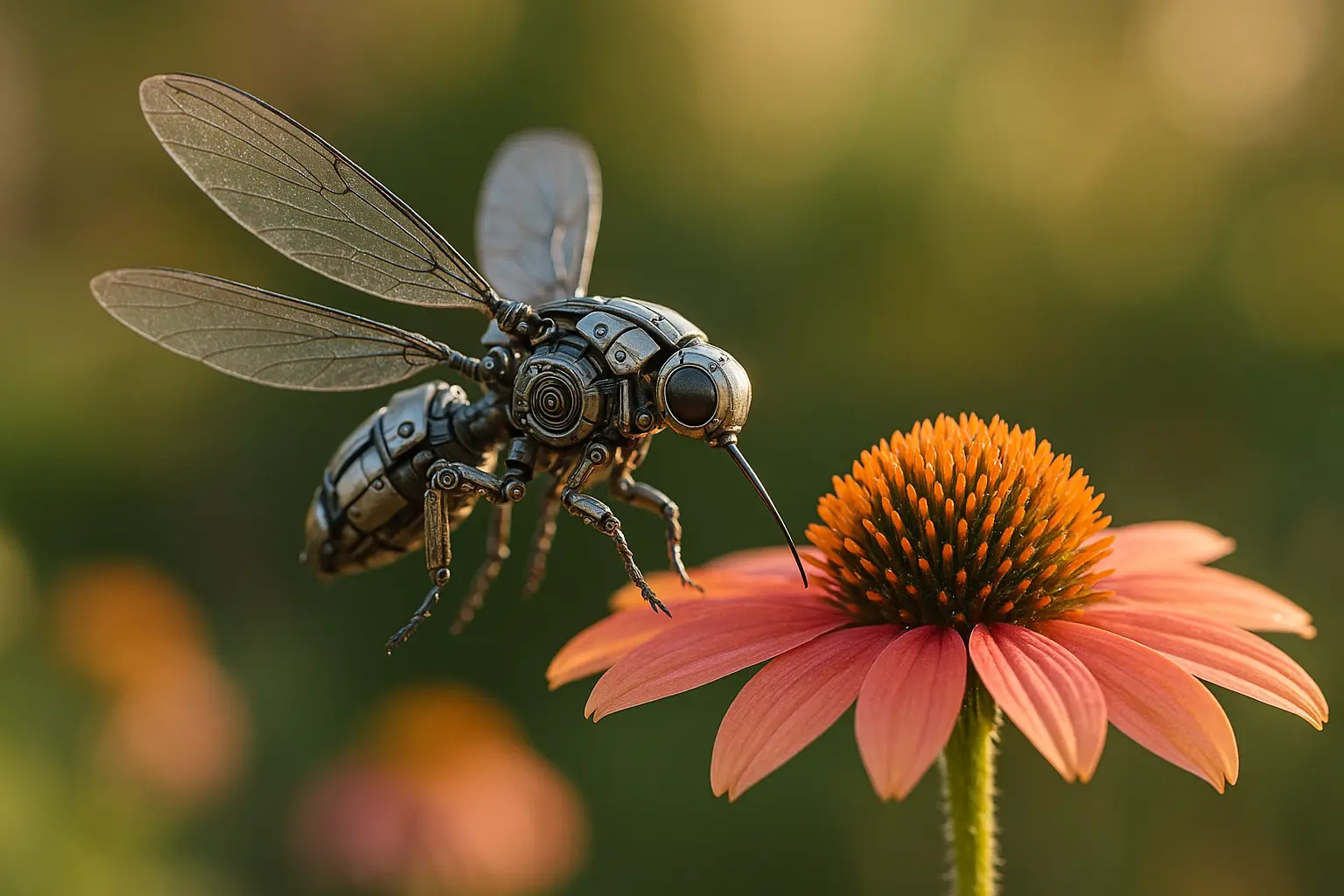
Beekeepers across North America and Europe have reported repeated double-digit colony losses in recent winters, and that trend alone explains why engineers keep returning to one strange idea: building a machine that pollinates a flower the way a bee does. We look at where bio-inspired pollination robots actually stand today, what still separates a lab prototype from a tool a landscaping or growing operation could buy, and why the gap between the two matters for anyone reading past the headlines.
Bio-inspired pollination machines exist today mainly as research prototypes and narrow commercial pilots, not as an off-the-shelf replacement for bees. Ground robots developed at university labs have reached pollination success rates in the 80 to 90 percent range on specific crops such as apples, while drone-based pollination is already used commercially at scale for row crops and orchards in parts of Asia. Outside of these specific cases, the technology remains too costly, too fragile, or too narrow in scope for general use in gardens, parks, or open farmland.
- Ground-based robots using cameras and soft manipulators have reached 80 to 90 percent pollination accuracy on single flower types in controlled trials.
- Drone-based pollination is already a commercial service on some Asian farms, run at fleet scale rather than as a research demo.
- Soft robotics and flexible materials remain the main engineering bottleneck for machines that must touch a flower without damaging it.
- No regulator or agronomic body currently treats robotic pollination as a substitute for maintaining healthy bee and pollinator populations.
What a bio-inspired pollination machine actually does
A bio-inspired pollination machine copies a specific behavior of a natural pollinator rather than a bee’s whole body plan. Most current designs focus on the moment of contact: a robotic arm, a soft brush, or a puff of electrostatically charged pollen that mimics how a bee’s hairy body picks up and transfers grains between flowers. Researchers at Washington State University, for example, built a ground-based unit combining a depth camera with a robotic arm and an electrostatic sprayer to pollinate apple blossoms, reaching an 84 percent success rate in field trials. That figure is specific to one crop and one controlled setting, and it should not be read as a general performance number for robotic pollination as a whole.
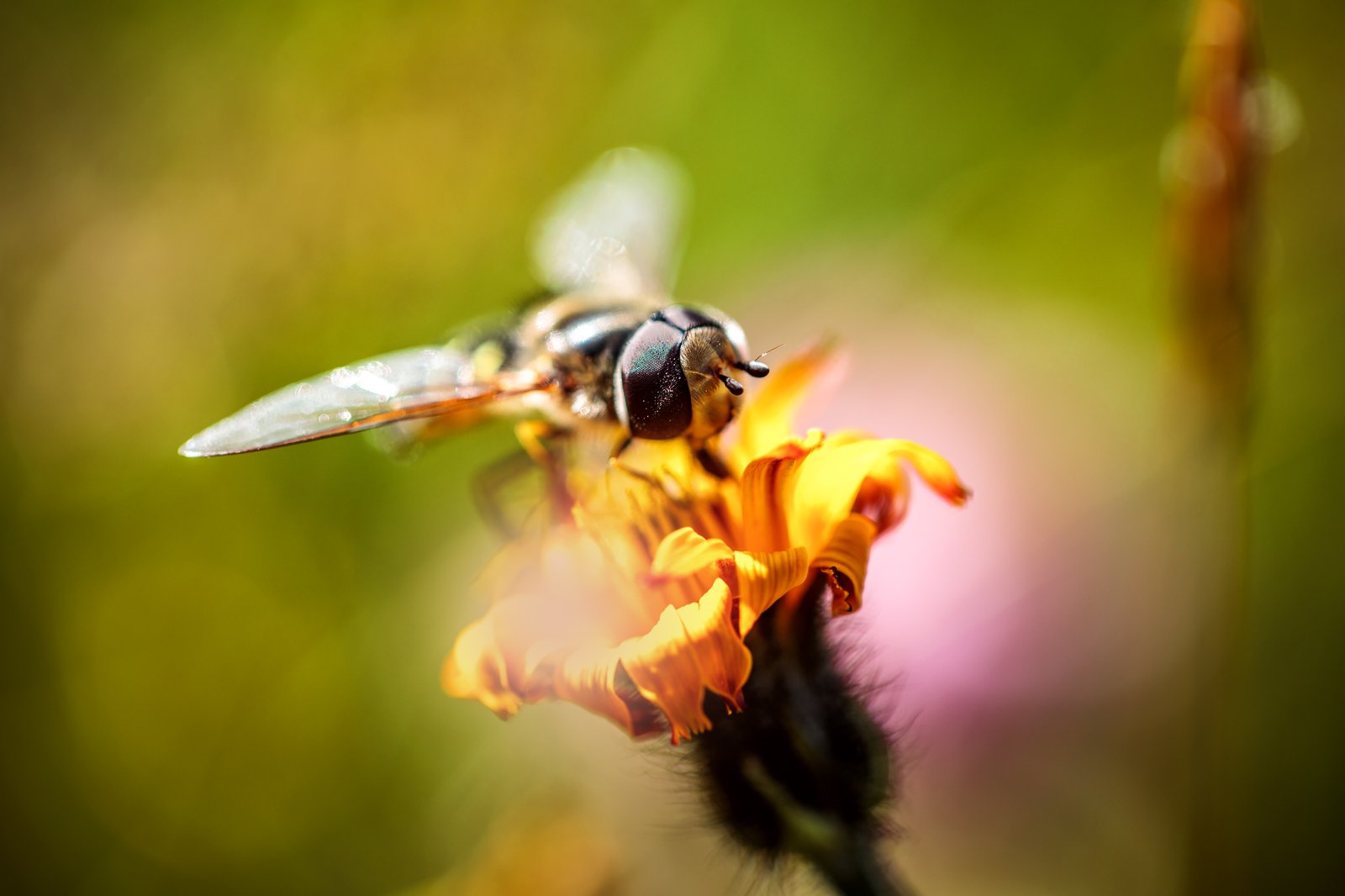
A separate strand of development uses aerial drones rather than ground units. Companies operating in Asia already run fleets of agricultural drones that disperse pollen over rice, maize, and orchard crops as a paid service, which is a meaningfully different stage of maturity than a university prototype. The distinction between “a robot that works in one published study” and “a service farms actually buy” is the single most important thing to keep in mind when reading about this field.
How mature is the technology right now
Most bio-inspired pollination systems remain firmly in the experimental or early-pilot stage as of 2026, and presenting them as generally available would misrepresent where the industry actually is. HarvestX, a robotics company working on precision pollination, announced what it described as its first commercial deployment in November 2024, with a single confectionery-industry client. One named client and one announced date is a useful data point, but it is not evidence of broad market adoption, and no credible source currently claims otherwise.
Market-research firms have published growth forecasts for the robotic pollination sector running into the billions of dollars by the mid-2030s. Those numbers describe projected market value, a financial estimate built on assumed future adoption, not a count of machines already deployed on farms or in gardens. Readers comparing a forecast to a field deployment are comparing two different kinds of claim, and conflating them is exactly the kind of overstatement this site avoids when discussing agri-tech that has not yet left the pilot stage.
The materials problem that still limits these machines
Flowers bruise. A rigid robotic gripper built for warehouse work will crush a blossom before it transfers a single grain of pollen, which is why almost all serious pollination-robot research now centers on soft robotics: components that flex, compress, and reshape themselves the way an insect’s body does. Engineering teams are testing materials that change stiffness in response to electrical or thermal signals, aiming for a gripper that behaves more like living tissue than like metal or hard plastic.
Energy efficiency is the second constraint. A honeybee visits dozens of flowers per minute on almost no external power. A robot doing the same task needs a power source, sensors, and processing capacity, all of which add weight and reduce the time it can operate between charges. Closing that efficiency gap is a multi-year materials science problem, not a software update, and it is one reason field-scale adoption keeps arriving later than press coverage sometimes implies.
| Approach | Current stage | Reported success rate |
|---|---|---|
| Natural honeybee pollination | Established baseline | Roughly 70 percent in comparative studies |
| Ground robot, single-crop trial (apple blossom) | Research prototype | 84 percent (WSU field trial) |
| Precision robotic pollinator, named client | Early commercial pilot (since late 2024) | Reported around 90 percent by the developer |
| Drone-based pollen dispersal, row crops | Commercial service (fleet scale in parts of Asia) | Not independently standardized across sources |
Where this could fit into professional landscaping and urban green space
Urban and semi-urban green spaces face a version of the same pollinator pressure as farmland, often worse, since fragmented planting beds and limited flower diversity give wild pollinators fewer resources to work with. A future where small pollination units support planted beds in parks, botanical collections, or dense residential developments is plausible on paper, and several of the same soft-robotics teams building agricultural units have mentioned greenhouse and urban applications as a longer-term goal. None of that is deployed today at the scale a landscaping crew could specify on a project, and any claim that it is would run ahead of the evidence. The more grounded near-term contribution is data: sensor-equipped units, even experimental ones, generate readings on temperature, humidity, and flowering timing that can feed into planting decisions long before a robot ever touches a flower.
This is also where the pollinator conversation naturally connects to garden design choices that support insect populations directly rather than replacing them. Sites built around therapeutic garden spaces where pollinator health directly supports human wellbeing already treat healthy planting and flowering cycles as part of the design brief, which is a lower-cost, lower-risk way to support pollination today than waiting for robotics to mature.
The realistic goal researchers describe is not a robot replacing a bee. It is a backup system for the specific moments and locations where natural pollinators are already struggling to keep up.
FAQ
Are robotic bees already used in commercial farming?
Drone-based pollen dispersal is used commercially on some farms in Asia. Ground-based robotic pollinators modeled on insect movement remain limited to research trials and a small number of named early pilots, not widespread commercial use.
Can a pollination robot fully replace bees in a garden?
No credible source currently supports that claim. Current systems are designed to supplement pollination in specific, limited conditions, not to substitute for a functioning population of wild and managed pollinators.
What is the biggest technical barrier left to solve?
Materials that can touch a flower without damaging it, combined with a power source light and efficient enough for extended field use. Both remain active engineering challenges rather than solved problems.
Why do bio-inspired designs matter more than a generic robotic arm?
Because the task itself, delicately transferring pollen without bruising a petal, resembles a living organism’s movement far more than an industrial task like lifting or cutting, which is why soft, adaptive materials outperform rigid mechanical designs here.
Could this technology help urban gardens specifically?
Potentially, in the longer term, since urban plantings often have fewer wild pollinators nearby. No deployment at that scale exists yet, and supporting pollinators through planting design remains the more immediate, proven option.
Bio-inspired pollination machines are a genuinely promising research direction, not a finished product. The distance between a published success rate in one trial and a tool available to a landscaping business or a market garden is still measured in years, and treating that distance honestly is more useful to readers than treating early prototypes as a foregone conclusion.
Published 29 July 2026.
Sources: Washington State University CPAAS robotic pollination research; HarvestX commercial deployment announcement (November 2024); XAG agricultural drone fleet reporting; FAO Agriculture 4.0 report on agricultural robotics and automated equipment.