

A hatchery manager who cannot find enough trained staff to sort chicks by hand faces the same problem a landscaping company faces when it cannot hire enough crew for spring planting season: too much seasonal, skill-dependent work chasing too few available workers. In poultry production, that pressure has pushed hatcheries toward automated gender-sorting systems, and one name comes up repeatedly in that shift: Genesys, developed by the animal health company Ceva.
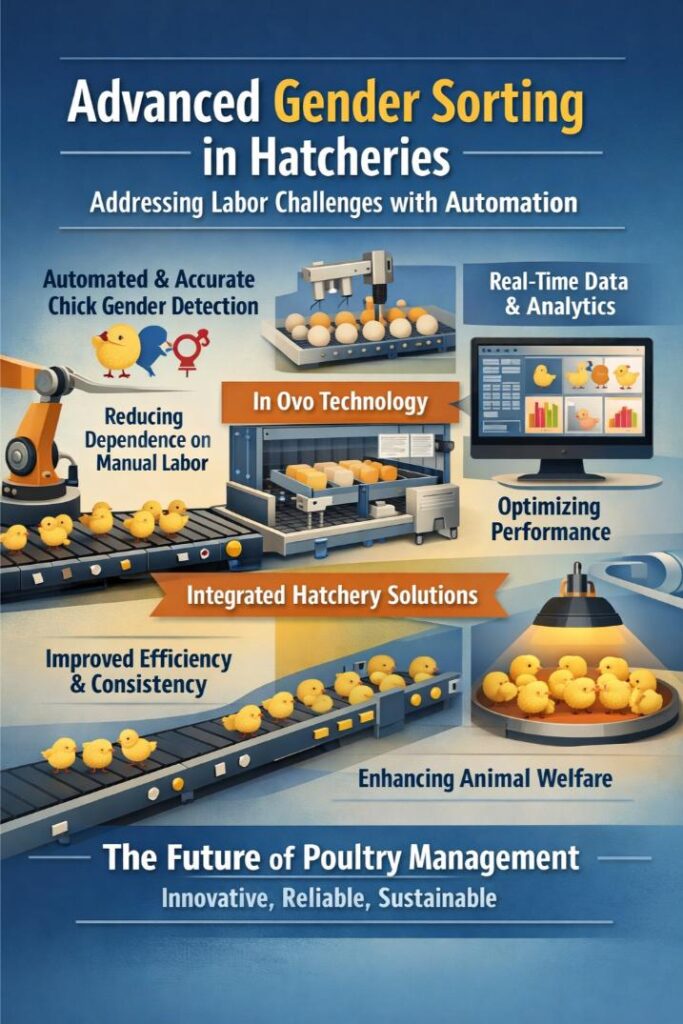
Genesys is a computer-assisted gender sorting system built to identify chick gender during hatchery processing, reducing reliance on manual sorting at a time when skilled hatchery labor is increasingly hard to secure. It combines imaging sensors, cameras, and real-time data processing, and it is typically deployed alongside Ceva’s in ovo technology Egginject, which allows interventions earlier, during embryonic development, rather than after hatching.
- Labor scarcity in hatcheries is the main driver behind automated gender sorting adoption, not sorting accuracy alone.
- Genesys pairs with Egginject, an in ovo intervention tool, to manage flock composition earlier in the production cycle.
- In ovo sexing more broadly has grown fast in the EU, reaching an estimated 28 percent of the laying hen flock sexed this way by the end of Q1 2025, according to industry reporting.
- Adoption is heavily shaped by regulation: several European countries have banned or restricted post-hatch culling of male chicks, which is the practice these technologies were built to replace.
Why hatcheries are automating gender sorting now
Gender sorting has traditionally relied on trained workers examining feather development or other physical traits shortly after hatching, a method that demands both expertise and repetitive, precise handling. As hatchery operations scale up, that dependence on manual technique becomes a bottleneck: turnover, training time, and inconsistent operator performance all affect throughput. Ceva positions Genesys as a way to standardize the sorting step itself, removing variability that comes from relying on individual operators.
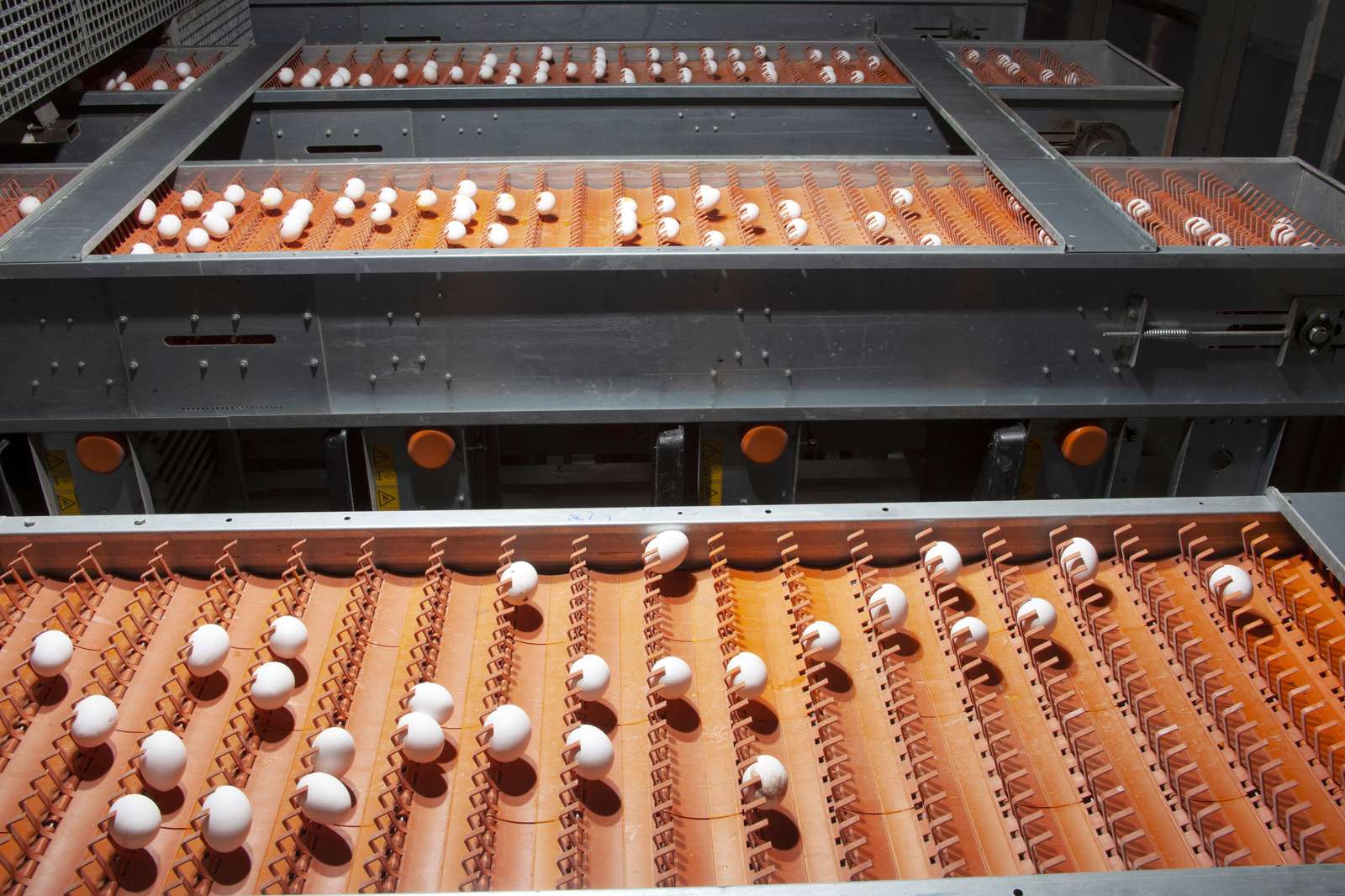
The system uses a network of sensors and cameras to capture data on each chick and process it instantly, which is meant to support a continuous, high-throughput workflow. Its modular design is intended to fit into existing hatchery layouts without a full infrastructure rebuild, which matters for established operations weighing the cost of automation against a full facility redesign.
Regulatory pressure is a bigger factor than the technology itself
The push toward in ovo and computer-assisted gender sorting cannot be separated from Europe’s regulatory shift against culling male chicks after hatching. Germany banned culling of male chicks past day 12 of incubation starting in January 2024, and similar restrictions apply in France, Italy, and Austria. Reporting from the Poultry Site indicates Germany’s shift has cut the share of male chicks reared for meat to around 30 percent, down from 70 to 80 percent in prior years, since many are now identified and removed at the egg stage instead.
At the EU level, a bloc-wide ban has been discussed but was put on hold in 2023, leaving country-level rules as the actual driver of adoption for now. That distinction matters: a producer in a country without a culling ban has a different, more discretionary adoption timeline than one operating under German or French rules. Any claim that in ovo sexing or Genesys-style sorting is now standard practice across the entire poultry sector would overstate a trend that is still concentrated in specific, regulated markets.
| Metric | Reported figure | Source period |
|---|---|---|
| Share of EU laying hen flock sexed in ovo | Approximately 28 percent | End of Q1 2025 |
| Year-over-year increase in that share | About 8 percentage points | 2024 to 2025 |
| Male embryos identified and removed pre-hatch (EU total since 2022) | Roughly 175 million | 2022 to 2025 |
| Added processing cost per egg for in ovo sexing | 0.016 to 0.02 euros | Reported industry range |
What automation changes for hatchery workforce planning
Automating the sorting step does not remove the need for skilled staff, it relocates their attention. Ceva and other suppliers describe operators shifting from repetitive manual handling toward supervision, quality control, and process optimization, roles that require a different, arguably more transferable skill set. This mirrors what other automated agricultural sectors report: fewer hands needed for the single repetitive task, more value placed on the people who can supervise and troubleshoot the system running it.
That trade-off, trained labor moving from hands-on tasks to oversight of automated systems, is not unique to poultry. Landscaping companies weighing whether to invest in automated machinery for large-scale grounds maintenance run through very similar cost-benefit reasoning before committing capital to automation, balancing upfront investment against a shrinking pool of workers willing to do repetitive physical tasks.
FAQ
What exactly does Genesys do in a hatchery?
Genesys uses cameras, sensors, and real-time data processing to identify chick gender during sorting, reducing the need for manual, visually based sorting by trained staff.
Is in ovo sexing mandatory across the poultry industry?
No. It is required or strongly incentivized only in countries with specific bans on post-hatch culling, such as Germany, France, Italy, and Austria. A bloc-wide EU rule has been discussed but remains on hold.
Does automation eliminate hatchery jobs?
It reduces the number of workers needed for manual sorting specifically, but industry reporting describes a shift of remaining staff toward supervision and quality control rather than a simple net reduction in all hatchery roles.
How much does in ovo sexing add to production costs?
Industry sources cite an added cost in the range of 0.016 to 0.02 euros per egg, depending on the specific detection method and egg type used.
Genesys is a clear example of automation responding to a labor problem rather than existing for its own sake. Whether it becomes standard practice well beyond its current regulated markets will depend more on future policy decisions than on the technology’s capability, which is already demonstrated at meaningful scale in the markets where it operates today.
Published 29 July 2026.
Sources: The Poultry Site, “Ending male chick culling: the economics driving Europe’s poultry shift”; British Hen Welfare Trust reporting on in ovo sexing adoption; FAO Agriculture 4.0 report on agricultural automation and labor.