Most gardeners assume a vegetable patch has to look utilitarian to be productive, all straight rows and bare soil between plants. It does not, and the assumption costs them both yield and visual interest. A 2012 Oregon State University study on home vegetable gardens found a mean return of roughly $0.74 per square foot of growing area in produce value, with well-planned gardens of 500 to 700 square feet returning $370 to $518 in their first year alone. That return has nothing to do with whether the bed looks like a farm plot or a designed border, only with how well the space is planned.
A vegetable and fruit garden becomes both aesthetic and genuinely productive when raised beds or defined structures organize the space, planting follows a seasonal succession plan for continuous harvest, and a handful of sustainable practices, companion planting, mulching, crop rotation, keep the soil productive over multiple years. None of these three depend on sacrificing visual design for yield.
- Raised beds improve drainage and aeration while giving a productive garden a defined, intentional structure.
- Succession planting keeps a bed producing continuously rather than peaking once and going idle.
- Companion planting, basil near tomatoes, marigolds among root crops, reduces pest pressure without chemical input.
- A well-run home vegetable garden can return meaningfully more value per square foot than most gardeners expect.
Structuring the space with raised beds and defined layouts
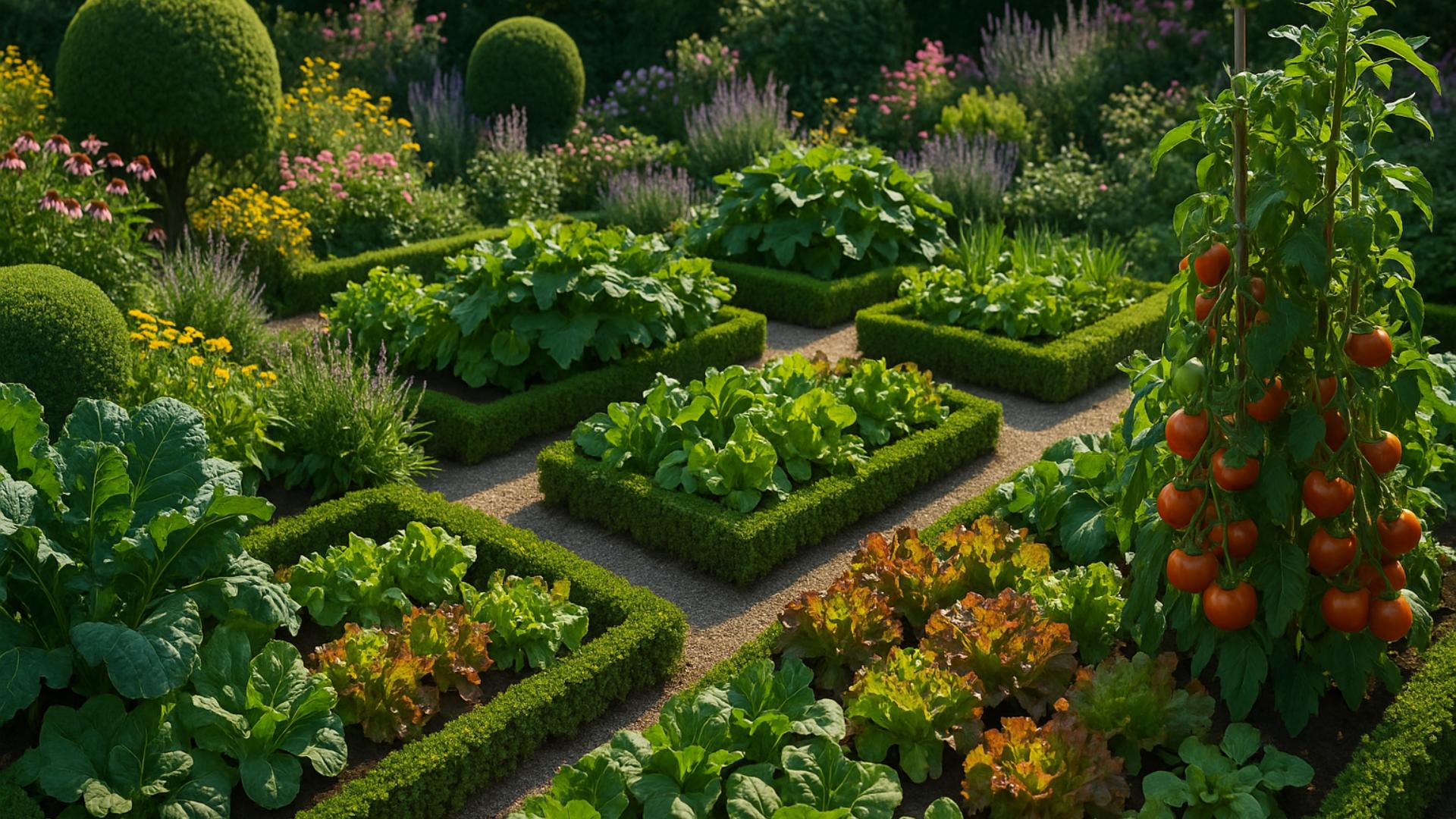
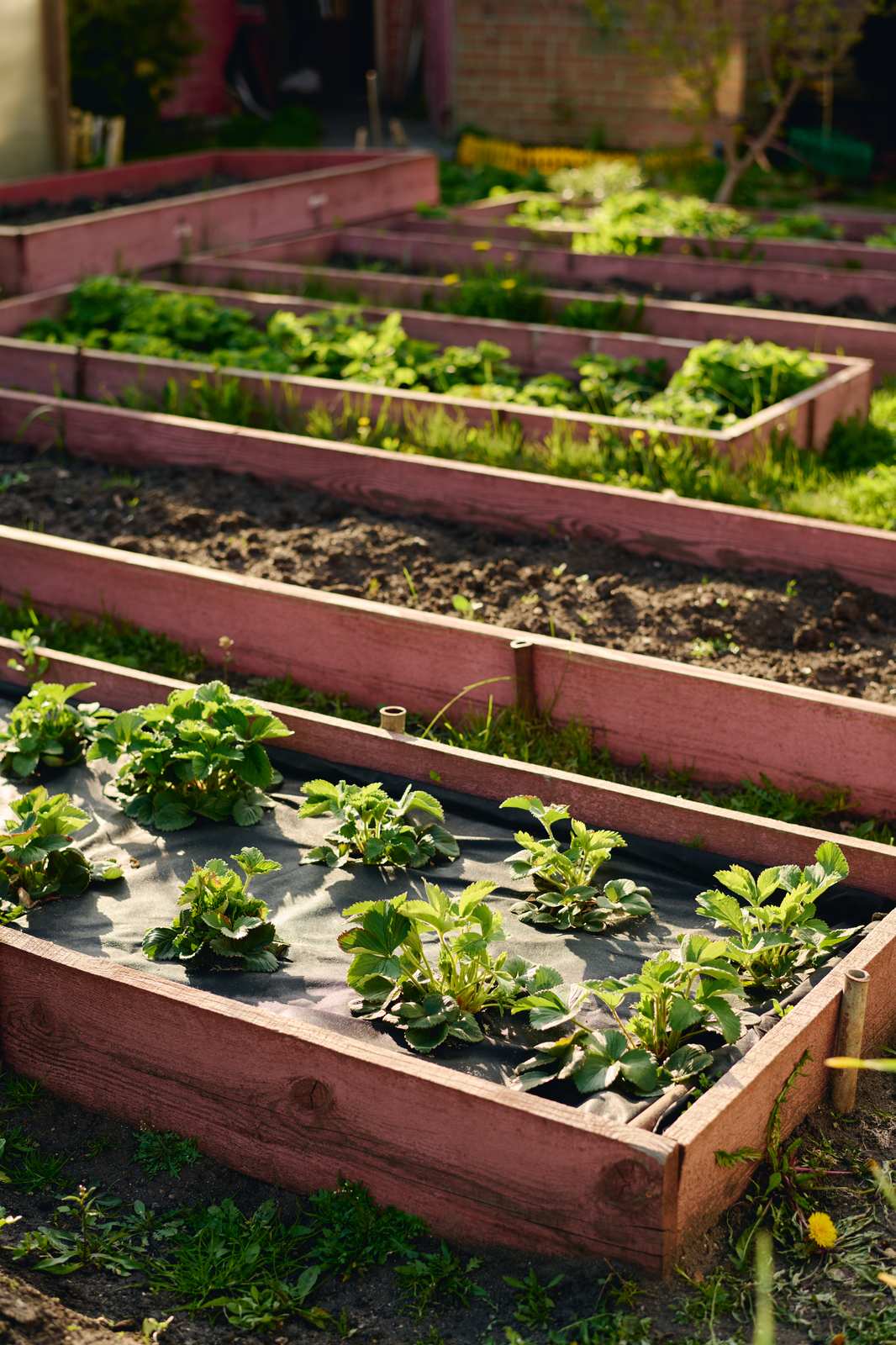
Raised beds solve two problems at once: they improve soil drainage and aeration for the crops growing in them, and they give a productive garden the same sense of intentional structure that a designed ornamental bed has. A neat grid of raised beds reads as considered rather than makeshift, which matters as much to how the space feels day to day as the harvest itself does.
Interplanting edible crops among ornamentals extends this same logic. Vibrant Swiss chard nestled among begonias, or bean vines climbing a support against a backdrop of roses, adds layers of color and texture that a purely productive layout would miss. Soil quality underpins all of it: enriching beds with compost or cover crops builds the fertile base that both yield and long-term plant health depend on.
Planning a seasonal succession for continuous harvest
A garden that produces only once a year, at a single harvest peak, is not making full use of its growing season. Succession planting staggers sowing dates so that as one crop reaches maturity, another is already underway, keeping both the harvest and the visual display active across the whole season rather than concentrated into a few weeks.
Spring opens with fast, cool-season crops: lettuce, radishes, peas. As temperatures climb, these give way to summer staples, tomatoes, zucchini, peppers, that need the extended warmth to fruit properly. Autumn brings a third wave, kale, beets, carrots, which tolerate cooler conditions and add textural depth to the garden even as most flowering plants wind down. Perennial crops like rhubarb and asparagus round out the plan, offering a reliable annual harvest for comparatively little ongoing effort once established.
Keeping a productive garden sustainable across multiple seasons
Companion planting is the most accessible sustainability tool available to a home gardener, and it works through a fairly well-documented mechanism: certain plant pairings release compounds that repel pests or improve growth in a neighboring crop. Planting basil near tomatoes can deter common insect pests, while marigolds planted among root vegetables help protect against nematodes, both without any synthetic input.
Water conservation matters just as much for long-term productivity. Drip lines or soaker hoses deliver moisture directly to root zones with minimal waste, and a layer of mulch retains that moisture in the soil while suppressing weeds, cutting down on both water use and hands-on maintenance. Crop rotation closes the loop by preventing the soil depletion and disease buildup that come from planting the same family of crops in the same spot year after year.
Biodiversity strengthens the whole system further. A garden that mixes native plants alongside its edible crops attracts pollinators and predatory insects that help keep pest populations in check on their own, reducing how much active intervention the garden needs from the person tending it. The broader case for treating edible and ornamental planting as one integrated design, rather than two separate zones, is covered in how edible plants can be integrated into the overall garden design instead of segregated, which goes further into the visual side of this same approach.
Seasonal crop planning at a glance
| Season | Crops to sow | Design role |
|---|---|---|
| Spring | Lettuce, radishes, peas | Early fresh green texture |
| Summer | Tomatoes, zucchini, peppers | Volume, color, height variation |
| Fall | Kale, beets, carrots | Structural leaf texture, deep colors |
| Perennial | Rhubarb, asparagus | Reliable structure, low upkeep |
Extending the approach with permaculture principles
Crop rotation and companion planting are, in essence, entry points into a broader permaculture logic: designing a growing space so that plants, soil and water management support each other rather than requiring constant outside correction. Gardeners who find these techniques worthwhile often move on to permaculture-based crop rotation and resilience techniques as a more complete framework for building a garden that stays productive with progressively less intervention over time.
FAQ
How do I incorporate vegetables and fruit without ruining my garden’s overall look?
Use raised beds, trellises or decorative containers to give edible plants the same structural presence as ornamentals, and choose varieties with colorful fruit or unusual foliage to reinforce the visual side of the design.
What fruits and vegetables work best in a garden meant to look decorative?
Ornamental kale, cherry tomatoes, rainbow Swiss chard, strawberries and blueberry bushes all combine attractive foliage or fruit color with genuine productivity.
How can I keep the garden productive and visually balanced at the same time?
Mix edible plants with ornamentals deliberately rather than clustering them separately, and keep up with routine pruning, deadheading and vine training, since maintenance affects both appearance and yield equally.
Does succession planting require much more planning than a single annual planting?
It requires a seasonal calendar rather than a one-time plan, but the additional planning is modest once the sequence for a given climate zone is established and repeated year to year.
Is companion planting reliable enough to replace pesticides entirely?
It reduces pest pressure meaningfully but is not a guaranteed substitute for all pest management. It works best as one part of a broader approach that also includes crop rotation, healthy soil and encouraging natural predators.
The gardens that manage both beauty and yield rarely rely on a single clever trick. They rely on structure, sequence and a handful of sustainable habits repeated consistently across the growing season, which is a far more attainable goal than any single dramatic planting decision could achieve on its own.
Sources: Oregon State University Extension, home vegetable garden productivity study, 2012; National Gardening Association, home garden value estimates.