
Why would a municipal parks department or a golf course, both under constant budget pressure, spend more upfront on a robotic mower than a walk-behind crew would ever cost? Because the math changes once a facility has forty acres of turf, a handful of available groundskeepers, and a season that will not wait. Automation in sports field and large public green space maintenance is spreading fastest where the scale of the ground simply outpaces what a human crew can keep up with.
Automated maintenance solutions for sports fields and large green spaces, primarily robotic mowers and sensor-driven irrigation systems, are moving from a novelty on a handful of golf courses to a mainstream option for facilities of meaningful scale, though full adoption remains uneven and concentrated in specific climates and budgets. The technology reduces manual labor for repetitive tasks like mowing and watering, while data from onboard sensors increasingly guides decisions about fertilization, pest management, and scheduling.
- Autonomous mowers using GPS-assisted mapping have reached 1 to 2 centimeter accuracy on some commercial models, according to manufacturer specifications.
- Adoption has accelerated fastest in the US Sun Belt and desert West, where labor costs and water scarcity make automation’s savings more visible.
- Regulatory and liability questions around autonomous equipment operating near the public remain unresolved in several jurisdictions.
- IoT-connected irrigation and sensor systems now generate the operational data facility managers use to plan maintenance, not just to run equipment.
Why robotic mowers are spreading on golf courses and sports turf first
Golf courses and large sports facilities were early adopters because their turf areas are large, repetitive, and expensive to maintain with hourly labor. Manufacturers including Husqvarna, Toro, and dedicated commercial players like GST Robotic Mowers now supply fleet-scale autonomous units aimed specifically at this market, rather than the residential robotic mowers many readers may already know. Husqvarna’s commercial-grade models, for instance, are built to cover areas up to 16,000 square meters and use GPS coordinates paired with a fixed base station for navigation accuracy, a very different proposition from a small residential unit wandering a suburban lawn.
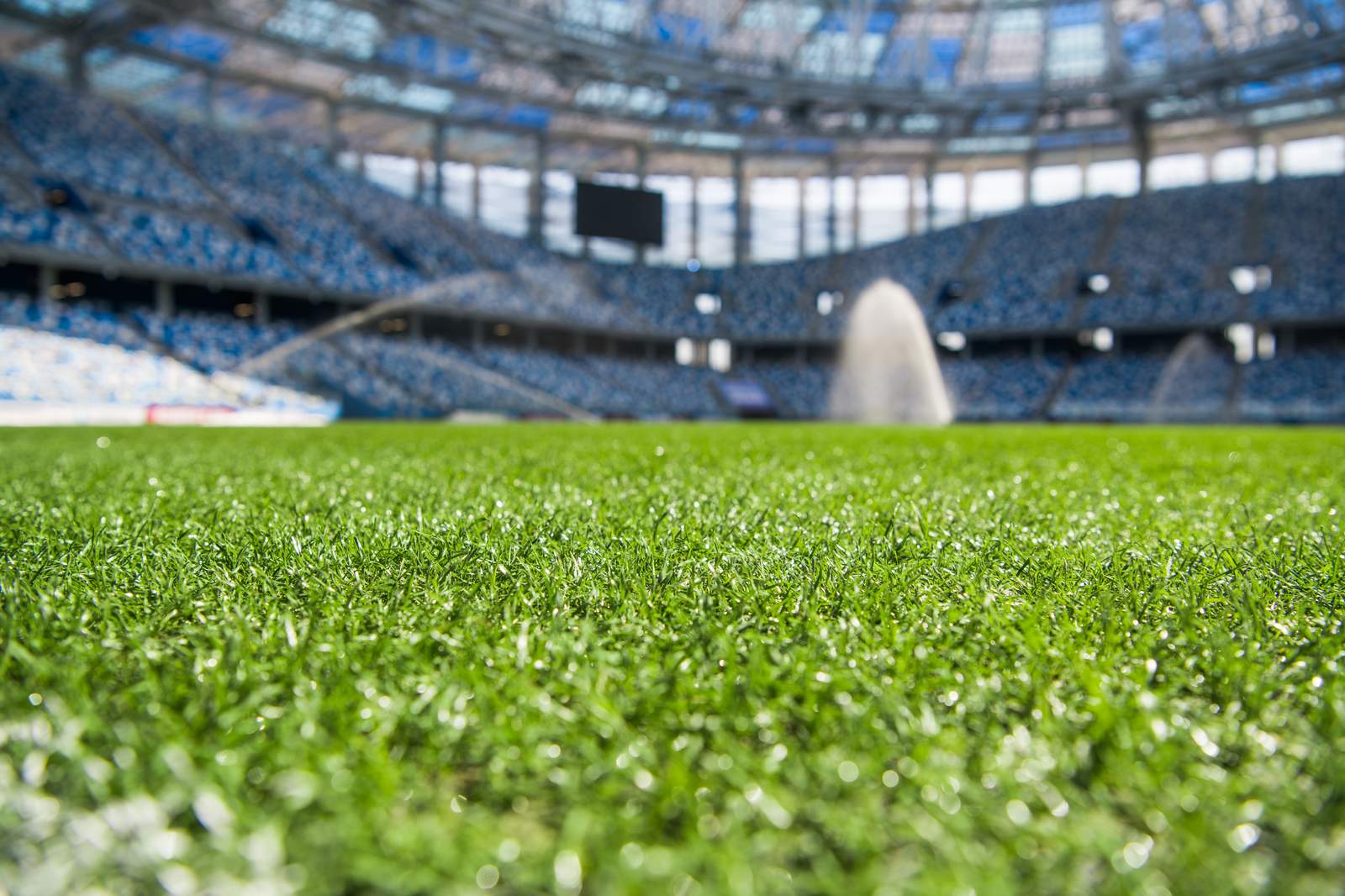
Reporting from industry publications describes adoption accelerating specifically in warmer, drier US regions through 2025, where year-round mowing seasons and high water costs make the return on automated equipment clearer than in regions with a short mowing season. That regional concentration is a useful reminder that “automation is spreading” does not mean it is spreading evenly. A facility in a short-season climate faces a different cost calculation than one operating turf maintenance nearly year-round.
How sensor-driven irrigation reduces water waste on large sites
Irrigation is where automation delivers its most measurable savings on large public sites, because water use is metered, priced, and directly tied to a budget line. Sensor networks monitoring soil moisture, weather forecasts, and localized usage patterns let a facility water only the sections that need it, rather than running a uniform schedule across an entire property regardless of actual conditions. This shift from calendar-based watering to condition-based watering is one of the more mature parts of the automation stack discussed in this pillar, and it connects directly to broader AI-powered smart irrigation systems already used to manage water consumption remotely across both public and private landscapes.
The data layer behind this goes beyond irrigation valves. Sensors tracking soil health, climate conditions, and usage patterns now feed into broader facility management software, giving grounds managers a single view of conditions across dozens of fields or park sections instead of relying on manual walk-throughs. That shift from spot-checking to continuous monitoring is arguably a bigger change in how these facilities are managed than the mowers themselves.
What automation actually replaces, and what it does not
Automated mowing and irrigation replace the most repetitive, schedule-driven parts of turf maintenance, not the judgment calls. A robotic mower can cut grass to a precise height on a fixed schedule, but deciding when to aerate, when to overseed, or how to respond to an unusual pest outbreak still requires a trained groundskeeper reading conditions a sensor was never built to detect. Facilities that have adopted automation successfully tend to describe it as freeing staff time for these higher-judgment tasks rather than as a straightforward headcount reduction.
Safety and liability remain the clearest open question for wider rollout. Autonomous equipment operating in spaces used by the public, a park at midday rather than a fenced golf course at dawn, raises questions about collision avoidance, insurance, and local regulation that vary by jurisdiction and are still being worked out in several US states. Any suggestion that autonomous mowers are already cleared for unrestricted use in all public green spaces would overstate where the regulatory picture currently stands.
| Maintenance task | Current automation level | Human role still required |
|---|---|---|
| Mowing | High (fleet-scale autonomous mowers commercially available) | Route planning, obstacle handling, maintenance |
| Irrigation | High (sensor-driven scheduling widely available) | System calibration, drought-response decisions |
| Pest and disease management | Low to moderate (sensor detection, manual treatment) | Diagnosis, treatment choice, follow-up |
| Field lining and marking | Moderate (GPS-guided line markers exist) | Setup, quality checks before events |
What this means for facility budgets and staffing plans
The upfront cost of fleet-scale autonomous mowers and full sensor networks is significant, often requiring board or council approval for public facilities, and the return on that investment depends heavily on the size of the turf area and local labor and water costs. A small municipal park with two acres of grass will rarely see the same payback timeline as a 40-acre sports complex or a golf course running near capacity. This is the same cost-versus-scale reasoning that shows up across landscaping automation more broadly, and comparing the actual costs and benefits before committing capital remains the more useful exercise than assuming automation pays for itself everywhere equally.
Staffing plans shift rather than shrink outright in most reported cases. Facilities already running automated mowing describe reassigning staff toward tasks automation cannot do: managing special events, handling irregular repairs, and interpreting the sensor data the system now produces in volume. Training existing groundskeepers to interpret that data, rather than only maintaining physical equipment, is becoming its own distinct skill requirement inside these teams.
The clearest signal from current adoption patterns is that automation spreads first where turf area, labor cost, and water cost all point the same direction. Where they do not, the case for automation is far less obvious.
FAQ
Are robotic mowers already standard on golf courses?
Not universally. Adoption has grown quickly in specific regions, particularly warmer US climates, but many courses and public facilities worldwide still rely primarily on conventional mowing crews.
How accurate is GPS-guided mowing on large fields?
Commercial-grade systems from manufacturers such as Husqvarna report accuracy in the 1 to 2 centimeter range under normal conditions, though performance can vary with signal interference or complex terrain.
Does automated irrigation actually reduce water use, or just labor?
Both. Condition-based watering driven by soil moisture and weather sensors reduces water applied to areas that do not need it, in addition to reducing the staff time needed to run manual irrigation schedules.
What is the main barrier to wider adoption right now?
Upfront cost combined with unresolved safety and liability rules for autonomous equipment operating in spaces used by the public, rather than a lack of capable technology.
Can automation fully replace a grounds maintenance crew?
Current evidence points to task reassignment rather than full replacement. Automation handles repetitive scheduled work well; diagnosis, event management, and irregular repairs still require trained staff.
Automated maintenance for sports fields and large green spaces is no longer an experimental curiosity, but it is also not yet the universal default its marketing sometimes implies. The facilities seeing the clearest returns share a specific profile: large turf areas, high labor or water costs, and a willingness to retrain staff around the data these systems generate rather than simply cutting headcount.
Published 29 July 2026.
Sources: TurfMagazine.com, “Golf Course Trends 2025: Robotics, Data-Driven Turf”; USGA Green Section Record on autonomous mowers; industry reporting on predictive maintenance and IoT sensor adoption in facility management.