Automated machinery does not pay for itself just because it is automated. That assumption trips up a lot of landscaping business owners who buy a robotic mower or a GPS-guided spreader expecting instant savings, then get frustrated when the first season’s numbers look worse than the old push-mower routine. The real answer is more specific, and it depends heavily on scale.
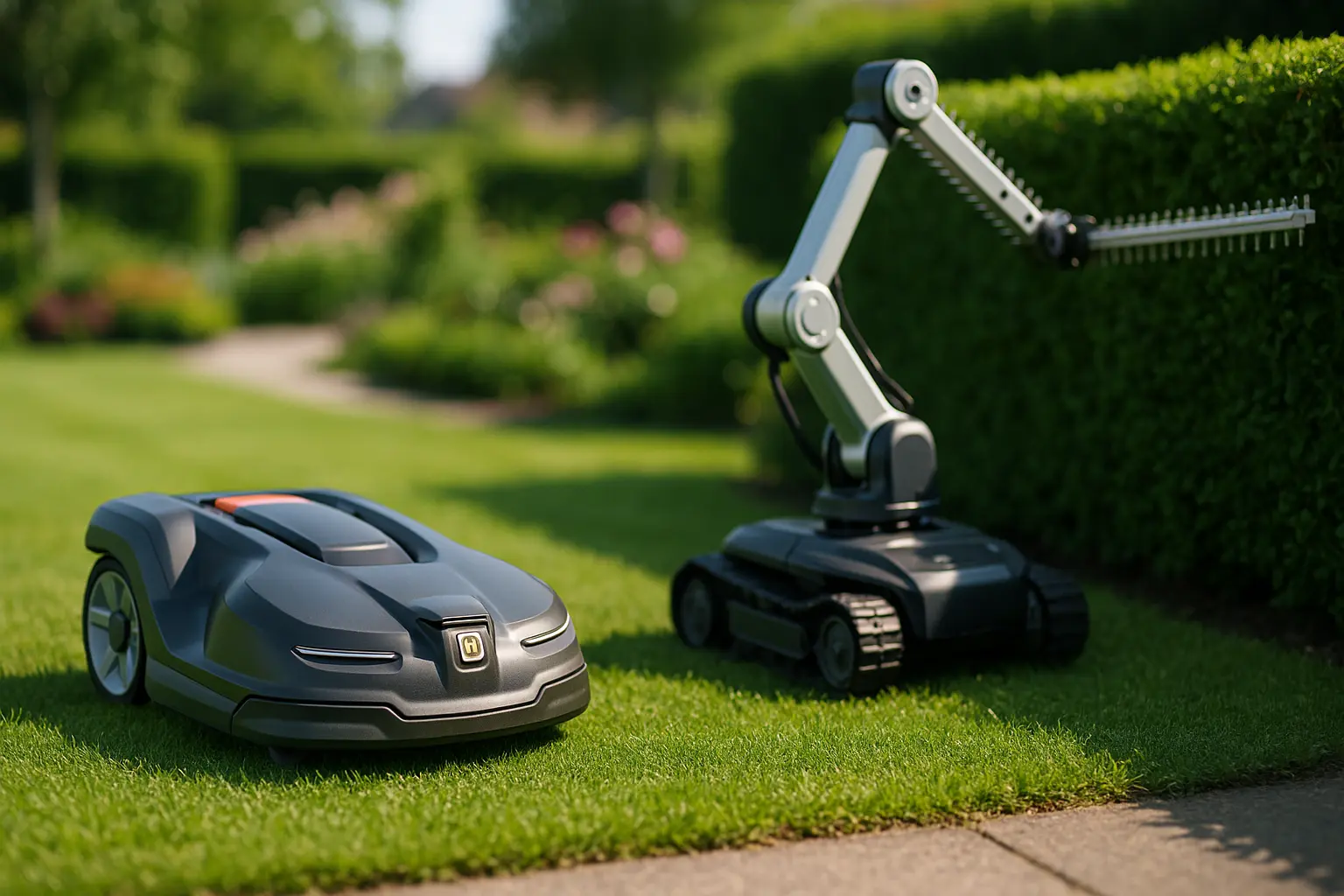
Automated landscaping machinery, such as robotic mowers and GPS-guided equipment, typically pays back its purchase cost within 1.5 to 3 years through reduced labor hours, lower fuel use, and fewer maintenance callouts, but only on properties large enough to keep the machine working most of the week. On small or scattered residential routes, the math often does not clear that bar.
What the numbers show:
- Commercial robotic mowers range from roughly 6,000 to 15,000 dollars for most multi-acre setups, up to 60,000 dollars or more for fleet-ready units
- Documented mowing cost reduction: from over 40 dollars per acre down to under 10 dollars per acre in some fleet deployments
- Payback window: 1.5 to 3 years depending on utilization
- Adoption remains uneven: 83% of landscaping professionals report not having adopted AI-driven tools in their operations yet
What the upfront investment actually buys
| Equipment tier | Typical price range | Best fit |
|---|---|---|
| Entry robotic mower | 6,000 to 15,000 dollars | Single large commercial property or HOA common area |
| Fleet-ready commercial unit | Up to 60,000 dollars or more | Multi-site contracts, sports fields, business parks |
| GPS-guided spreader or sprayer | Varies by acreage covered | Turf care companies managing large lawns precisely |
The real payback window, and why it moves so much
A payback estimate of 1.5 to 3 years assumes the machine actually runs close to full capacity. A robotic mower sitting idle two days a week because a crew has to relocate it between disconnected properties will never hit that timeline. The businesses reporting the fastest returns tend to be the ones with large, contiguous commercial sites, sports fields, or business parks, where a single robot can cover several acres daily with minimal supervision. Scattered residential routes rarely generate that kind of utilization, which is exactly why robotic mowing has grown fastest in commercial and municipal contracts rather than typical suburban lawn care.

Labor savings against costs the brochure does not mention
The labor-savings side of the equation is real: fewer worker-hours per acre, reduced fuel spend, and mowing costs that can fall from over 40 dollars per acre to under 10 dollars per acre in favorable deployments. But three costs rarely make it into a sales pitch. Training time for staff to operate and troubleshoot new systems is not free, even if the equipment itself works flawlessly from day one. Connectivity and software fees for GPS-guided or app-managed equipment add a recurring cost most owners forget to budget for the following year. Downtime during the adoption curve, while a crew adjusts to a new workflow, temporarily reduces output before the promised gains show up.
When automation genuinely does not pay off yet
Despite heavy marketing, adoption of AI-driven and advanced automated tools remains low across the industry: 83% of landscaping professionals report they have not adopted these tools in their business as of the most recent industry survey. That figure alone is a useful reality check against any claim that automated machinery is now the default choice. For a company running a mix of small residential lawns under an acre each, the honest answer is often that traditional equipment remains the more cost-effective option, at least until routes consolidate or contract sizes grow.
This cost calculation connects directly to the safety record building up around autonomous mowers, since insurance and liability considerations factor into the real total cost of ownership. It also reshapes staffing plans, creating new roles like the robot fleet supervisor in place of some of the labor hours the automation removes.
So who should buy in now, and who should wait? A company already managing several acres of contiguous turf on repeat contracts has a real case for automation this season. A company built around small, scattered residential jobs is usually better served waiting until either route density improves or unit prices fall further, which market growth projections suggest is likely as the robotic mower market expands from roughly 2.4 billion dollars in 2025 toward a projected 5.3 billion dollars by 2031.
A middle path worth considering before a full fleet purchase is leasing or renting a single unit for one season on the largest site in a company’s portfolio. That single trial generates real utilization data specific to that business, rather than relying on a generic industry payback figure that may not reflect the actual route density, terrain, or contract mix a particular company deals with day to day.
Run the utilization numbers before the marketing numbers. A machine that sits idle two days a week never reaches the payback window quoted in a sales brochure, no matter how efficient it is on paper.
Sources: commercial robotic mower pricing data, 2025; Mordor Intelligence robotic lawn mower market report, 2025-2031; Aspire 2025 Landscape Industry Report on AI and automation adoption among landscaping professionals.