
Most garden advice quietly assumes a body that can kneel, bend, and stand back up without discomfort. That assumption shuts a lot of people out of an activity that has real, documented benefits for exactly the age group and mobility profile most likely to be excluded from it.
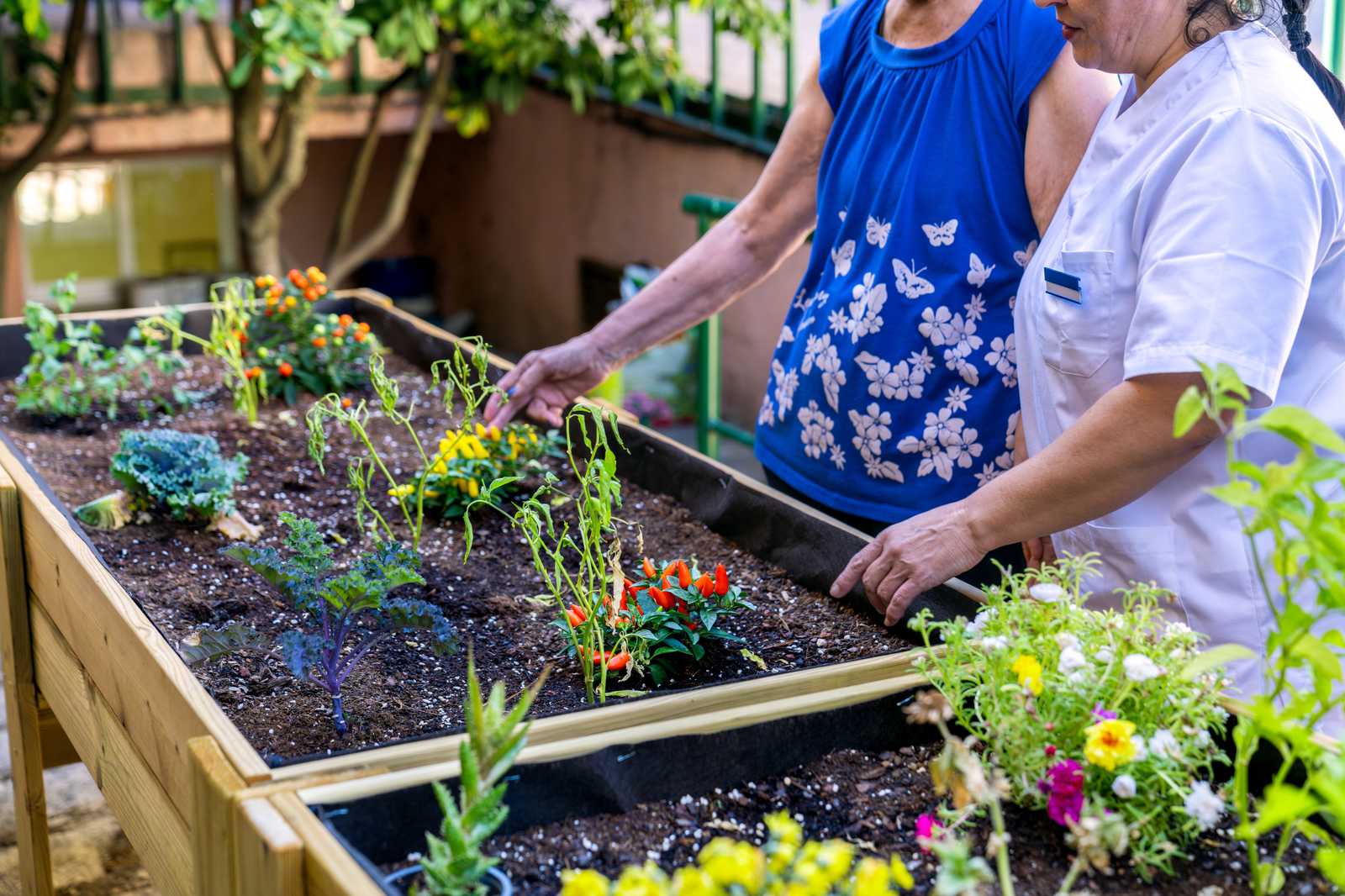
A garden designed for people with reduced mobility and seniors uses raised beds, wide firm pathways, and adapted tools so that gardening remains physically possible without bending, kneeling, or gripping strain. These adjustments aren’t cosmetic. Horticultural therapy programs built around this kind of accessible design have been shown to improve mobility, muscle coordination, balance, and social engagement in older adults.
- Raised bed height should match how the gardener will use it: around 24 inches for wheelchair users, up to 34 inches for standing gardeners who can’t bend.
- Path width and surface matter as much as bed height, since a narrow or loose-gravel path blocks access before a gardener ever reaches a bed.
- Sensory plants (fragrant herbs, textured foliage) add therapeutic value beyond the physical accessibility itself.
- Adaptive tools with longer handles or lighter weight reduce strain on joints during routine tasks.
Getting the raised bed height right for the actual user
Raised bed height isn’t one-size-fits-all, and getting it wrong defeats the purpose of building one at all. For a gardener working from a wheelchair with their knees positioned under the bed, the growing surface typically needs to sit around 34 inches high, leaving roughly 24 inches of clearance underneath for the wheelchair and about 12 inches of soil depth on top. A gardener who stands but struggles to bend generally does better with a bed between 24 and 30 inches, avoiding the need to reach the floor while still working comfortably from a standing position.
| User profile | Recommended bed height | Key design detail |
|---|---|---|
| Wheelchair user, seated gardening | Around 24 inches at soil level | Open space underneath for knee clearance |
| Standing, limited bending ability | 24 to 30 inches | Bed width no more than 24 to 30 inches per side, reachable from one side |
| Wheelchair user, knees under bed | Around 34 inches | Roughly 24 inches clearance beneath, 12 inches of soil depth |
Bed depth matters just as much as height. A bed deeper than about 24 to 30 inches front to back becomes impossible to reach across from a fixed position, regardless of how well the height is calibrated.
Designing paths and seating that actually get used
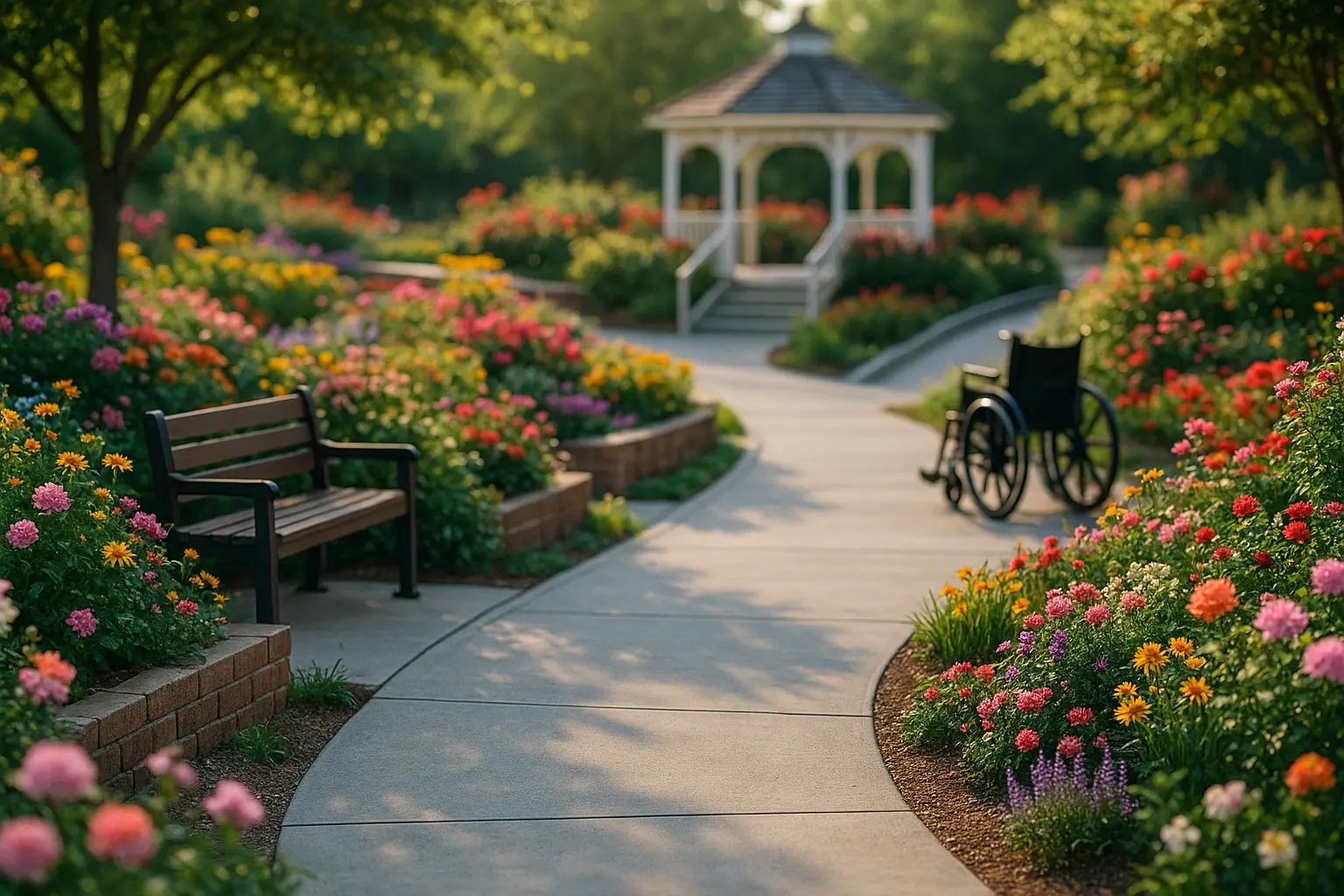
Paths need to be wide enough for a wheelchair or walker to move through comfortably, with a firm, non-slip surface rather than loose gravel or uneven paving that can catch a wheel or a cane tip. Gentle, gradual slopes should replace steps wherever the site allows it, since even a single step can turn an otherwise accessible garden into a dead end.
Seating placed at regular intervals throughout the garden, rather than only at the entrance or a single central spot, encourages longer visits by giving gardeners a place to rest partway through a task. Benches with armrests and back support provide more stability when standing back up than a backless bench, a small detail that determines whether someone uses a bench at all.
Choosing sensory plants and adaptive tools
Sensory plants extend the experience of an accessible garden beyond sight alone. Fragrant herbs such as lavender and rosemary, paired with tactile foliage like lamb’s ear, engage touch and smell for gardeners whose vision may be limited, turning the space into a genuinely multi-sensory environment rather than a purely visual one.
Tools designed for this purpose typically feature elongated handles that reduce the need to bend or kneel, along with lightweight materials that ease strain on weaker grips. Battery-operated pruners and automated watering setups reduce repetitive strain further, turning tasks that would otherwise require sustained hand strength into something manageable in short sessions.
Why the benefits go beyond the plants themselves
Horticultural therapy programs, which use structured plant-based activities to support health outcomes, have documented improvements in mobility, coordination, balance, and social engagement among older adults who participate regularly. Gardens designed with this level of accessibility often double as informal community spaces too, since accessible design tends to invite longer, more social visits rather than quick, functional ones.
This overlaps closely with the therapeutic-garden principles that overlap closely with accessible design, since both approaches prioritize sensory engagement, safe movement, and a calm pace over a purely decorative layout.
FAQ
What’s the ideal raised bed height for a wheelchair user?
Around 24 inches if the gardener stays fully seated beside the bed, or closer to 34 inches if they need to roll their wheelchair under the bed with knee clearance underneath.
How wide should garden paths be for wheelchair access?
Paths should comfortably fit a wheelchair or walker with some margin on either side, and the surface should be firm and non-slip rather than loose gravel, which can be difficult to move through.
What plants work best for a sensory garden aimed at seniors?
Aromatic herbs like lavender and rosemary, along with textured foliage such as lamb’s ear, provide scent and touch cues that add value beyond visual appeal alone.
Are adaptive gardening tools significantly more expensive than standard tools?
Prices vary, but many adaptive tools, particularly those with longer handles or lighter materials, are priced comparably to standard tools of similar quality rather than as specialized medical equipment.
Published: July 29, 2026. Last updated: July 29, 2026.
Sources: American Horticultural Therapy Association guidance, accessible garden design specifications from university extension programs.