Most of the carbon footprint of a landscaping project is not decided by the plants at all. Between 75% and 95% of the greenhouse gas emissions tied to a typical landscape architecture project come from embodied carbon, the emissions locked into extracting, manufacturing and transporting hard materials such as stone, concrete and timber, according to research compiled by the American Society of Landscape Architects (ASLA, 2024). That figure reframes the whole conversation: choosing the right paving stone or the right timber source can matter more for a garden’s environmental impact than any planting decision that follows.
Sustainable and local materials reduce a garden’s embodied carbon mainly by cutting transport distance and by extending the working life of what is already on site. A locally quarried stone or a reclaimed brick travels a fraction of the distance a shipped-in alternative does, and reuse avoids the extraction and processing emissions of a brand-new material altogether.
- Local sourcing cuts the transport share of embodied carbon, often the single largest controllable variable in a hardscaping budget.
- Reclaimed stone can lower a project’s environmental impact by up to 50% compared with newly quarried stone, per lifecycle data from the Natural Stone Institute.
- Permeable paving reduces runoff and supports groundwater recharge, a benefit no amount of decorative planting replaces.
- Native plant palettes cut irrigation demand once the hardscape is in place, closing the loop between material choice and long-term maintenance.
Why transportation distance decides so much of a material’s real cost
A stone slab’s environmental price tag is set well before it reaches a garden. Local materials require fewer transport miles, and transport is a well-documented driver of embodied carbon in landscape construction, ASLA’s Dirt research blog notes. A flagstone quarried two counties over will almost always outperform an imported equivalent on this metric alone, regardless of how the two compare on appearance.
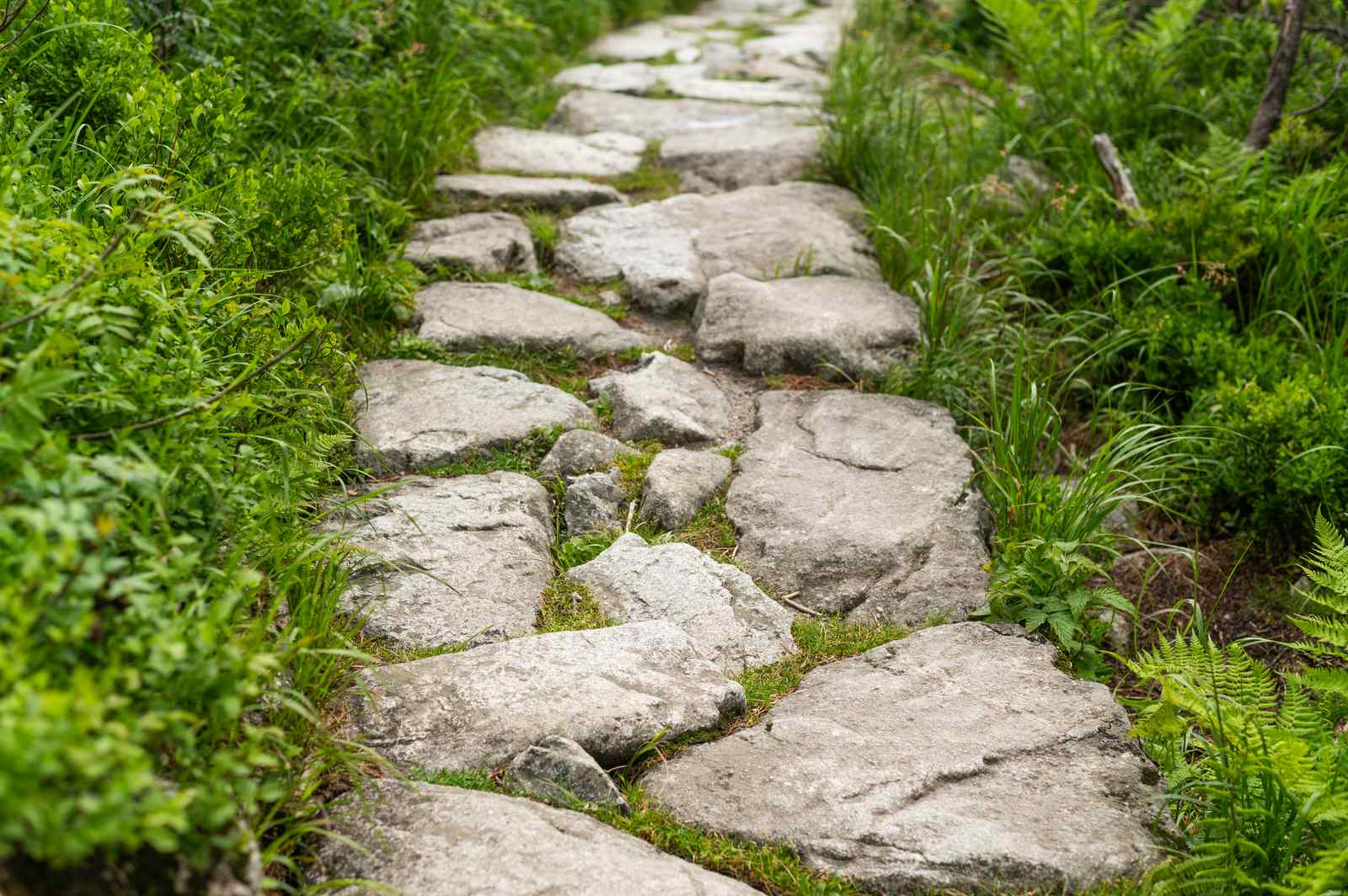
Natural stone also compares favorably to manufactured alternatives once quarrying and manufacturing emissions are counted. Structural engineering analysis from the Institution of Structural Engineers found natural stone can carry roughly 40% lower global warming potential than precast concrete of comparable use, a gap wide enough to influence material selection on its own. That said, the comparison depends heavily on the specific quarry, finishing process and transport route involved, so it should guide a decision rather than settle it outright.
Reclaimed and salvaged materials as a first option, not a fallback
Reclaimed stone, brick and timber pulled from demolished structures avoid the extraction phase entirely, which is where a large share of a material’s lifetime emissions originate. Salvage yards, architectural reclamation dealers and even demolition sites slated for redevelopment are realistic sources, not a niche curiosity reserved for restoration purists.
Reclaimed brick paths, weathered timber edging and repurposed granite curbing carry a patina that new material cannot fake, which is part of why designers reach for them regardless of the sustainability argument. Salvaged materials also tend to be more forgiving structurally, since older stone and timber were often over-built by today’s standards.
How permeable surfaces change what happens to rainwater
A permeable paving surface lets rainwater infiltrate through the joints rather than sheet off toward a storm drain. That single design choice reduces runoff volume, limits erosion at the base of slopes, and recharges the groundwater table beneath the garden instead of sending it downstream.
Gravel, permeable pavers and resin-bound surfaces all achieve this to varying degrees, and the right choice depends on foot traffic, slope and the soil beneath. A garden that pairs permeable hardscape with a rainwater harvesting system built into the garden design closes the water loop almost entirely, since the paving stops sending water away while the collection system stores what does run off.
Matching plant choices to the materials already on site
Material sustainability does not stop at the hardscape. Native plants adapted to the local climate and soil type need less irrigation once established, and they tend to root well in whatever native subsoil the stone and paving work left exposed. This pairing matters because a beautifully sourced patio surrounded by thirsty, non-adapted plants only shifts the environmental cost from materials to water use.
A garden built around native plant palettes that reduce maintenance and water use also tends to need fewer chemical inputs over time, since regionally adapted species face fewer of the pest and disease pressures that hit non-native ornamentals in unfamiliar conditions.
Comparing common hardscape materials on sustainability criteria
| Material | Typical transport footprint | Permeability | Longevity |
|---|---|---|---|
| Locally quarried stone | Low, if sourced within region | Low unless laid with open joints | Decades to over a century |
| Reclaimed brick | Very low, no new extraction | Moderate with sand-set joints | Already proven, decades more |
| Permeable pavers | Varies by manufacturer | High by design | 20 to 30 years typical |
| Precast concrete slabs | Moderate to high | Low | 20 to 40 years |
Designing gardens that work with the local ecosystem rather than against it
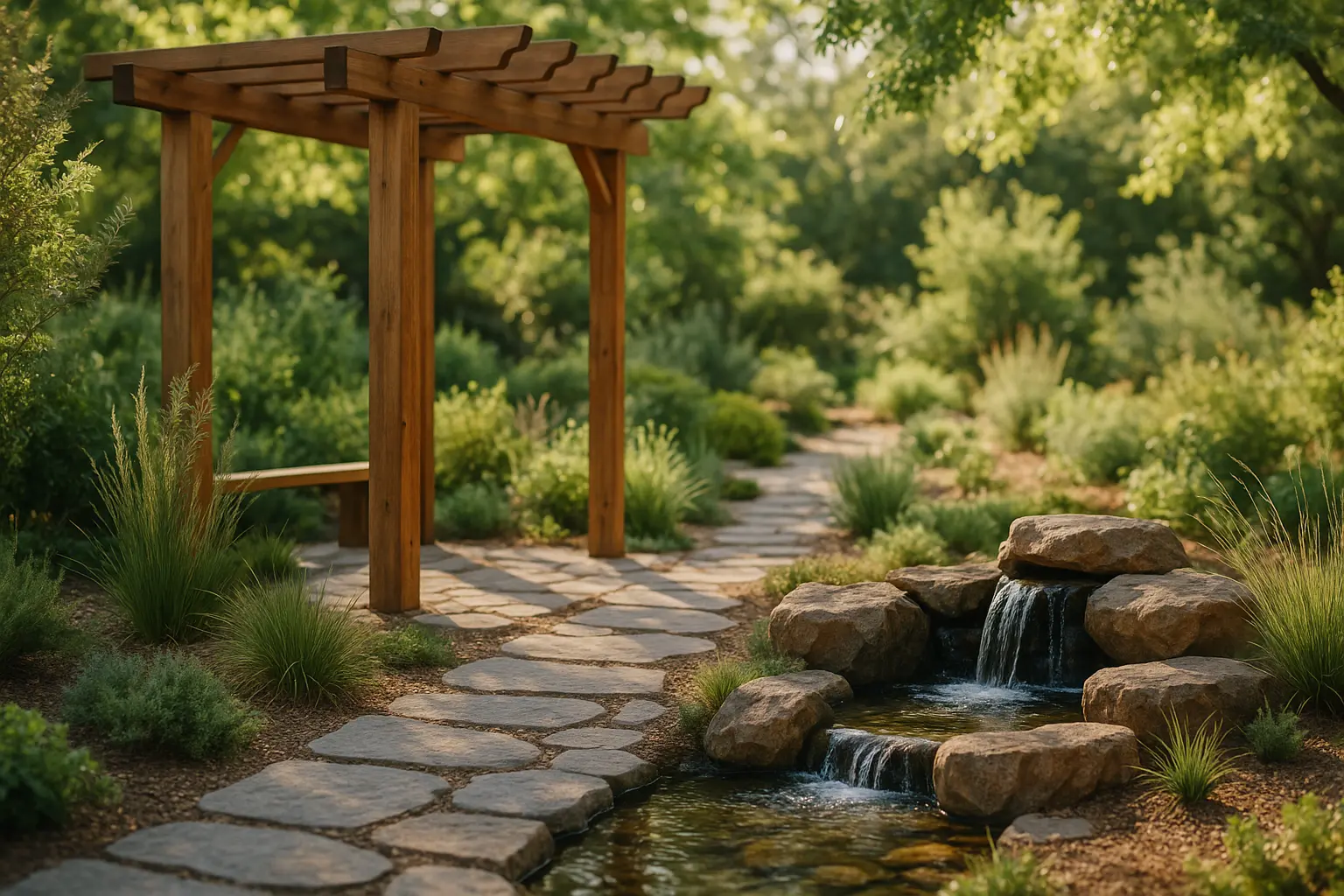
Water features such as small ponds or bioswales built into a sustainably-sourced garden extend the ecological benefit further, offering habitat for pollinators and amphibians while helping manage runoff on site. A garden designed this way behaves more like a functioning micro-ecosystem than a decorative backdrop, and it tends to need less intervention from the gardener year over year.
None of this requires abandoning aesthetics for austerity. Locally-sourced stone, reclaimed timber and permeable surfaces read as warm, textured and place-specific, often more so than uniform imported materials ever do.
FAQ
Are sustainable materials always more expensive than conventional ones?
Not always. Reclaimed materials can cost less than new stone once sourced locally, though availability varies by region and project timeline. New sustainably-quarried stone can carry a premium, but its durability often offsets that cost over decades of use.
How do I find reclaimed stone or brick for a garden project?
Architectural salvage yards, demolition contractors and regional stone suppliers are the most reliable sources. Asking a local landscaper about upcoming demolition projects in the area can also surface material before it reaches a salvage yard.
Does permeable paving work in a garden with heavy clay soil?
It works less efficiently on dense clay, since infiltration slows considerably. A layered sub-base designed for the specific soil type, rather than a standard installation, is usually needed to make permeable paving function as intended on clay.
Is locally sourced stone always more sustainable than imported stone?
Transport distance is one factor among several, alongside extraction method and quarry practices. A responsibly quarried local stone is generally the safer choice, but it is worth asking a supplier directly about sourcing rather than assuming local always wins on every metric.
A garden built from what the region already offers, reused where possible and paired with plants suited to the same soil and climate, ends up costing less in water and maintenance long after the installation crews have left. That is the real argument for sustainable and local materials: not a single dramatic gesture, but a series of smaller decisions that compound over the life of the landscape.
Sources: American Society of Landscape Architects (ASLA), Dirt research blog, 2024; Institution of Structural Engineers, embodied carbon in stone analysis; Natural Stone Institute lifecycle assessment data.