
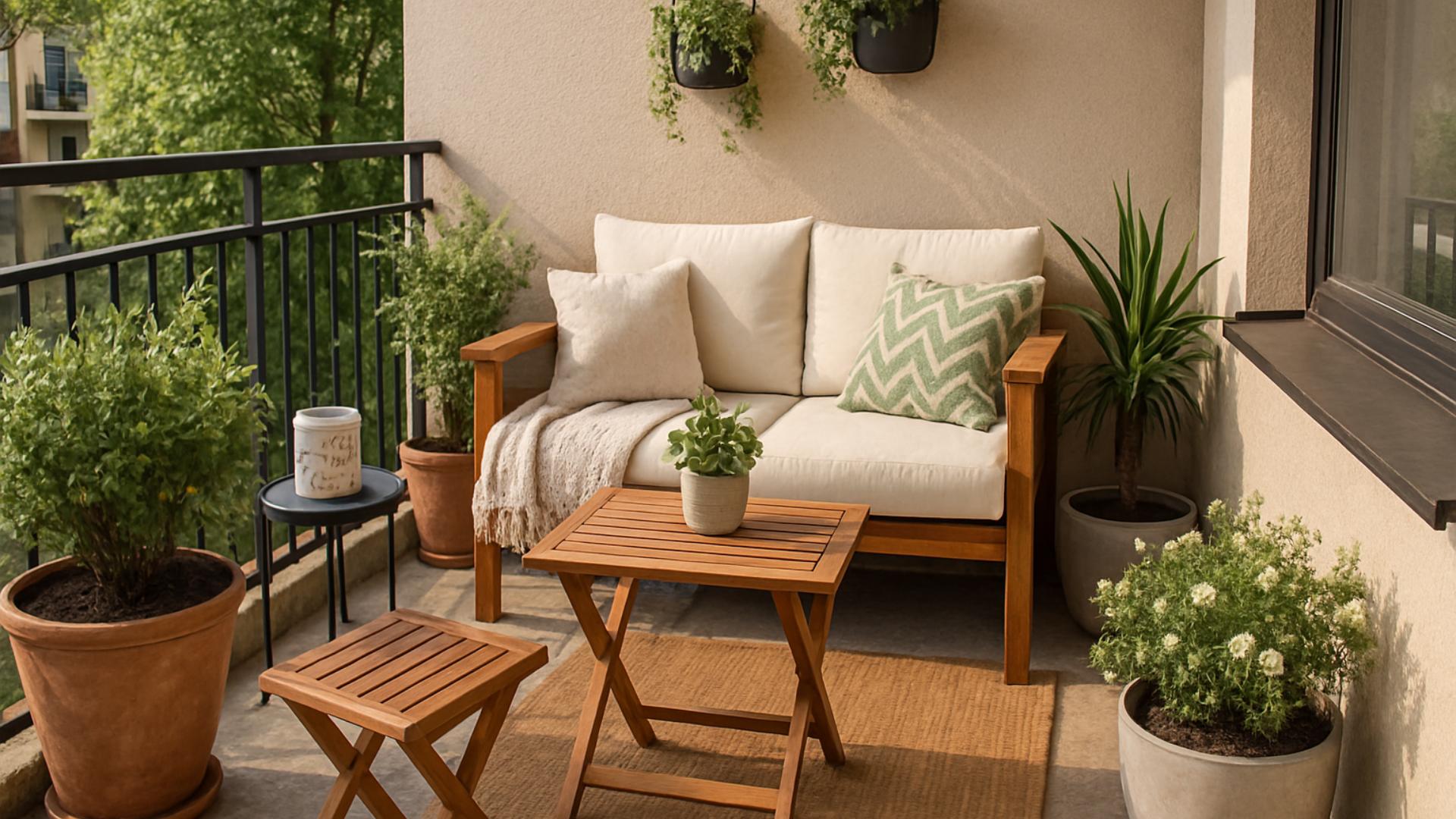
A balcony is not a miniature garden. Treating it like one, by shrinking a full-size layout down to fit, is usually why small outdoor spaces end up cluttered and underused rather than genuinely functional. A patio or balcony works on a different set of rules, where every piece of furniture, every planter and every light fixture has to justify its footprint far more strictly than it would in a larger yard.
A small balcony or patio functions well when furniture is compact and multi-purpose, planting uses vertical space rather than floor space, and lighting is layered rather than relying on a single fixture. Skipping any one of these three usually means the space reads as cramped no matter how carefully the rest is chosen.
- Compact, weather-resistant furniture with built-in storage frees up floor space for movement.
- Vertical gardening, wall planters, trellises, hanging baskets, adds greenery without consuming ground area.
- Layered lighting (ambient, task, accent) does more for evening usability than a single bright fixture.
- Roughly 1 in 8 British households has no garden at all, per Office for National Statistics data, which is part of why container and balcony gardening keeps growing in relevance.
Choosing furniture that earns its footprint
Furniture is the first constraint on a small outdoor space, since oversized pieces make everything else feel like an afterthought. Bistro sets, stackable chairs and benches with built-in storage compartments do the most with the least floor area, and materials matter almost as much as size: rattan, treated wood and powder-coated metal handle weather exposure without demanding constant upkeep.
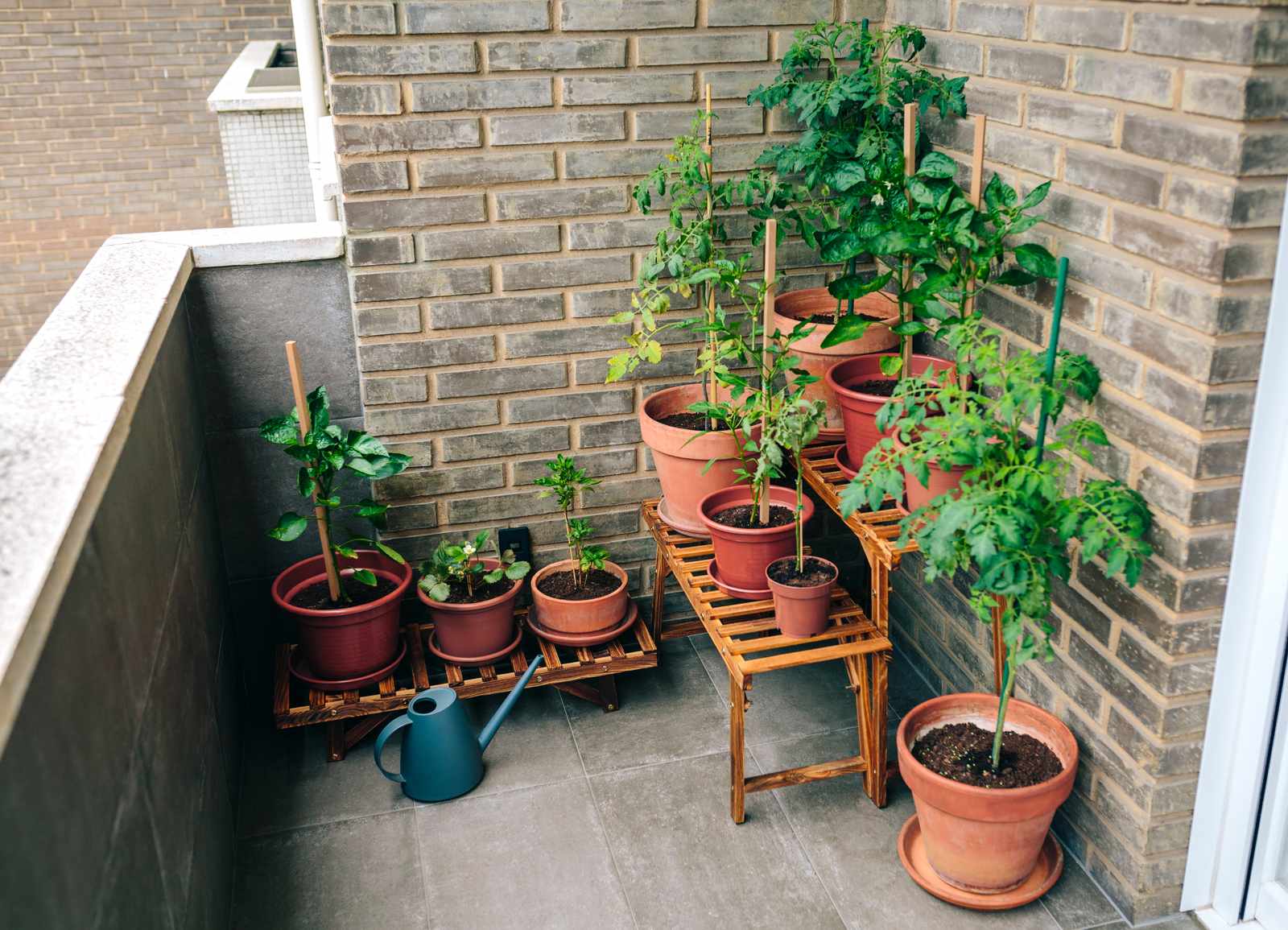
Modular and foldable pieces solve a different problem, letting the same footprint serve a morning coffee routine and an evening dinner for four without needing two separate furniture sets. A retractable or foldable table is the single most space-efficient purchase most small patios can make, since it removes the need to permanently dedicate floor space to a dining function used only part of the day.
Textiles finish the space without taking up any additional room. Cushions, an outdoor rug and a throw or two add warmth and personality cheaply, and because they are easy to swap, they let a small space feel refreshed seasonally without any structural change.
Using vertical space instead of floor space for planting
Ground-level planters are the least space-efficient way to add greenery to a balcony or patio, yet they are usually the default choice. Wall-mounted planters, hanging baskets and simple trellis structures let a gardener add a meaningful amount of green without ever touching the floor plan.
Plant selection should match the space realistically. Herbs like basil and mint reward culinary use in a container that takes up barely any room, hardy succulents thrive with minimal attention, and for those with slightly more vertical space, dwarf fruit trees or a simple trellis of climbing plants adds scale without the footprint of a full-size version. Tall, leafy plants such as bamboo or ornamental grasses can also double as a privacy screen, which matters considerably in a shared apartment building or a patio overlooked by neighbors.
A more thorough treatment of wall-mounted planting systems is covered in vertical green walls that reclaim floor space on a tight balcony, which goes further into structural considerations for mounting a living wall on a rented or weight-limited balcony.
Layering light rather than relying on one fixture
Lighting is what separates a balcony used only during the day from one used comfortably into the evening. Ambient lighting, string lights, lanterns, or thin LED strips tucked beneath a railing, establishes the base layer and gives the whole space a soft, defined glow without any single fixture dominating.
Task lighting handles anything ambient light cannot: a standing lamp or a clip-on light for reading or eating, positioned so it illuminates an activity without flooding the entire space. Accent lighting finishes the layering by highlighting one specific feature, a statement plant, a textured wall, and adds the kind of visual depth that flat, even lighting never achieves. Solar-powered fixtures handle all three roles reasonably well on a balcony that gets decent sun exposure, since they need no wiring and adjust automatically to available daylight.
Small space priorities at a glance
| Priority | Space-efficient solution | Avoid |
|---|---|---|
| Seating | Foldable, stackable, storage benches | Fixed, oversized sofa sets |
| Planting | Wall planters, hanging baskets, trellises | Multiple large ground-level pots |
| Lighting | Layered ambient, task and accent | One overhead fixture |
| Privacy | Tall grasses, bamboo, lattice screens | Solid walls that block airflow and light |
FAQ
How do I make the most of a very small balcony?
Decide on the space’s primary function first, relaxing, mini garden, or dining, then commit to furniture and planting that serve that one function rather than trying to accommodate all three at once.
What storage solutions work best in a limited outdoor space?
Multi-functional furniture, benches or ottomans with storage compartments inside, along with wall-mounted hooks and shelves that keep the floor entirely clear.
Can I add meaningful greenery without any floor space at all?
Yes. Railing planters, hanging baskets and vertical wall systems can hold a genuinely varied planting scheme without a single pot touching the ground.
What is the most practical lighting option for a rented balcony?
Solar-powered string lights or lanterns, since they need no electrical wiring, no permanent fixture installation, and can be removed entirely at the end of a tenancy.
How can I create privacy on a balcony that faces neighbors directly?
Tall plants like bamboo or ornamental grasses in deep containers, combined with a lattice panel or outdoor curtain, block sightlines without fully closing off airflow or light.
None of this requires a large budget or a rebuild. It requires treating a small outdoor space as its own design problem, with its own rules about furniture, planting direction and light, rather than as a scaled-down version of a garden it was never going to be.
Sources: Office for National Statistics (UK), garden access data, 2020; RHS State of Gardening Report, 2025.