
The USDA updated its Plant Hardiness Zone Map in 2023, and the new version runs about 2.5 degrees Fahrenheit warmer on average than the 2012 edition it replaced, based on 1991-2020 weather data drawn from over 13,400 stations. Roughly half the country shifted into a warmer half-zone. That single update means a four-season planting plan drawn up a decade ago may no longer match the bloom windows and frost dates a garden actually experiences today, which makes this a good moment to revisit what continuous seasonal interest actually requires.
A garden holds visual interest across all four seasons when each one is planned around a different design tool: color and bulbs in spring, structural abundance in summer, foliage and late bloomers in fall, and evergreen structure with bark or stem color in winter. No single plant category carries the whole year; the shift between tools is what keeps the garden from going flat for months at a stretch.
- Spring relies on bulbs and early perennials layered by bloom time and height.
- Summer leans on perennial borders and pollinator-friendly flowering shrubs at peak abundance.
- Fall shifts the emphasis to foliage color and late-blooming perennials like asters and sedums.
- Winter depends almost entirely on evergreens, bark texture and garden structure rather than flowers.
Spring: building the first wave of color after winter
Spring planting is fundamentally about staggered bloom timing rather than volume. Bulbs planted the previous fall, tulips, daffodils, hyacinths, provide the earliest color and require no special skill beyond correct planting depth and timing. Layering these with early perennials and flowering shrubs like lilacs and azaleas extends the display well past the point where the bulbs themselves fade.
Microclimates within a single garden matter more in spring than in any other season. A south-facing wall warms up weeks before a shaded north corner, which means the same garden can support both very early bloomers near the warm wall and later woodland species in the cooler shade, staggering the display naturally rather than through deliberate scheduling.
Summer: sustaining abundance through peak heat
Summer is when a well-planned garden shows the payoff of earlier decisions, since perennial borders reach their fullest volume during these months. Echinacea, rudbeckia and daylilies anchor most temperate perennial borders, while ornamental grasses add movement that static flowering plants cannot provide on their own.
Flowering shrubs like hydrangeas and butterfly bushes do double duty, offering both structure and continuous bloom while drawing in pollinators. Selecting drought-tolerant species for the hottest, sunniest positions reduces the maintenance burden considerably, since a summer garden that depends on constant irrigation becomes a liability the moment water restrictions or a dry spell hit.
Fall: using foliage color as the main event
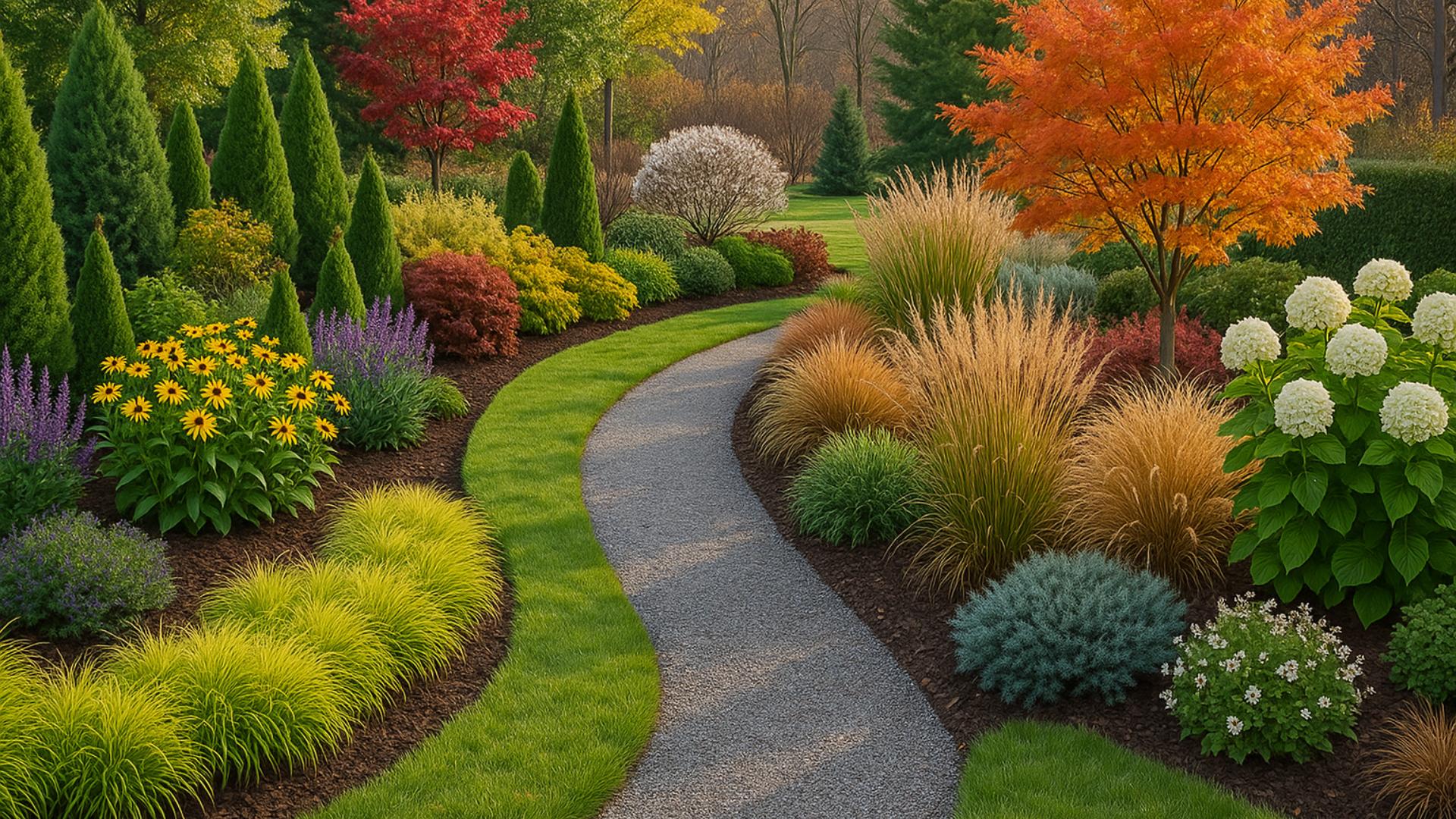
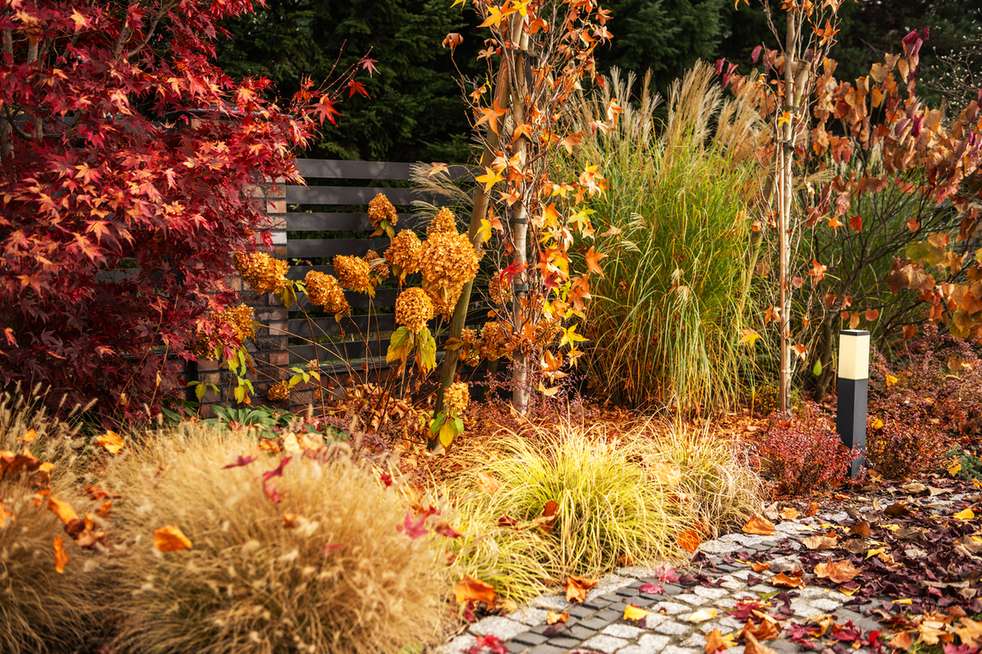
Fall interest depends more on foliage than on flowers, since most bloom cycles are winding down by this point. Maples and oaks that turn fiery orange, red and gold do most of the visual work, supported by ornamental grasses like miscanthus that catch the autumn light and rustle audibly in the breeze, adding a sensory layer beyond sight alone.
Late bloomers such as chrysanthemums, asters and sedums provide a final, deliberate splash of flower color before the first frost closes out the growing season. This is also the practical window for introducing hardscaping changes, stone paths, benches, without disturbing an actively growing border.
Winter: relying on structure rather than bloom
Winter interest is the hardest of the four to plan for precisely because so little is actively growing. Evergreens carry most of the load here, with conifers like spruce, pine and holly providing a reliable block of green against an otherwise muted landscape, their sculptural forms doing what flowers did earlier in the year.
Plants selected for bark texture and stem color extend winter interest further. Birch trees with peeling white bark and red-twig dogwoods add a visual element that has nothing to do with flowering, while ornamental grasses left uncut over winter retain their form and offer a soft, pale contrast against snow or bare soil. Garden structures, arbors, trellises, sculptural focal points, matter more in winter than in any other season, since they remain constant while the plants around them go dormant. Introducing a permanent sculptural piece or art installation gives a garden something to anchor around when almost nothing else is holding attention, and adding sculptural focal points that hold interest when borders go dormant is worth considering specifically for the months when planting alone cannot carry the design.
Seasonal planning at a glance
| Season | Primary interest source | Key plant examples |
|---|---|---|
| Spring | Bulb and early perennial color | Tulips, daffodils, lilacs, azaleas |
| Summer | Perennial and shrub abundance | Echinacea, daylilies, hydrangeas |
| Fall | Foliage color, late bloomers | Maples, asters, sedums, miscanthus |
| Winter | Structure, bark, evergreen form | Holly, birch, red-twig dogwood |
Keeping lawn care aligned with a garden that changes all year
A lawn’s growth rate swings dramatically across the four seasons, fast in spring and early summer, nearly dormant in winter, which makes a rigid mowing schedule poorly suited to year-round garden care. Equipment that adjusts automatically to this rhythm removes some of that guesswork, and solar-powered mowers suited to a lawn’s changing growth rate across the seasons illustrate how automation and seasonal garden planning increasingly overlap, even though the mower itself has nothing to do with the borders above.
FAQ
What should I prioritize first when planning a four-season garden?
Start with winter structure, since it is the hardest season to retrofit later. Evergreens and hardscaping placed early give every other season something permanent to build around.
How do I keep color going through winter specifically?
Rely on evergreen shrubs like holly and boxwood for constant green, and add plants with colorful bark, such as red-twig dogwood, or winter-blooming shrubs like witch hazel for occasional color.
Which plants add the most texture across multiple seasons?
Ornamental grasses do the most work here, offering movement in summer and fall and retaining their form through winter, while plants like lamb’s ear provide a soft tactile contrast during the growing months.
How should I plan the transitions between seasons?
Stagger bloom times deliberately: spring bulbs giving way to summer perennials, followed by fall’s late bloomers and deciduous trees with strong autumn color, so no single transition leaves the garden visually empty.
Do hardscape elements really matter for seasonal interest?
Yes, and increasingly so in winter, when pathways, benches and water features provide visual structure at the exact time plants are contributing the least.
A four-season garden is less a fixed design than an ongoing handoff between different plant categories, each one carrying the visual interest for a few months before passing it to the next. Planned this way, no single season becomes the one a garden simply has to survive until spring returns.
Sources: USDA Plant Hardiness Zone Map, 2023 update; Brooklyn Botanic Garden and Gardening Know How reporting on the 2023 revision.