
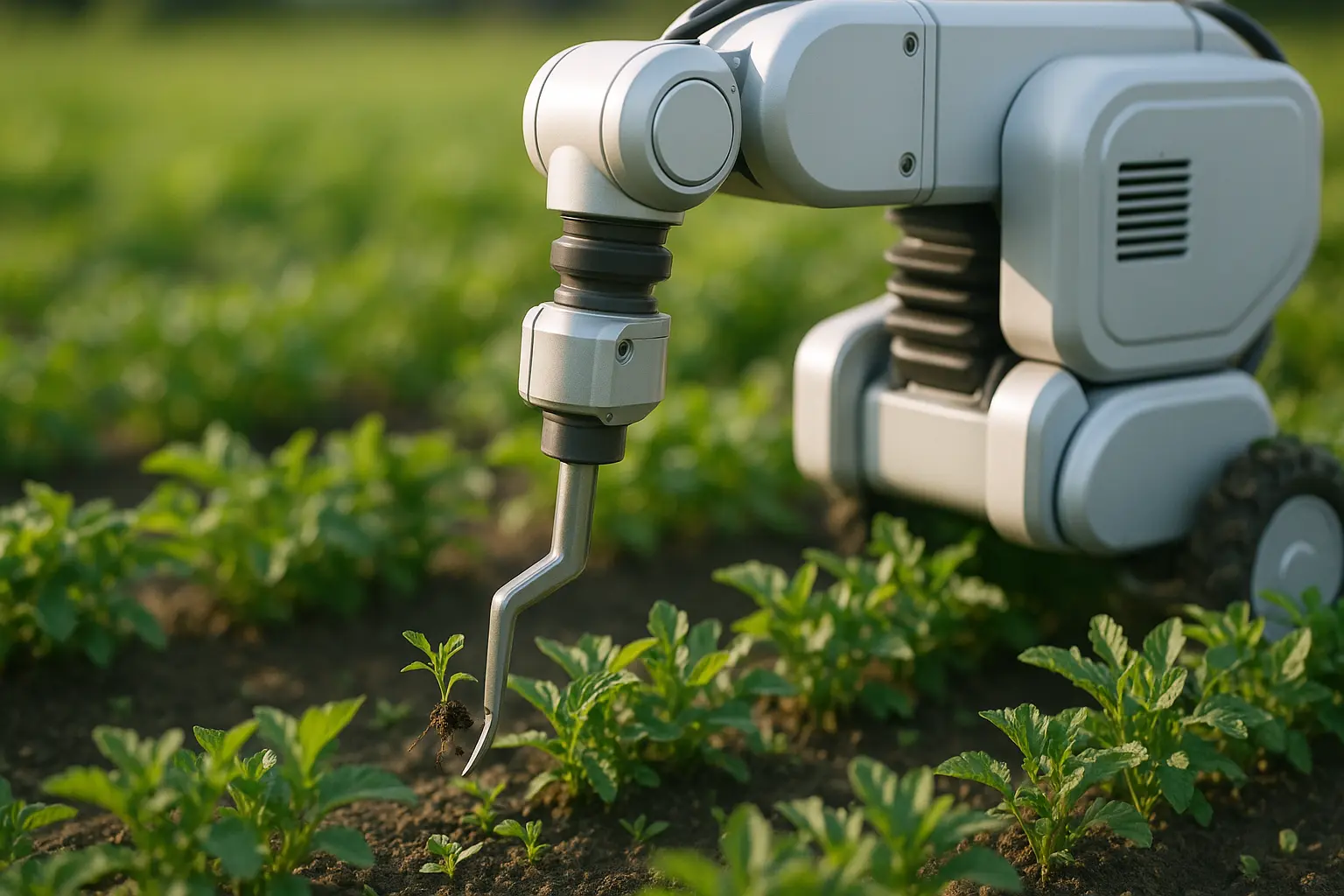
Chemical herbicides get blamed for a long list of agriculture’s environmental problems, and much of that criticism is fair. But swapping them for robots is not automatically the clean win it is often presented as. Robotic weeding tools genuinely reduce chemical use in most deployments, yet they come with their own costs, energy, manufacturing, upfront investment, that deserve the same scrutiny applied to the herbicides they replace.
Robotic weeding tools use cameras, sensors, and machine learning algorithms to identify individual weeds within a field or garden bed, then remove them mechanically or apply a precise, minimal dose of herbicide directly to the target plant. This selective approach stands in contrast to broadcast spraying, which treats an entire field uniformly regardless of where weeds actually are.
In brief:
- Selective spraying guided by weed-recognition cameras can cut herbicide volume dramatically, with some published trials reporting reductions as high as 20 times compared with broadcast spraying.
- Mechanical removal (no chemicals at all) is available on some models, typically at the cost of slower field coverage than spray-based systems.
- Upfront investment remains the primary barrier for small and mid-sized operations, alongside a genuine training and integration learning curve.
- These tools complement rather than replace agronomic practices like crop rotation and mulching that reduce weed pressure in the first place.
How the identification and removal sequence actually works
A robotic weeder’s process breaks into two distinct steps: detection, using trained image-recognition models to classify each plant it sees, and action, either a mechanical tool that physically removes the identified weed or a nozzle that applies herbicide only to that specific plant. The mechanical route eliminates chemical use entirely but generally moves slower across a field than a camera-guided sprayer, since precise physical removal takes more time per plant than a targeted spray burst.
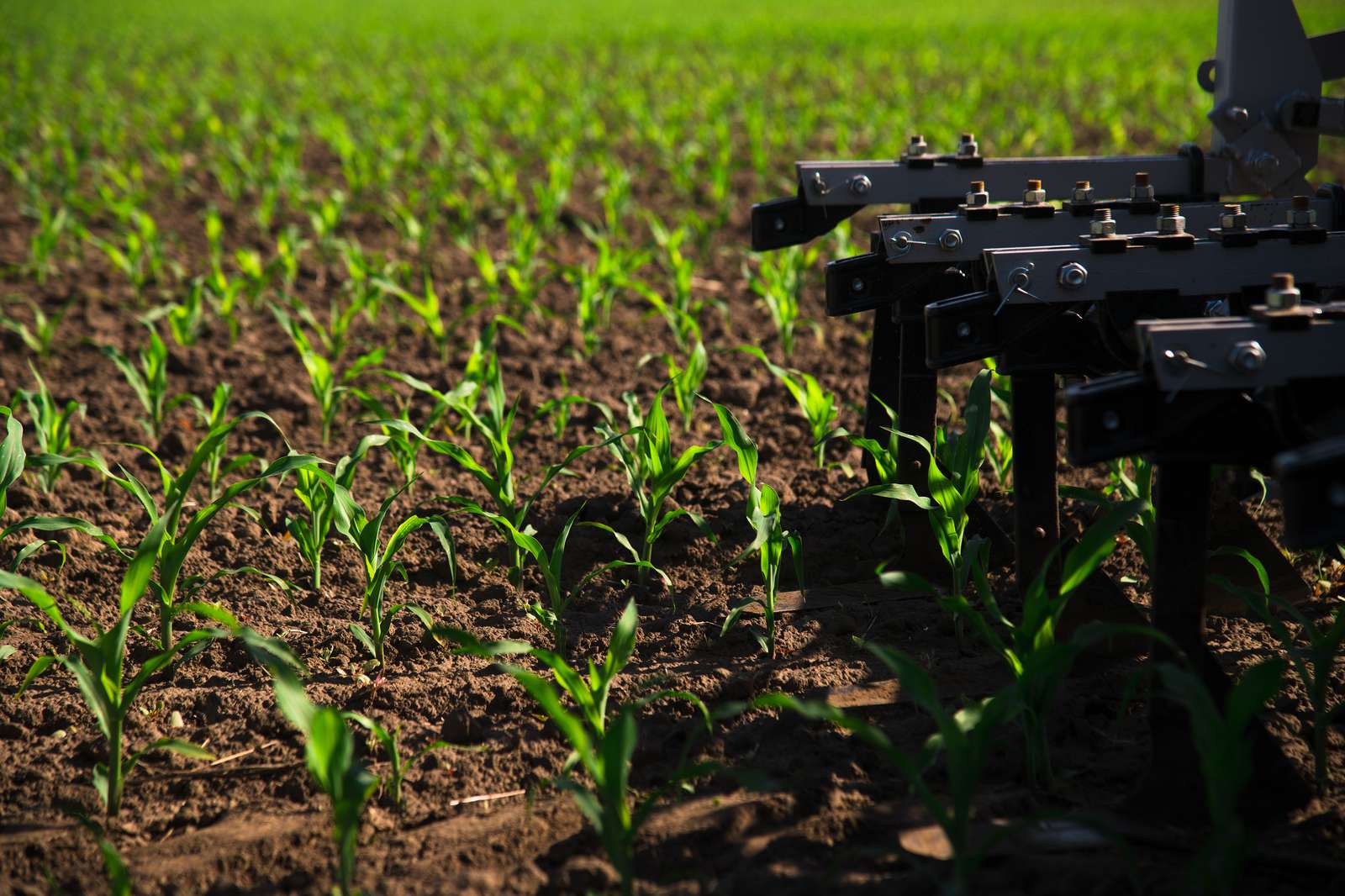
Both approaches depend entirely on detection accuracy. A system that misclassifies a young crop seedling as a weed causes real damage, which is why manufacturers continue refining training datasets specific to each crop type rather than selling a single universal detection model.
What the herbicide reduction numbers actually mean
Published research on autonomous mobile weeders equipped with detection and selective spraying reports herbicide volume reductions of up to 20 times compared with conventional broadcast systems, and other field trials report reductions in the 40% to 95% range depending on weed density and crop type. These are substantial figures, but they come from specific trial conditions, and a field with unusually heavy weed pressure will see a smaller percentage reduction than a lightly infested one, simply because there is proportionally less to save.

The costs that rarely make it into the marketing
The upfront investment for a robotic weeding unit remains substantial, often putting the technology out of reach for smaller farms and landscaping operations without financing support. Beyond purchase price, operations need staff trained to maintain and troubleshoot the equipment, and fields sometimes need modification, clearer rows, compatible spacing, to accommodate the machinery reliably.
There is also an environmental cost worth naming honestly: manufacturing, battery production, and eventual disposal of these machines carry their own footprint. Reduced herbicide use is a genuine environmental benefit, but it is not the only variable in a full lifecycle comparison against chemical weed control.
Where robotic weeding fits alongside, not instead of, good agronomy
Robotic weeding works best as one tool within a broader weed-management strategy that still includes crop rotation, cover cropping, and mulching, practices that reduce weed pressure before a robot or a sprayer ever needs to act. Treating automation as a total substitute for these fundamentals tends to disappoint; treating it as a precision layer on top of them tends to deliver the results reported in field trials, and it keeps the total cost of weed management, machine plus agronomy, lower than either approach used alone.
FAQ
Can robotic weeders fully replace herbicides on a commercial farm?
Mechanical models can eliminate herbicide use entirely on the fields they cover, though most commercial operations today use a mix of selective spraying and mechanical removal rather than a single method exclusively.
How do these robots tell a young crop plant apart from a weed?
Trained image-recognition models compare leaf shape, color, and growth pattern against a dataset specific to the crop being grown, which is why accuracy depends heavily on how well that dataset matches the actual field conditions.
Are robotic weeders practical for a home or community garden scale?
Most commercially available units today are built for row-crop agriculture rather than small garden beds, though smaller consumer-oriented mechanical weeders exist for limited residential use.
What is the biggest barrier preventing wider adoption of robotic weeding?
Upfront cost, consistently cited across industry sources as the main obstacle, ahead of technical complexity, which training programs can address more easily than the capital investment itself.
The case for robotic weeding is real, but it is a case for precision, not for a total replacement of sound agronomic practice. Readers wanting the technical detail behind how these machines actually see a weed can look at the vision systems that teach these robots to see weeds, and gardeners looking to reduce weed pressure before any machine gets involved may find choosing native plants that need less weeding in the first place a useful complementary approach.
Sources: ScienceDirect, autonomous mobile robotic weeders research; Frontiers in Plant Science, weed detection and precision spraying studies; NC State Extension, “AI-enabled Robotic Weeders in Precision Agriculture.”
Last updated: July 29, 2026.