
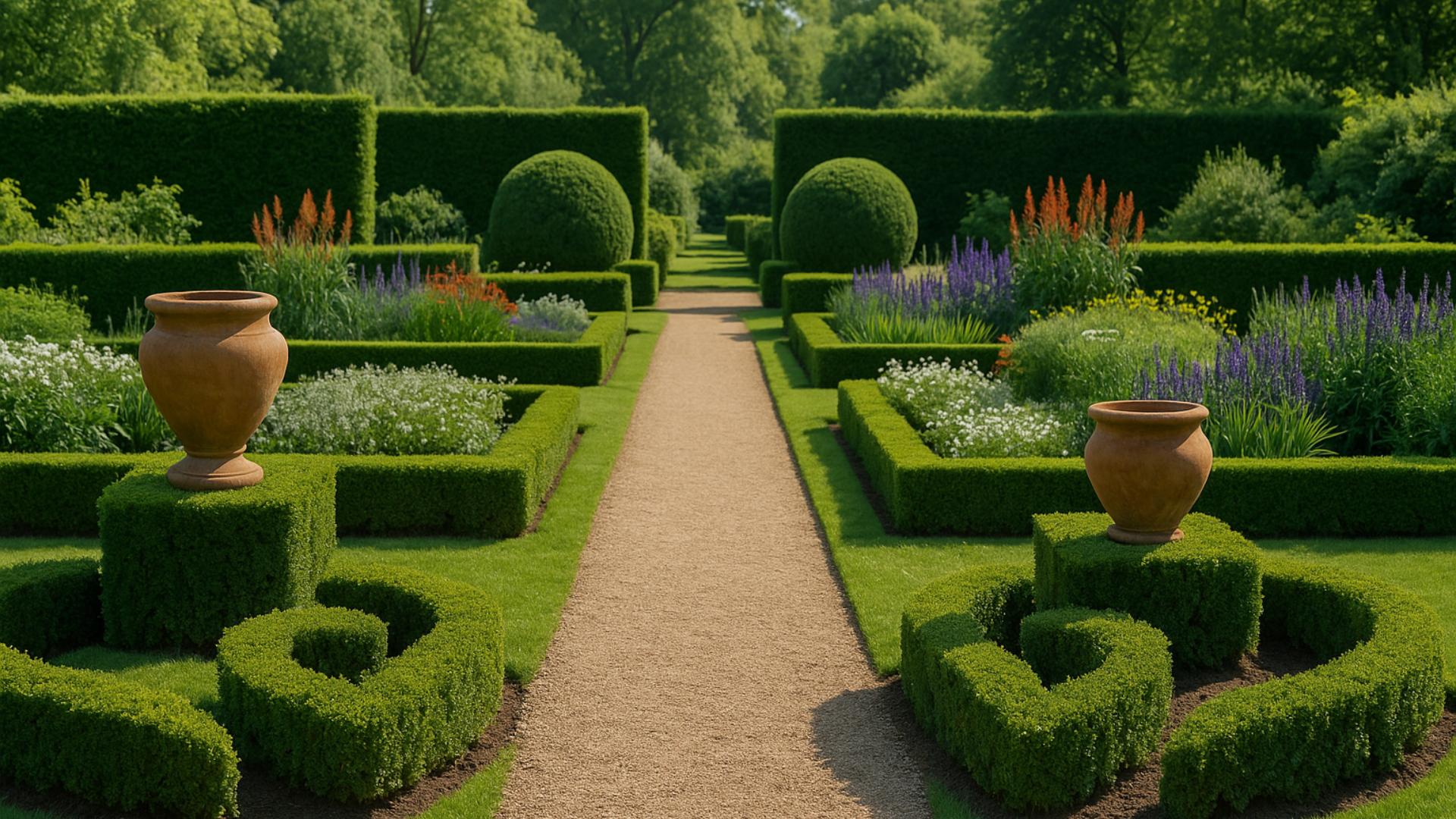
Ask most visitors why a garden feels right and they will point to the flowers. Ask a landscape designer the same question and the answer usually has nothing to do with any single plant. It has to do with three principles that operate underneath the planting choices: harmony, balance and perspective. A garden built on these three tends to feel settled and complete even before a single bloom opens, and one built without them can look scattered no matter how expensive the plant list.
Harmony ties a garden’s elements into one visual story, balance distributes visual weight so no single feature dominates the space, and perspective gives the garden depth by controlling how it reveals itself as a visitor moves through it. Each principle solves a different design problem, and most successful gardens lean on all three at once rather than picking a favorite.
- Harmony comes from consistent plant selection, repeated materials and a single organizing theme.
- Balance can be symmetrical, formal and orderly, or asymmetrical, dynamic and more naturalistic.
- Perspective uses varying plant heights, curved lines and overlapping layers to create a sense of depth.
- Getting any one principle wrong tends to undercut the other two, even if they were executed well.
Harmony: what makes a garden feel like one coherent space
Harmony is the principle that keeps a garden from reading as a collection of unrelated features. It comes from repetition and restraint rather than variety: the same handful of colors, materials and plant forms showing up in different combinations throughout the space, rather than every bed introducing something new.
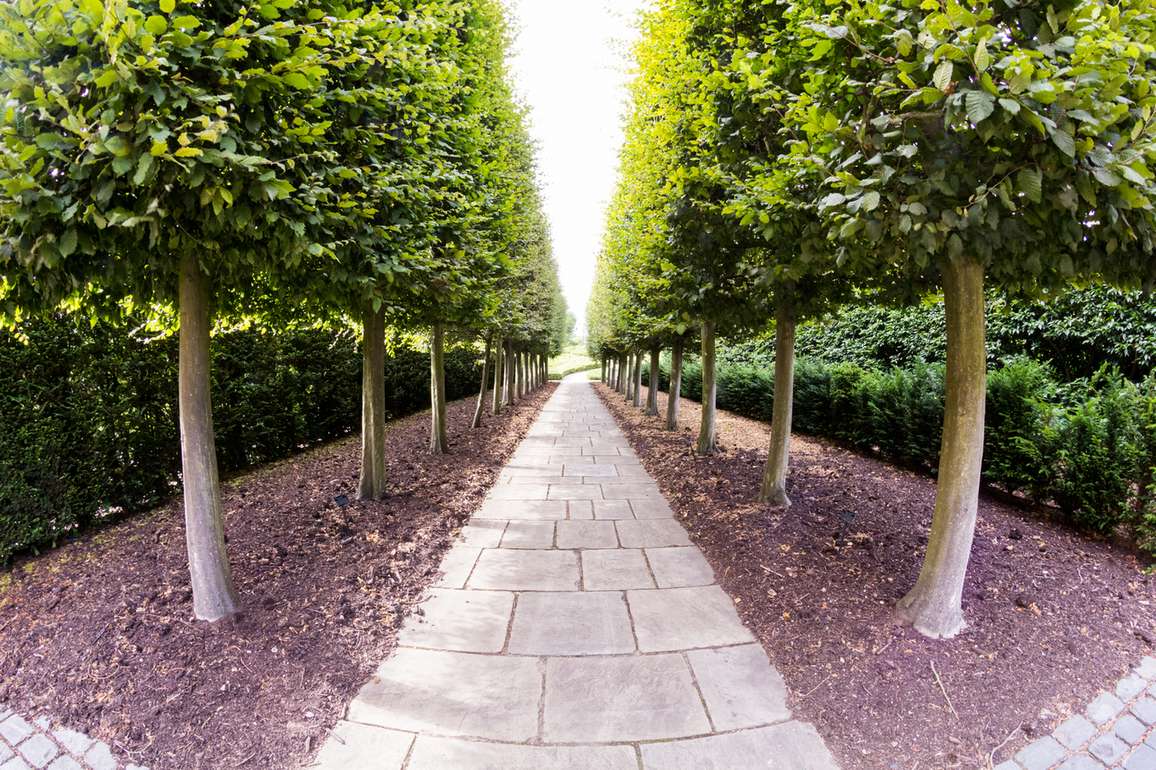
A garden built around a clear theme, whether that is a Mediterranean palette of silver foliage and terracotta, a Japanese-inspired restraint of green and stone, or a modern minimalist grid, achieves harmony almost automatically because every decision gets filtered through the same lens. Pathways, water features and sculptural elements should echo that same visual language rather than introduce competing styles.
The plants themselves need to share growing conditions as much as they share an aesthetic. A harmonious planting scheme fails quickly if half the bed wants full sun and dry soil while the other half needs shade and consistent moisture, since the maintenance mismatch eventually shows up as visual disorder too.
Balance: distributing visual weight across the space
Balance answers a different question than harmony: not whether the elements belong together, but whether they are arranged so no single feature overwhelms the rest. A garden can be harmonious in its palette and still feel lopsided if all the tall plants sit on one side and all the low ones on the other.
Symmetrical balance mirrors elements around a central axis and reads as formal and intentional, which is why it shows up so often in traditional and classical garden styles. Asymmetrical balance distributes different forms and features so that they carry equal visual weight without mirroring each other directly, producing a more relaxed, naturalistic feel.
Plant massing does most of the practical work here. Grouping plants of similar height and texture into blocks, rather than scattering single specimens, creates visual weight that is easy to balance against a focal point elsewhere in the garden, such as a sculpture, a mature tree or a water feature.
Perspective: designing how a garden reveals itself over time
Perspective is the principle most often skipped in smaller gardens, largely because it requires thinking about the space as something experienced over time rather than viewed all at once from a single window. A garden with real perspective unfolds in stages as a visitor walks through it, each turn in the path revealing something the previous vantage point hid.
Varying plant heights creates the vertical layering that perspective depends on: low groundcover at the front, mid-height shrubs behind, taller trees or structures at the back. Curved paths and borders extend this further by controlling sightlines, hiding what comes next until the visitor is close enough to see it.
Overlapping plantings, where one layer partially obscures the one behind it, add the same kind of visual depth a painter achieves with layered brushstrokes. This technique works particularly well in narrow gardens, where it can make a shallow space read as considerably deeper than its actual dimensions.
How the three principles interact across different garden styles
| Principle | Formal garden application | Naturalistic garden application |
|---|---|---|
| Harmony | Repeated clipped hedging, matched materials | Consistent regional plant palette |
| Balance | Symmetrical, mirrored beds | Asymmetrical plant massing |
| Perspective | Straight sightlines to a focal point | Curved paths, layered plantings |
These principles are not tied to a single aesthetic. A closer look at how these principles play out across minimalist and maximalist styles shows that harmony, balance and perspective apply just as much to a pared-back modern courtyard as to a densely planted cottage border. What changes between styles is the technique used to satisfy each principle, not whether the principle applies at all.
Common mistakes that undo an otherwise good design
Overcrowding one side of a garden with plants or features is the most frequent balance error, and it usually happens gradually as new plants get added without reconsidering the overall composition. Ignoring the mature size of a plant is a related mistake: a shrub bought small and placed for immediate balance can outgrow its spot within a few seasons and throw the whole arrangement off.
Stepping back to view the garden as a whole, rather than bed by bed, catches most of these issues before they become expensive to fix. This is worth doing seasonally, since plant growth shifts the balance of a garden even when nothing has been physically moved.
FAQ
What does harmony mean in garden design, and why does it matter?
Harmony refers to the coherent, unified feel created when a garden’s plants, materials and features share a consistent visual language. It matters because it is what makes a space feel intentional rather than assembled piece by piece.
How can I tell if my garden layout is actually balanced?
Stand at the main viewing point, usually a patio door or entry path, and check whether one side visually pulls more attention than the other through height, color intensity or density. If it does, the design likely needs either symmetrical mirroring or a counterweight feature on the lighter side.
Can perspective techniques work in a very small garden?
Yes, and they are arguably more valuable there. Layered planting heights and a curved path, even a short one, can make a small garden feel considerably larger than its actual footprint.
Do these three principles apply to container gardens as well?
The same logic scales down. A grouped container arrangement can achieve harmony through a shared color palette, balance through varied pot heights, and even a hint of perspective by placing taller containers further back.
None of the three principles works as a checklist item to complete once and forget. A garden matures, plants shift in size and light patterns change as trees grow, which means harmony, balance and perspective are something a garden keeps needing rather than something it achieves once and holds onto forever.