
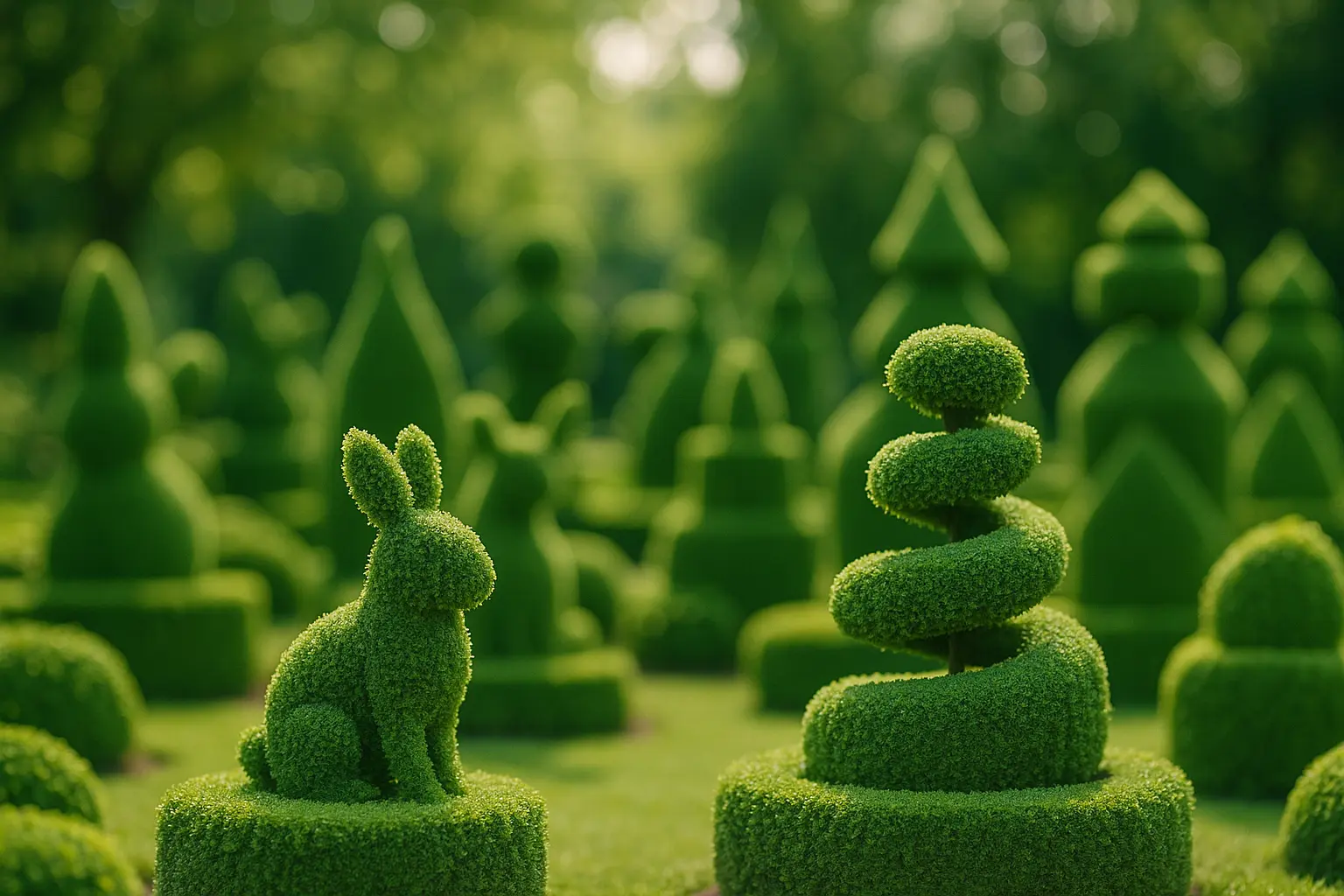
In a letter written nearly two thousand years ago, the Roman writer Pliny the Younger described the cypress hedges of his Tuscan villa clipped into animal shapes, letters, and obelisks. He credited a contemporary named Gaius Matius Calvinus with introducing the technique to Julius Caesar, who then helped popularize it across the empire. Topiary is, in other words, one of the oldest surviving garden traditions still practiced today, and it survived a nine-century gap after the fall of Rome before reappearing in European gardens.
Topiary is the practice of clipping woody plants, most often boxwood or yew, into deliberate geometric or figurative shapes, a technique that demands the right plant species, sharp tools, and patient, repeated pruning rather than a single dramatic cut. It rewards long-term commitment more than any other garden art form.
From Roman Villas to Levens Hall: A Long, Interrupted History
Topiary’s earliest documented practice comes from Roman aristocratic gardens, where cypress and other evergreens were shaped into animals, inscriptions, and abstract forms as a display of wealth and taste. That practice largely disappeared with the collapse of the Roman Empire and stayed dormant for roughly nine centuries before European gardeners revived it.
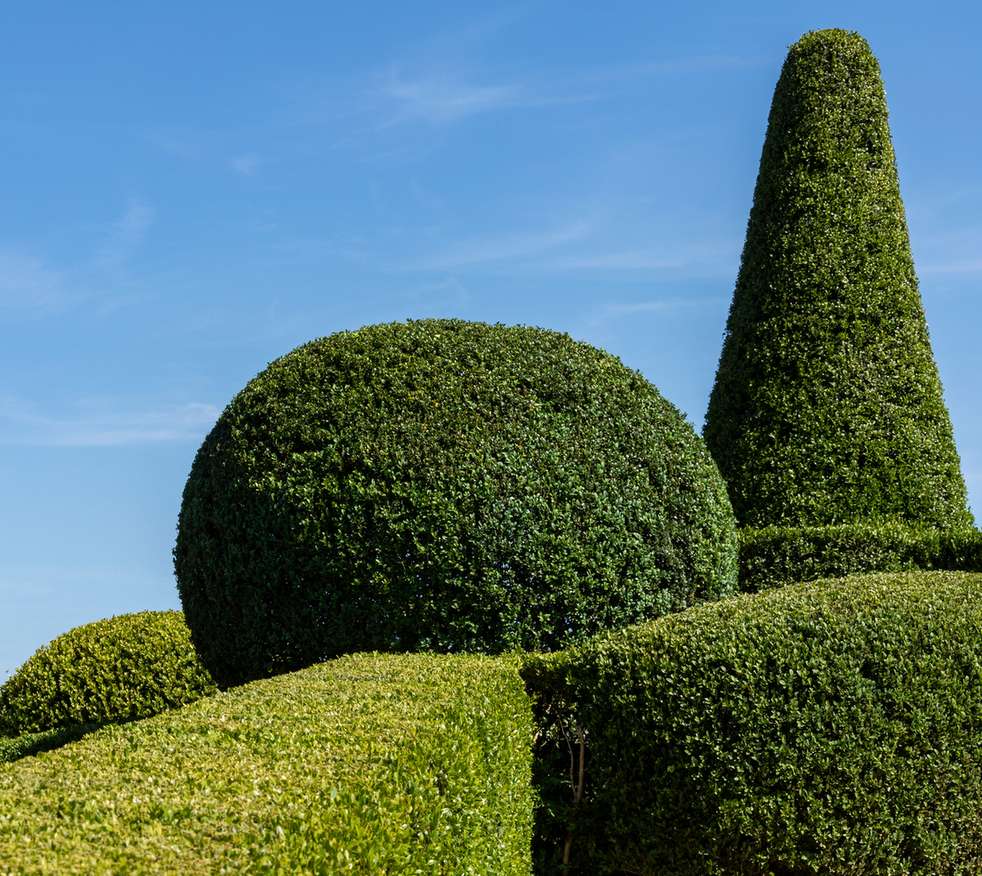
The style reached what historians consider its English golden age around 1702, and the clearest surviving evidence of that period still exists today. Levens Hall in Cumbria, England, laid out between 1689 and 1712 by a garden designer named Beaumont, remains the world’s oldest topiary garden still following its original design, a genuinely remarkable survival given how many historic gardens were replanted or redesigned entirely over the following three centuries. Elaborate topiary gardens across English and French noble estates became a direct signal of status and sophistication during this period, a role the art form has never fully shed even in far more modest home gardens today.
Choosing the Right Plant for a Topiary Project
Not every shrub tolerates the repeated, precise cutting topiary demands. Boxwood, yew, and holly remain the standard choices for good reason: all three have small leaves, dense branching, and a slow enough growth rate to hold a defined shape between prunings rather than blurring back into a shapeless mass within weeks. Privet and certain conifers also work well, particularly for larger, simpler geometric forms where extreme precision matters less.
The plant choice should follow the intended design, not the other way around. A simple sphere or cone tolerates a wider range of species than an intricate spiral or animal figure, which really only succeeds with a plant dense enough to hide the underlying structure completely. Climate matters too: a species that thrives in one region’s soil and rainfall pattern may struggle badly in another, so checking local growing conditions before committing to a specific evergreen is worth the extra research.
The Techniques and Tools Behind a Clean Shape
A successful topiary starts with a clear plan rather than improvised cutting. For anything beyond a basic sphere, a wire or metal frame placed around or over the young plant provides a physical guide, letting the gardener trim to a consistent boundary rather than eyeballing symmetry by hand. As the plant fills out and matures, the frame can often be removed, leaving a shape the plant now holds on its own through habit and dense branching.
Sharp tools matter more than most beginners expect. Dull shears bruise stems rather than cutting cleanly, which slows healing and leaves ragged, brown-tinged edges that undercut the whole point of a crisp geometric form. Hand shears, precision pruners, and occasionally a lightweight electric trimmer for larger surfaces make up the core toolkit, and regular sharpening is as important as the initial purchase.
- Trim during the active growing season, typically every few weeks, to keep dense forms crisp rather than shaggy.
- Start with simple geometric shapes, spheres and cones especially, before attempting animal figures or spirals.
- Use a frame for any design more complex than a basic rounded form.
- Keep tools sharp and clean between cuts to avoid spreading disease between plants.
Topiary’s Place in Contemporary Garden Design
Modern gardens use topiary quite differently from the sprawling estates of Versailles or Levens Hall, but the underlying appeal has not changed. A well-placed topiary works as a focal point against looser, more naturalistic planting, providing exactly the kind of visual contrast that keeps a garden from reading as either too rigid or too chaotic. In compact urban gardens, a single well-shaped specimen in a large container can anchor an entire small space without demanding the acreage a formal French parterre would need.
Choosing native or regionally adapted species for topiary also lets this ancient technique sit comfortably alongside more sustainability-minded garden practices, since a well-adapted evergreen needs less water and fewer interventions than a struggling non-native alternative shaped into the same form.
A topiary is never really finished. It is a shape maintained through repetition, which is precisely what makes it feel alive in a way a stone sculpture never quite manages.
| Plant | Growth rate | Best suited to |
|---|---|---|
| Boxwood | Slow | Detailed shapes, small forms |
| Yew | Slow to moderate | Large hedges and dense figures |
| Holly | Slow to moderate | Geometric forms, hedging |
| Privet | Fast | Simple large shapes, budget projects |
Starting a First Topiary Project Without Overreaching
Anyone attempting topiary for the first time benefits from resisting the temptation to start with an ambitious animal figure. A simple sphere or cone teaches the fundamentals of pruning rhythm and plant response without the added complexity of a frame or intricate detailing. Once that first shape holds well across a full season, moving to a frame-guided design becomes a far more manageable next step.
Patience genuinely matters more than skill in the early stages. A young plant needs one to three years of consistent shaping before it reliably holds a complex form, and rushing that process by cutting too aggressively too early tends to stress the plant rather than speed up the result. Local gardening workshops or an experienced topiary specialist can shorten that learning curve considerably for anyone serious about the craft.
Topiary sits at an unusual intersection: it is a living sculpture that a garden’s owner must actively maintain, project after project, season after season, for the shape to survive. That ongoing commitment is exactly what separates topiary from every other decorative element in a garden, and it is also why a well-kept specimen, whether inherited from a centuries-old estate or shaped from a single pot on a balcony, tends to draw more genuine admiration than almost anything else growing nearby.
For anyone drawn to topiary as a form of living sculpture, it pairs naturally with contemporary art and sculpture integrated into garden design, since both approaches treat the garden as a space for deliberate visual composition rather than purely functional planting.
Frequently Asked Questions
How long does it take for a topiary to reach its final shape?
Simple geometric shapes can look presentable within one growing season, but a dense, well-defined form generally takes one to three years of consistent pruning to fully mature, depending on the plant species and design complexity.
Can topiary be grown successfully indoors?
Smaller topiary specimens can thrive indoors given adequate light and humidity, though outdoor conditions generally support larger, more elaborate designs due to the additional space and natural light available.
What happens if a topiary plant is left unpruned for a season?
The defined shape will soften and blur within weeks as new growth spreads beyond the established outline. A single missed season is usually recoverable with a more aggressive corrective prune, but repeated neglect can permanently distort the form.
Is a frame necessary for every topiary design?
Basic shapes like spheres or cones can be maintained freehand with practice, but a wire or metal frame is strongly recommended for animal figures, spirals, or any design requiring precise, repeatable boundaries.
Which mistake do beginners make most often with topiary?
Starting with an overly ambitious design before mastering basic pruning rhythm is the most common misstep, often followed closely by using dull tools that bruise stems and leave unsightly brown edges on the cut foliage.