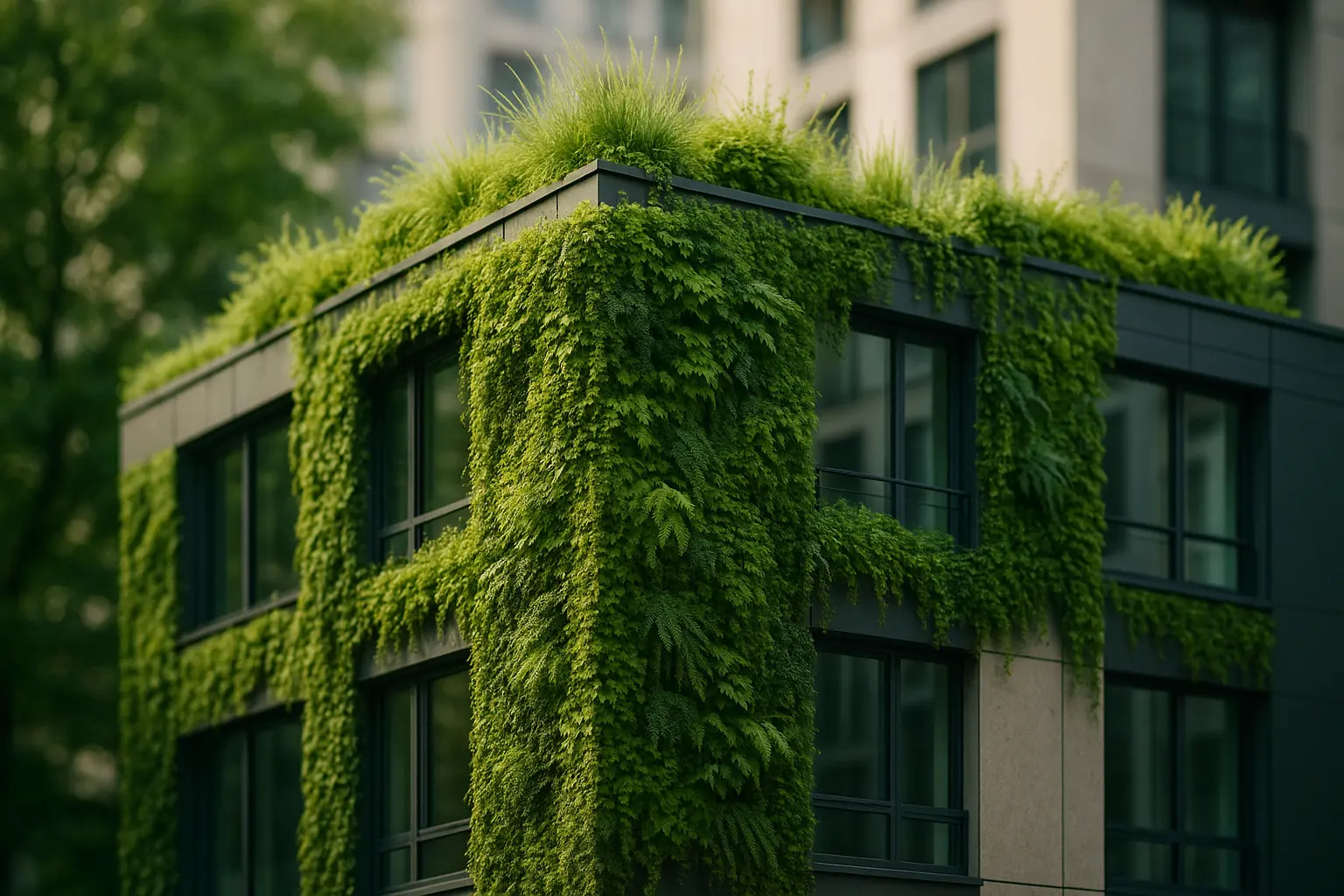
A well-built green roof can retain more than three-quarters of the rain that falls on it, according to published stormwater studies that measured retention rates averaging around 77 percent across different roof configurations, with some setups reaching close to full retention. That single figure explains why cities struggling with overloaded drainage systems keep turning to vegetated rooftops as infrastructure, not just decoration.
Green roofs and green walls bring measurable thermal, water management, and biodiversity benefits to buildings, but they also come with real structural and maintenance demands that need planning from day one rather than as an afterthought once the plants are already struggling.
- Retention rates for well-designed green roofs commonly range from 45 to over 80 percent of rainfall, depending on substrate and slope.
- Surface temperature differences between a green roof and a conventional one can exceed 19°C in summer conditions.
- Green walls support urban biodiversity by creating micro-habitats for insects and birds in otherwise hard, vertical surfaces.
- Structural assessment before installation is not optional, since the added weight of substrate and saturated soil is substantial.
How Green Roofs Manage Stormwater and Heat
A green roof’s stormwater performance depends heavily on its physical setup: substrate depth, slope, and vegetation type all shift the retention figure considerably. Research comparing different roof configurations found mean rainfall retention ranging from roughly 49 percent on gravel-based setups up to nearly 83 percent on fully vegetated platforms, with the best-performing shallow systems at a slight slope reaching around 87 percent retention. That water is either absorbed by plants and substrate or released slowly, easing pressure on urban drainage during heavy storms rather than sending it all downstream at once.
The thermal benefit works through a similar mechanism. Vegetation and substrate insulate the roof surface, and documented studies have measured maximum surface temperature differences of more than 19°C between a green roof and a bare one in summer, with some building-level studies reporting cooling load reductions as high as 70 percent. In winter, the same layer retains heat, reducing the building’s reliance on mechanical heating during cold spells.
What Green Walls Add That Roofs Cannot
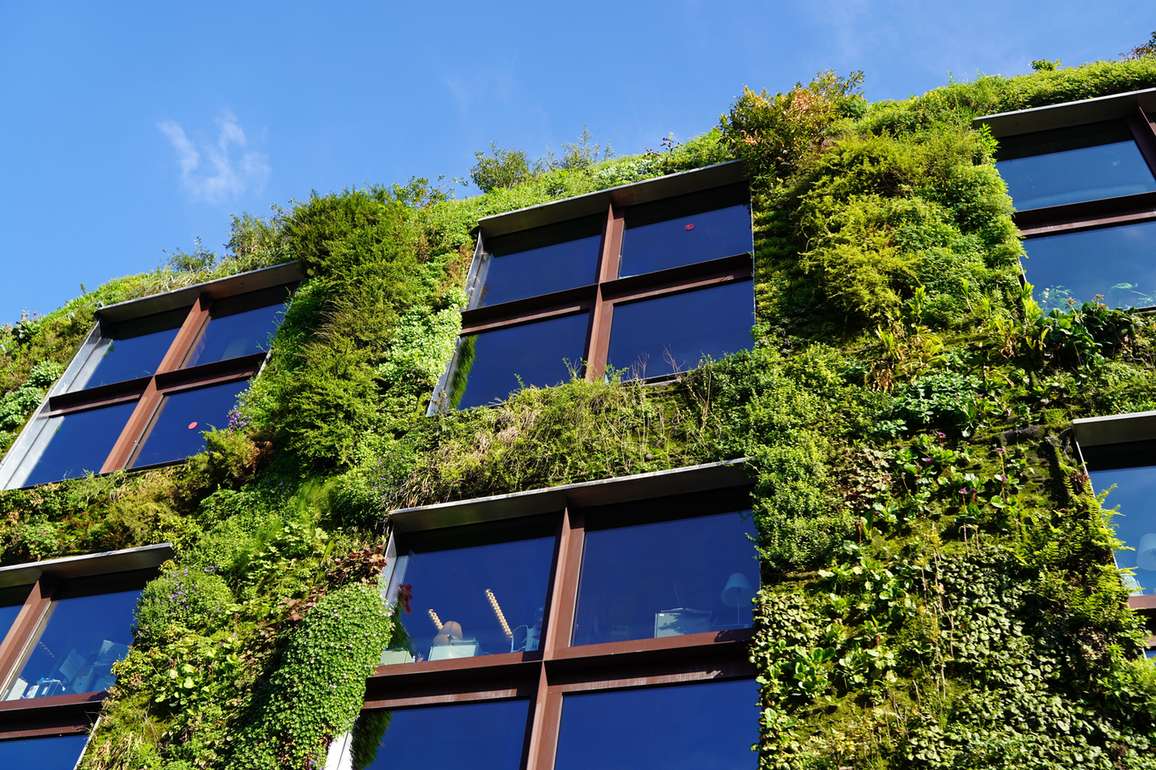
A green wall, sometimes called a living wall or vertical garden, brings vegetation into spaces where a roof installation is not physically possible, particularly on dense urban facades with little available horizontal surface. The psychological effect is well documented: visible greenery in office, hospital, and educational settings is consistently associated with reduced stress and improved mood, which is part of why green walls have become popular in commercial interiors as much as on exterior facades.
Ecologically, a green wall creates a vertical micro-habitat that a bare facade simply cannot offer, providing shelter and forage for insects and, in taller installations, nesting opportunities for small birds. The dense foliage also absorbs a measurable amount of ambient noise, functioning as a soft acoustic barrier in ways a hard wall never could, which matters more than expected in noisy urban corridors.
The Structural and Maintenance Reality Behind the Benefits
None of these benefits come free of engineering considerations. Saturated substrate on a green roof adds significant weight, and any installation needs a structural assessment before construction, not after the plants are already delivered. Green walls carry their own version of this demand: irrigation systems, drainage layers, and root barriers all require upfront design, and ongoing maintenance, including watering, fertilizing, and pest monitoring, is a recurring cost rather than a one-time expense.
Lightweight substrates, modular tray systems, and automated drip irrigation have made both technologies considerably more practical over the past decade, lowering both installation weight and the labor needed to keep plants healthy. Several municipalities also now offer incentives or subsidies for green roof and wall installations, which can offset a meaningful share of the upfront cost for property owners weighing the investment.
| Benefit | Green roof | Green wall |
|---|---|---|
| Stormwater retention | 45% to over 80% of rainfall | Minimal, not its primary function |
| Thermal insulation | Strong, up to 19°C surface difference | Moderate, plus acoustic buffering |
| Best suited to | Flat or low-slope rooftops | Dense facades with limited horizontal space |
Anyone drawn to this idea at a smaller, residential scale will find much of the same reasoning in vertical garden and green wall design for optimizing space and air quality, which focuses more on individual homes than on commercial-scale installations. On the maintenance side, keeping either system healthy increasingly relies on connected sensors for green space management, which flag irrigation and substrate moisture issues before they turn into plant loss.
Frequently Asked Questions
Can any existing building support a green roof?
No. A structural engineer needs to confirm the roof can bear the added weight of substrate, plants, and retained water, especially after heavy rain, before any installation moves forward.
How much maintenance does a green wall actually need?
Expect regular watering, periodic fertilizing, and routine checks for pests or dying plants. Automated irrigation reduces the labor involved but does not eliminate the need for seasonal inspection and occasional replanting.
Do green roofs and walls really lower energy bills?
Yes, though the exact savings depend on climate and building design. Documented studies show meaningful reductions in cooling demand during summer and reduced heat loss in winter, both of which translate into lower energy costs over time.
Is a green wall a good option for a small city balcony?
A modular, smaller-scale green wall can work well on a balcony, provided there is a reliable water source and the mounting structure can support the combined weight of trays, substrate, and moisture.
Are government incentives available for these installations?
Many municipalities now offer some form of subsidy or incentive program for green roofs and walls, though availability and amounts vary widely by location and should be checked with local authorities before budgeting a project.
Green roofs and green walls are no longer a niche architectural flourish. They are increasingly treated as functional infrastructure, and the buildings that plan for their structural and maintenance requirements from the outset tend to get the most out of the environmental case that first justified the investment.