
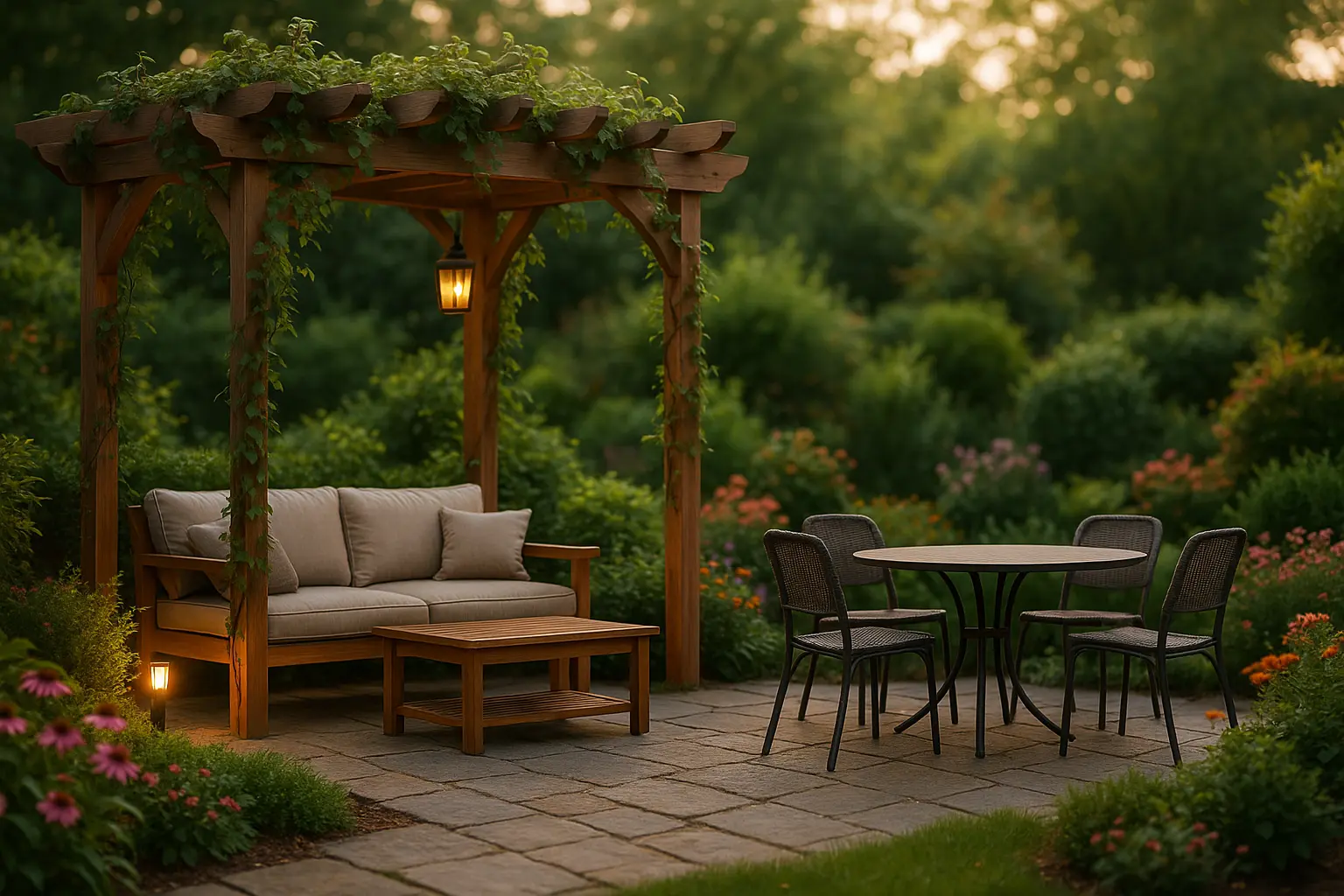
More clients now ask us to design the garden the same way they would furnish a living room, with sofas, a dining table, and sometimes a fireplace, rather than treating outdoor space as an afterthought to the house. Industry surveys on outdoor living confirm this is not a passing preference: among homeowners with a seating or lounge area outside, most now include comfortable sofas or lounge chairs, and roughly half add a fireplace or fire pit. The garden has become a room, and it needs to be designed like one.
A well-designed relaxation and social garden combines a terrace, a shaded structure such as a pergola, and a dedicated dining area, each chosen for durable materials and arranged so the space works for both a quiet evening alone and a gathering of a dozen people. The details that make this work are less about trend-chasing and more about weather resistance, flow, and honest maintenance expectations.
The Terrace as the Garden’s Living Room Floor
A terrace functions as the transition between the house and the rest of the garden, and its material choice sets the tone for everything built around it. Natural stone, composite decking, and reclaimed hardwood each offer a different balance of durability, cost, and upkeep, and the right pick depends heavily on local climate: composite decking shrugs off humidity far better than untreated wood, while natural stone handles heavy foot traffic without wearing a visible path.
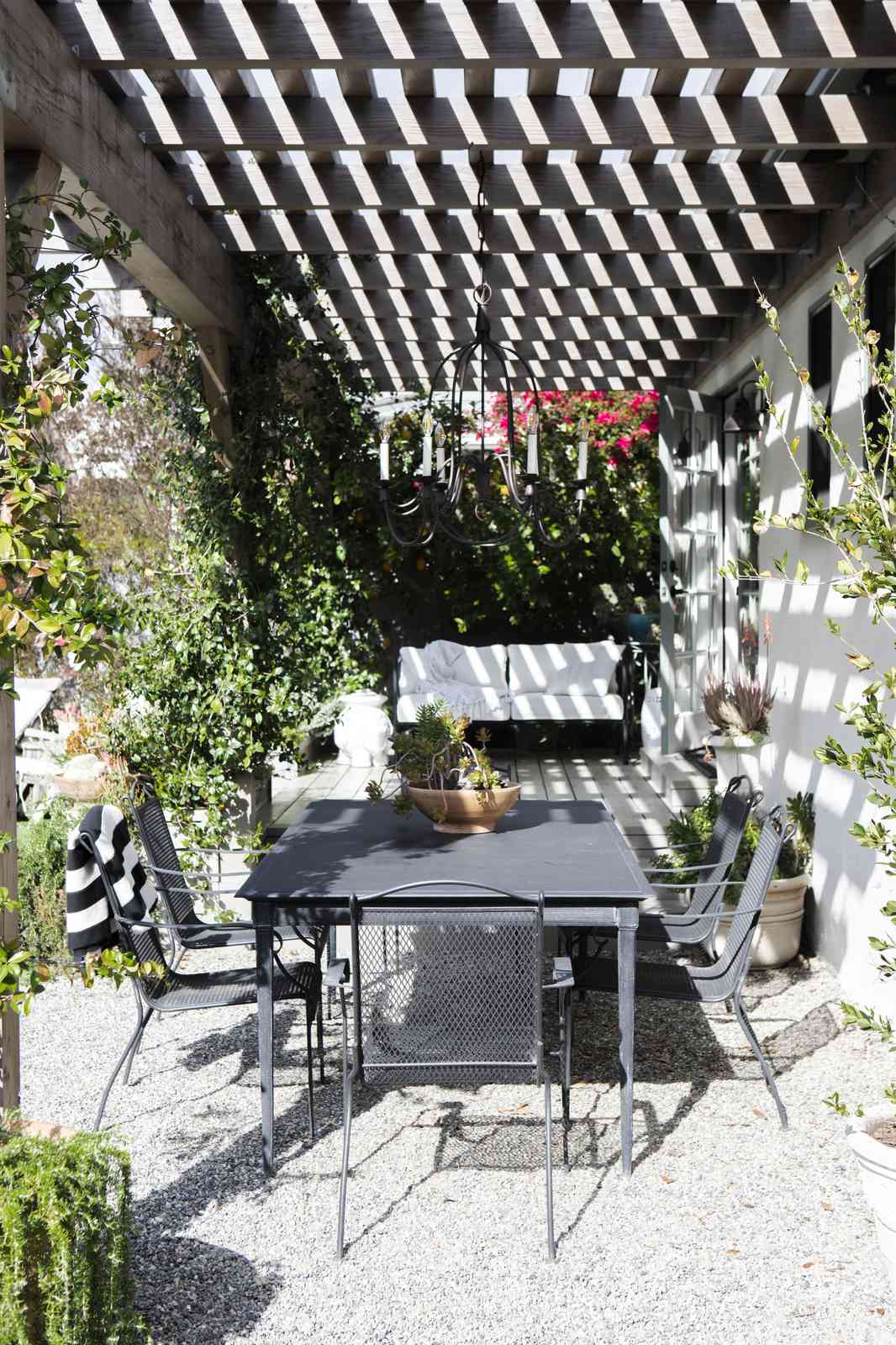
- Comfortable, modular seating encourages people to linger rather than pass through.
- Soft, low-level lighting, ideally solar-powered LED or well-placed lanterns, turns a daytime terrace into an evening destination.
- Potted plants or a small vertical garden soften hard edges and blur the line between terrace and garden.
A terrace that hosts both an intimate morning coffee and a twenty-person gathering needs flexible furniture arrangements built in from the start, not improvised on the day. Rainwater harvesting built quietly into the terrace design, feeding nearby planting beds, is one of the easier sustainability additions to make at this stage before the hardscaping is finished.
Pergolas: Shade, Structure, and a Sense of Occasion
A pergola has moved well past its old role as a simple support for climbing plants. It now anchors an entire outdoor room, and the material chosen changes both its lifespan and its character. Cedar, aluminum, and vinyl each suit different climates and budgets, with cedar offering warmth and a traditional look that needs periodic resealing, while aluminum trades some of that warmth for near-zero maintenance.
One of the more notable shifts in recent outdoor living reports is the rise of the bioclimatic pergola, a structure with automated louvers that open and close in response to sun, wind, or rain sensors, sometimes controlled remotely alongside lighting and heating. These systems cost significantly more than a fixed structure, generally in the range of several thousand dollars once installed, but they solve the oldest pergola problem: deciding in advance how much shade a given afternoon will actually need.
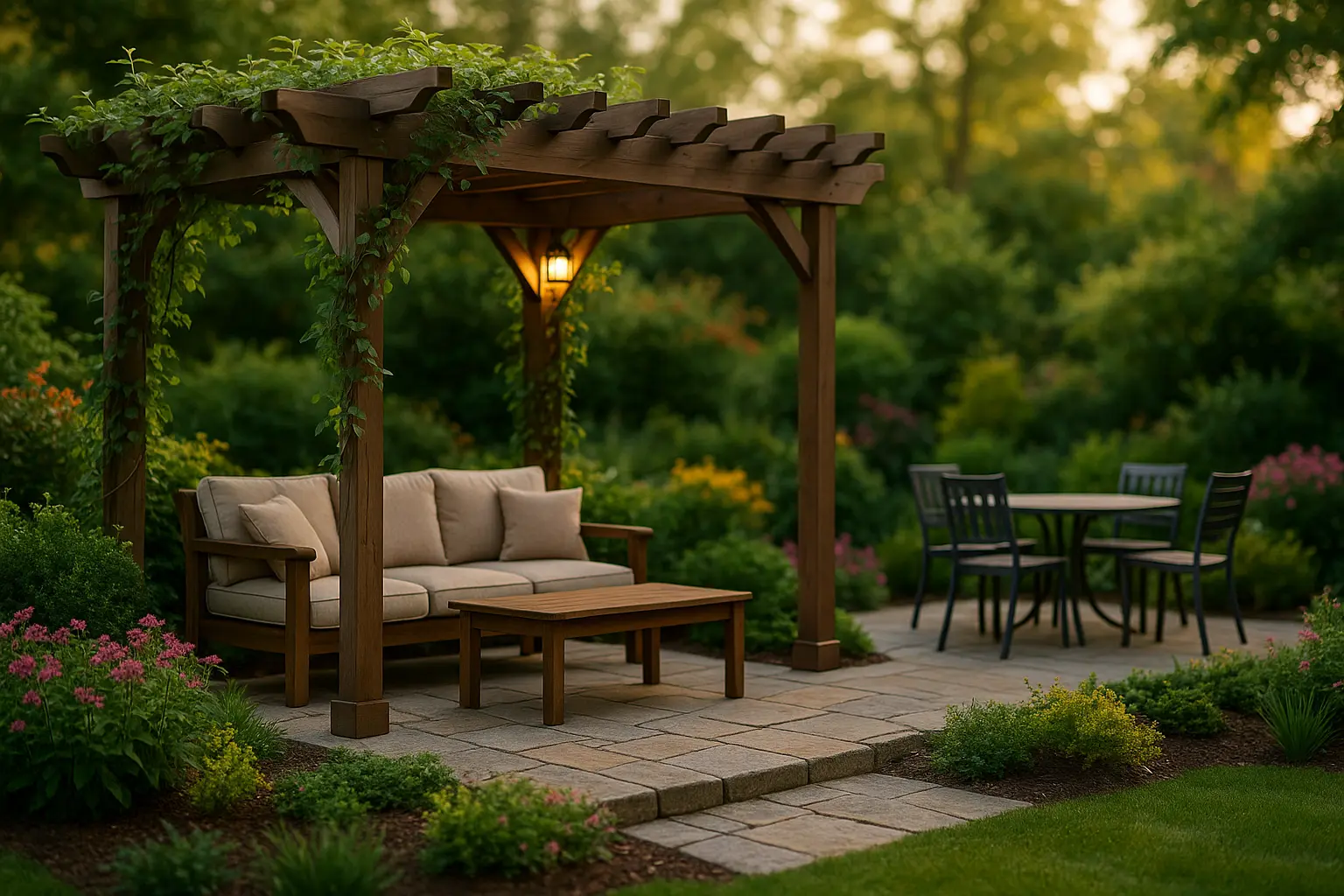
Climbing plants remain the simplest way to give a pergola presence. Wisteria, grapevines, and climbing roses turn a bare frame into what feels like living architecture within two or three growing seasons, adding fragrance and dappled shade that no mechanical louver system quite replicates.
Dining Areas Built for Actual Weather, Not Just Good Weather
An outdoor dining area only earns its keep if it survives the seasons it is meant to be used in. Location matters first: a spot sheltered from prevailing wind but still open to the garden’s best view avoids the common mistake of tucking dining furniture into a corner nobody wants to sit in. Weather-resistant materials such as teak, powder-coated metal, or treated hardwood outlast anything chosen purely for looks.
Seasonal adaptability separates a dining area used three months a year from one used nine. Retractable awnings, an overhead pergola, or even a simple large umbrella extend the usable season meaningfully. Built-in cooking facilities, from a straightforward barbecue to a full outdoor kitchen with a pizza oven, keep the dining area as the natural gathering point rather than a satellite to an indoor kitchen everyone keeps walking back to.
The gardens that get used every week are rarely the most elaborate ones. They are the ones where someone thought through where the wind comes from before choosing where to put the table.
| Element | Best material options | Maintenance level |
|---|---|---|
| Terrace flooring | Natural stone, composite decking | Low to moderate |
| Pergola frame | Aluminum, cedar | Very low (aluminum) to moderate (cedar) |
| Dining furniture | Teak, powder-coated metal | Low |
A dining area near still or moving water tends to feel calmer almost immediately, which is why so many of these projects end up paired with a fountain, pond, or other water feature elsewhere in the garden. For anyone working with a more constrained footprint, the same terrace and dining logic scales down well, and small space layout strategies for balconies and patios cover exactly how to adapt it.
Frequently Asked Questions
How much does a bioclimatic pergola typically add to a project budget?
Automated, sensor-controlled pergolas generally start in the low thousands of dollars and rise well beyond that depending on size and features, compared to a fixed cedar or aluminum structure, which costs considerably less but offers no automatic shade adjustment.
What is the most weather-resistant furniture material for a dining area?
Teak and powder-coated metal both hold up well across seasons with minimal care. Untreated wood and basic plastic resin furniture tend to degrade faster and usually need replacing sooner.
Can a terrace really work for both quiet use and large gatherings?
Yes, as long as the furniture layout is planned to be modular from the start. Lightweight, stackable, or reconfigurable pieces let a terrace shift from an intimate two-person setup to seating for a large group without needing a second, separate space.
Do climbing plants damage a pergola over time?
Vigorous climbers like wisteria can add significant weight and occasionally strain weaker frames, so pergolas intended for heavy climbing growth should use robust materials such as cedar or reinforced aluminum rather than lightweight vinyl.
Is built-in outdoor cooking worth including from the start?
If the dining area is meant to be a true gathering point rather than an occasional extra, a built-in barbecue or small outdoor kitchen usually gets used far more than a portable grill wheeled out for special occasions.
The terrace, the pergola, and the dining area work best when they are designed as one continuous space rather than three separate purchases. Get the materials right for the local climate, plan for both solitude and a crowd, and the garden stops being scenery and starts being somewhere people actually want to spend their evenings.