

Picture a landscaping company running three brands of automated equipment on the same estate: a robotic mower from one manufacturer, a sensor-driven irrigation controller from another, and a fleet-tracking app from a third. None of them share data with each other by default. That is not a hypothetical inconvenience, it is the everyday reality behind one of the least discussed obstacles to automation in this sector: getting different machines to actually talk to one another.
Standardization and interoperability between automation machines and systems remain unresolved challenges across landscaping and industrial automation, mainly because equipment from different manufacturers uses different communication protocols and data formats. The agricultural sector has made real progress with a formal standard called ISOBUS, but landscaping-specific equipment has not adopted an equivalent standard at the same pace, leaving many operators to manage a patchwork of incompatible systems manually.
- ISOBUS (ISO 11783) is the established interoperability standard in agricultural machinery, allowing plug-and-play communication between tractors and implements from different manufacturers.
- The Agricultural Industry Electronics Foundation (AEF), founded in 2008 by seven manufacturers, certifies ISOBUS compliance globally.
- A newer standard, ISO 23870, is under development to bring Ethernet-based communication to the next generation of connected equipment.
- Landscaping-specific automation has not adopted an equivalent unified standard, which means interoperability there is still handled case by case, often through custom middleware.
Why different automation machines struggle to work together
Interoperability problems start with something basic: manufacturers do not agree on how a machine should describe its own data. A sensor reporting soil moisture from one supplier’s irrigation controller may format that reading differently from a competitor’s controller, even though both are measuring the same physical thing. Multiply that across mowers, sensors, drones, and fleet software from a dozen different vendors on a single large property, and the result is what the industry calls data silos: valuable information that exists somewhere in the system but cannot move between the tools that need it.
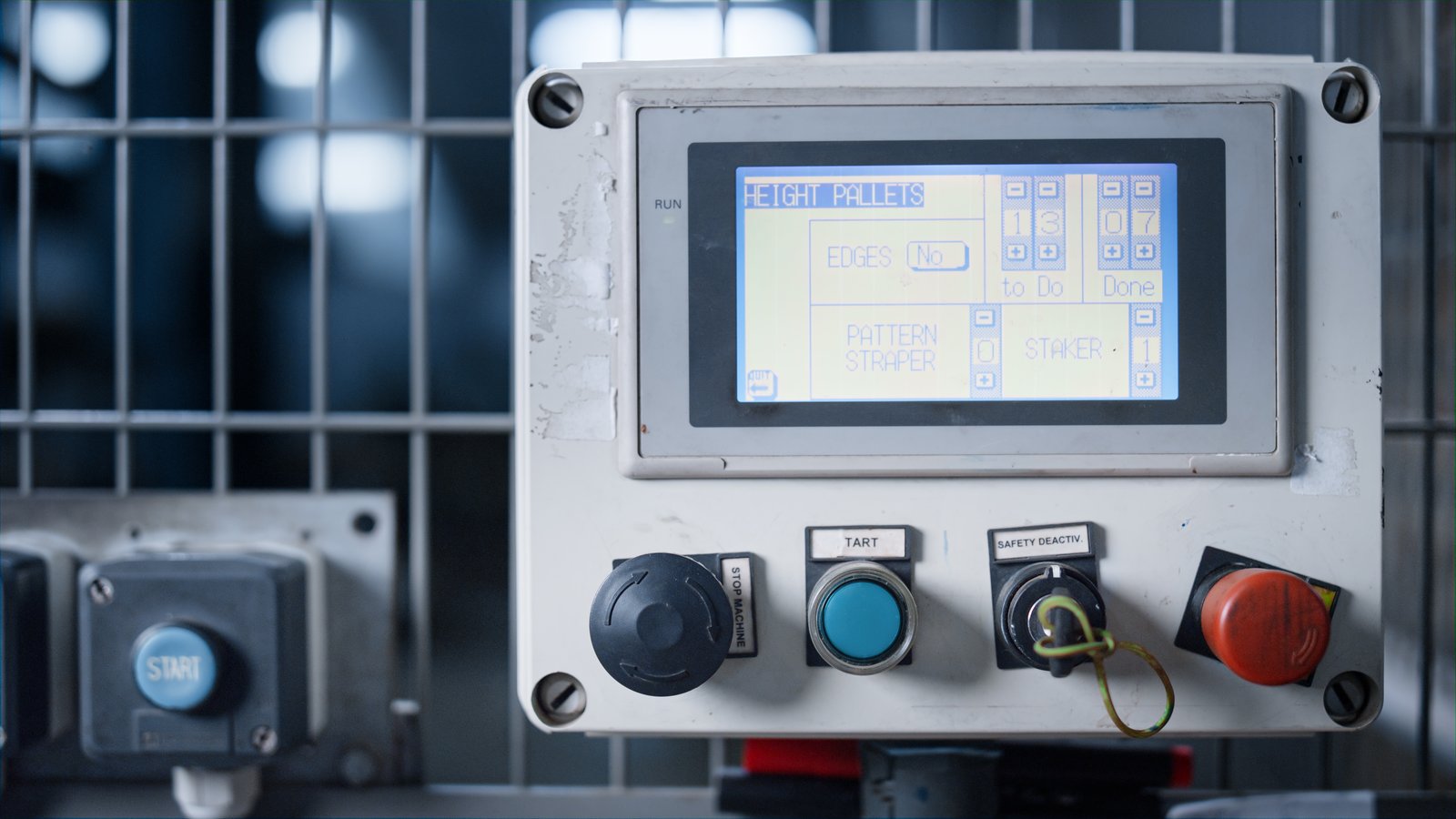
This is not a hypothetical problem invented to justify new software sales. It reflects a real diversity of industrial systems, each built to solve a specific need in a specific operational environment, without a shared blueprint guiding how they should connect to anything else. The uneven pace of technology adoption compounds this: some manufacturers integrate the latest connectivity standards quickly, while others, often smaller or more specialized suppliers, lag behind, widening the compatibility gap rather than closing it.

How ISOBUS solved this problem for agriculture, and why landscaping has not caught up
Agriculture faced this exact challenge decades ago and solved a large part of it with ISOBUS, formally ISO 11783, a communication protocol built on the same Controller Area Network foundation used in heavy-duty vehicles generally. ISOBUS lets a tractor from one manufacturer run an implement from a completely different manufacturer without custom integration work, because both sides agree to speak the same electronic language. The AEF, founded in 2008 by seven major agricultural equipment manufacturers, certifies compliance and keeps the standard current as new equipment types emerge.
Landscaping and grounds maintenance equipment has not organized around an equivalent standard, largely because the sector is more fragmented and lower-margin than large-scale agriculture, which reduces the commercial incentive for manufacturers to invest jointly in a shared protocol the way seven agricultural giants did in 2008. Some landscaping automation borrows agricultural-grade components that already carry ISOBUS compatibility, which helps at the equipment level, but the software and data layer above it, fleet management platforms, sensor dashboards, scheduling tools, remains far less standardized across the sector as a whole.
| Sector | Interoperability standard | Maturity level |
|---|---|---|
| Large-scale agriculture | ISOBUS (ISO 11783) | Established, industry-wide, certified since 2008 |
| Next-generation connected equipment | ISO 23870 (in development) | Emerging, not yet widely deployed |
| Landscaping-specific automation | No dedicated equivalent standard | Fragmented, largely handled by custom integration |
What businesses actually do to bridge the gap today
In the absence of a landscaping-wide standard, businesses rely on three practical workarounds. Cloud-based platforms let different systems push data to a shared location even if they cannot talk to each other directly, trading real-time integration for at least centralized visibility. Open-source software layers, where available, let a company build its own translation between two otherwise incompatible systems, at the cost of technical staff time most smaller landscaping firms do not have readily available. IoT gateway devices act as physical translators, sitting between two systems and converting one’s data format into something the other can read, which is often the fastest fix but adds another point of hardware failure to the chain.
None of these solve the underlying problem the way a shared industry standard would; they manage around it. Larger operators with dedicated IT staff can absorb this overhead more easily than smaller landscaping businesses, which means the interoperability gap currently functions as a real, if underdiscussed, barrier to smaller firms adopting multi-vendor automation at the same pace as larger competitors.
Why this connects directly to safety and regulation
Interoperability is not purely a convenience issue. When multiple autonomous machines operate on the same site without a shared way of signaling their position or intent to each other, the risk of collision or unsafe overlap rises, which is exactly the kind of scenario covered by safety and regulatory standards for autonomous machines operating in gardens and public spaces. A future landscaping-specific interoperability standard would likely need to address safety signaling alongside data formatting, not as an afterthought.
Some companies have already found working solutions despite the lack of a formal standard, generally by committing to a single vendor’s ecosystem rather than mixing brands, or by budgeting specifically for integration middleware from the outset rather than treating it as a surprise cost. Looking at case studies of landscaping companies that have completed a full automation transition shows these practical workarounds in more concrete detail than any single standard’s technical documentation can.
FAQ
Is there an ISOBUS equivalent specifically for landscaping equipment?
Not currently. Landscaping automation sometimes benefits from ISOBUS-compatible agricultural components, but no dedicated, industry-wide interoperability standard exists yet for landscaping-specific equipment and software.
Why does interoperability matter if each machine already works on its own?
Because the real value of automation often comes from combining data across machines, irrigation, mowing, and sensor readings together, not from each system operating in isolation. Without interoperability, that combined view requires manual work or custom integration.
What is the simplest fix for a small landscaping company facing this problem?
Sticking to a single manufacturer’s ecosystem where possible avoids most compatibility issues, though it can limit choice and negotiating leverage compared to a multi-vendor approach.
Will a universal landscaping automation standard eventually exist?
It is plausible given the agricultural sector’s precedent with ISOBUS, but no dedicated initiative comparable to the AEF currently exists for landscaping equipment specifically, so any timeline would be speculative.
Standardization is one of the less visible barriers in landscape automation, overshadowed by more visible questions about robots and job displacement, yet it directly determines how much value a business can actually extract from equipment it has already bought. Until the sector organizes around a shared standard the way agriculture did with ISOBUS, interoperability will remain something individual companies solve for themselves, one integration project at a time.
Published 29 July 2026.
Sources: CSS Electronics, “ISOBUS (ISO 11783) Explained”; AutoPI, “What Is ISOBUS (ISO 11783)?”; Agricultural Industry Electronics Foundation (AEF) certification documentation.