

Put a new technician in front of a six-figure autonomous mower fleet controller and ask them to learn its fault-diagnosis routine, and there are really only two ways to do it: let them practice on the live machine, at the risk of an expensive mistake, or find a way to simulate the experience first. Virtual reality has become the second option for a growing number of manufacturers training people on automated machinery, and the evidence for why is now fairly specific.
Virtual reality training for operating and maintaining automated machines lets trainees practice realistic procedures without shutting down live equipment, and industry data shows measurable gains in accuracy and training speed compared to traditional classroom methods. Reported improvements include 25 to 30 percent better procedural accuracy and up to 40 percent less training time, though these figures come primarily from broader manufacturing and industrial contexts rather than landscaping-specific studies.
- VR training improves procedural accuracy by 25 to 30 percent and cuts training time by up to 40 percent compared to classroom-only methods, per 2025 industry research.
- Simulation-based maintenance training represents roughly 18.7 percent of the total maintenance training market in 2025, growing at close to 10 percent annually.
- A widely cited PwC study found VR-trained employees reported up to 275 percent more confidence applying what they learned than classroom-trained peers.
- The technology’s main current limitation is cost of development for highly specific equipment simulations, not a lack of proven learning benefit.
Why VR training fits automated machinery specifically well
Traditional hands-on training for automated systems has always carried a real cost: taking a working machine offline to train someone on it. For a landscaping company with a limited fleet, that downtime is not trivial, and for more complex industrial automation, the safety risk of a trainee’s mistake on live equipment can be significant. VR removes both constraints by letting a trainee interact with a detailed digital replica of the machine, practicing procedures that would be too costly or risky to repeat on the real thing.
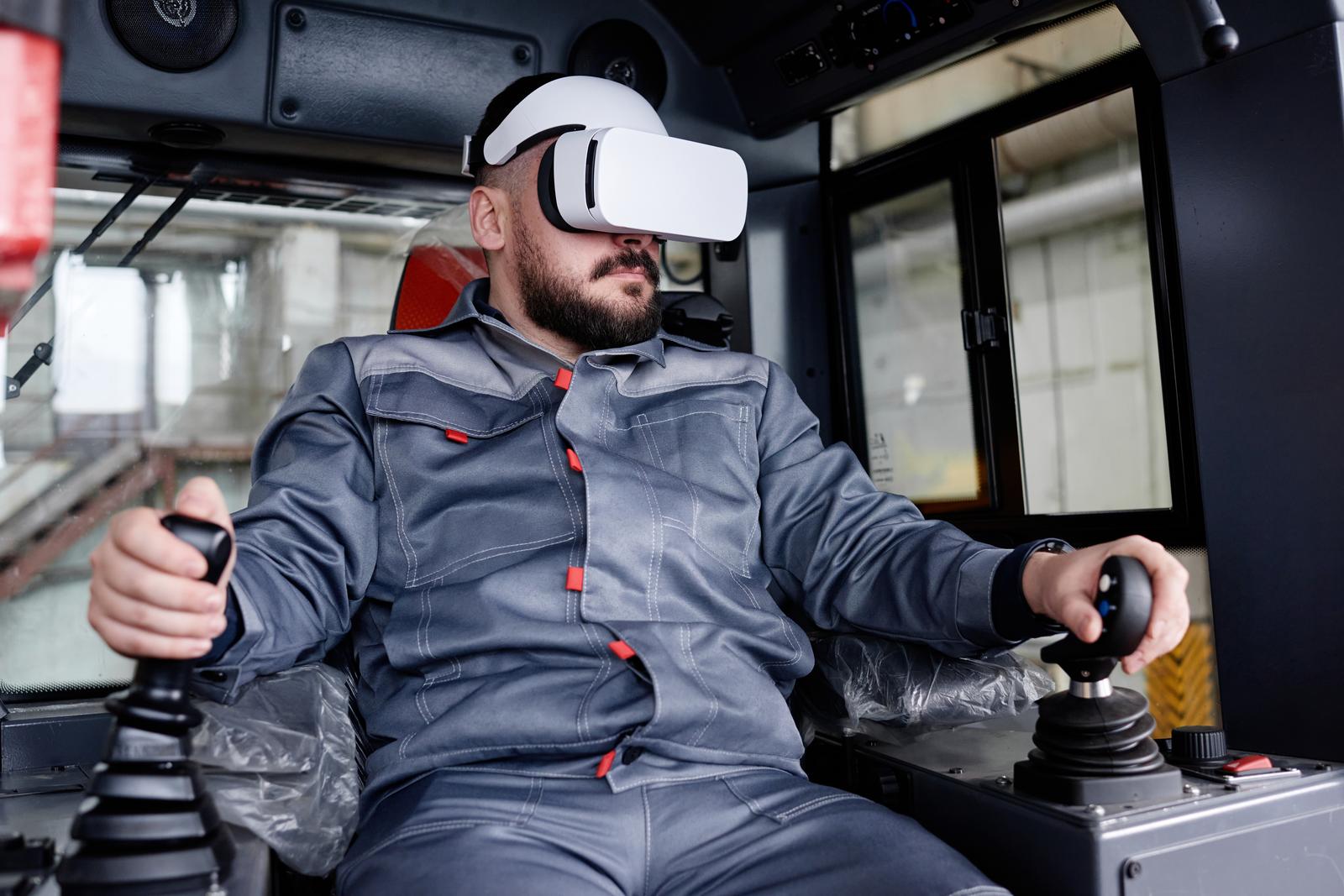
The learning research behind this is more specific than a general claim that “simulation helps.” A frequently cited PwC study found VR-trained employees were substantially more confident acting on what they learned and reported a stronger emotional connection to the training content than classroom-only peers, a factor tied to better long-term retention in learning research generally. Separate industry reporting on simulation-based maintenance training describes procedural accuracy improvements in the 25 to 30 percent range alongside meaningfully shorter training time, figures drawn primarily from manufacturing and heavy industry rather than landscaping equipment specifically.
What a realistic VR training session for automated equipment actually covers
A well-built VR training module for automated machinery typically walks a trainee through three layers of the same equipment: understanding its normal operating behavior, recognizing early warning signs of a fault, and practicing the actual repair or reset procedure. Trainees can explore machine components in a fully rotatable 360-degree view, something a physical training session rarely allows without partially disassembling a real unit.
- Scenario-based fault simulation: trainees encounter simulated malfunctions and practice diagnosing them without any real equipment risk.
- Repeatable, on-demand practice: unlike scheduled hands-on sessions, VR modules can be repeated as many times as a trainee needs.
- Performance tracking: most systems log interaction data, letting trainers identify exactly where a trainee is struggling.
This scenario-based approach is what separates useful VR training from a simple video tutorial with a headset attached. The value comes specifically from letting a trainee make a mistake in a diagnosis scenario and see the consequence play out, which is precisely what a static video cannot replicate.
| Training method | Live equipment risk | Repeatability |
|---|---|---|
| Traditional hands-on training | High | Limited by equipment availability |
| Classroom / video instruction | None | High, but passive |
| VR simulation training | None | High and interactive |
Where the cost and access limits actually sit
Building a high-fidelity VR module specific to one manufacturer’s automated equipment is not cheap, and that cost is the real barrier for smaller landscaping companies rather than the hardware itself, since consumer VR headsets have become significantly more affordable. Large equipment manufacturers increasingly bundle basic VR training content with premium automated machinery purchases, which shifts the cost from the buyer to the manufacturer’s own sales model, but smaller or independent equipment brands are far less likely to offer this yet.
VR training also complements, rather than replaces, on-site technology already used for repairs in the field. Where VR handles training away from the equipment, augmented reality tools support technicians directly during real repairs on-site, overlaying instructions onto the physical machine rather than simulating it separately. The two technologies address different moments in a technician’s workflow rather than competing for the same use case.
This training question also sits inside a larger shift in what skills the landscape sector now needs. As more equipment automates, the broader training and skills gap automation is creating for gardeners and landscapers becomes the bigger structural question, of which VR is one specific tool rather than the whole answer.
FAQ
Is VR training proven to work better than traditional methods for machinery maintenance?
Available industry data shows measurable gains in accuracy and confidence, though most published figures come from broader manufacturing contexts rather than landscaping equipment specifically, so results for a given landscaping application may vary.
Can small landscaping companies afford VR training programs?
Increasingly, yes, for equipment purchased from manufacturers that bundle VR content with the sale. Building a custom VR module independently remains expensive and is currently more realistic for larger operations.
Does VR training replace hands-on experience entirely?
No. Most implementations position VR as preparation before hands-on work, not a full substitute, since certain physical skills still require practice on real equipment.
What kind of equipment benefits most from VR training?
Complex, expensive, or safety-critical automated machinery benefits most, since the cost of a training mistake on the real equipment is highest for exactly that category.
VR training for automated machinery has moved past the novelty stage and into measurable, if not yet universal, adoption. Its real value is narrower than blanket marketing sometimes suggests: reducing risk and downtime during the specific stage of learning how a piece of automated equipment fails and how to fix it, not replacing the broader skills training the sector still needs.
Published 29 July 2026.
Sources: Dataintelo, Maintenance Training Market Research Report 2034; AIDAR Solutions, “8 Key Benefits of Virtual Reality Training in 2025”; PwC study on VR training confidence and retention cited in industry reporting.