
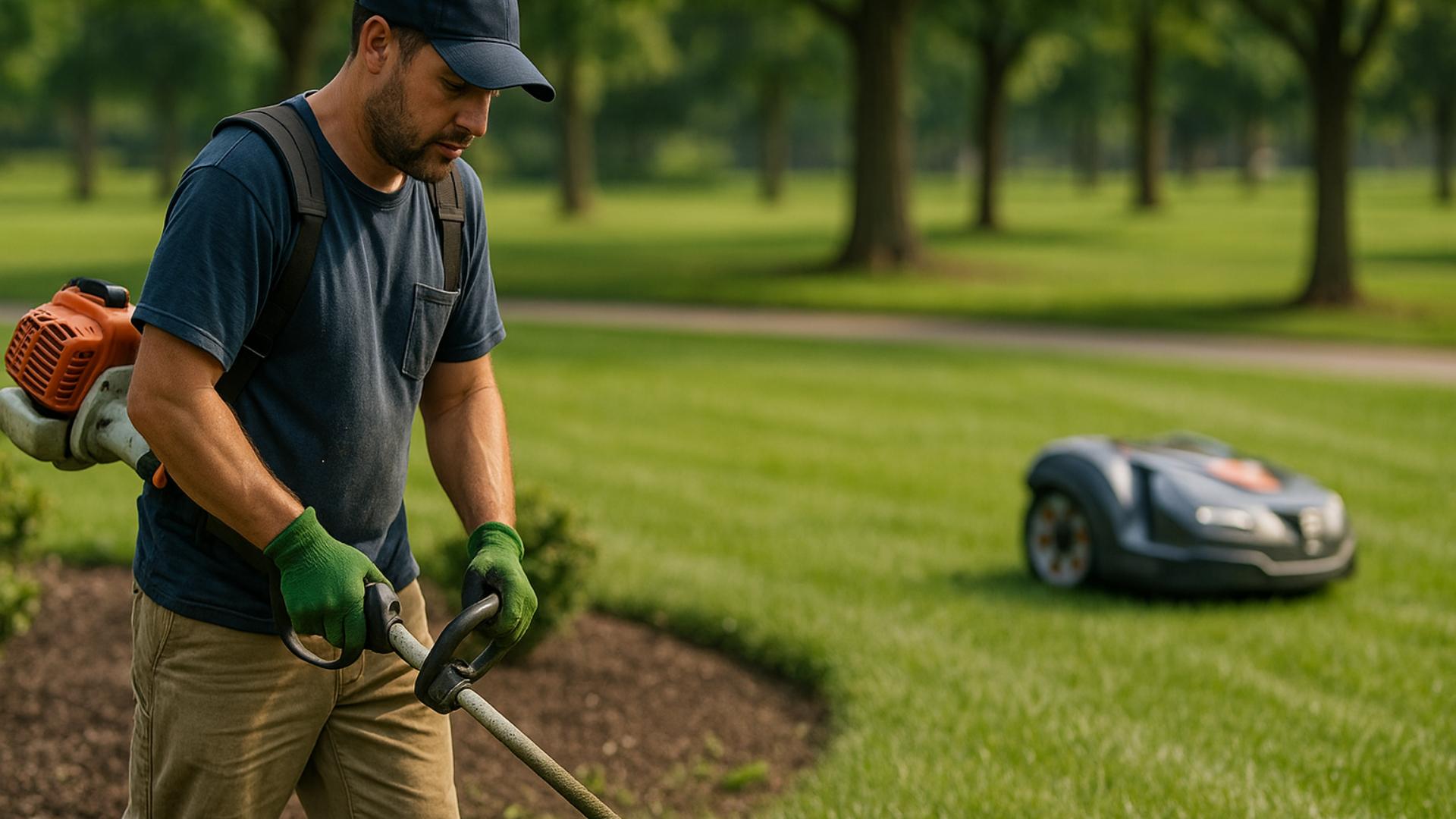
Scroll through job postings for landscaping crew leads today and you will find requirements that would have looked out of place a decade ago: comfort with a tablet app, basic troubleshooting of sensor-based irrigation controllers, sometimes even “robotic mower fleet management” listed as a plain line item. Nobody is asking gardeners to become software engineers, but the skill list has quietly shifted, and training programs are only partway through catching up.
Automation is changing what future gardeners and landscapers need to know without eliminating the core horticultural knowledge the job has always required. Plant biology, soil health, and design sense remain the foundation; what has been added on top is a working familiarity with the machines, sensors, and software now common on professional sites.
In brief:
- Traditional plant and soil knowledge stays essential, automation adds to the skill set rather than replacing it.
- New required competencies include operating robotic mowers, monitoring sensor-based irrigation, and basic data interpretation from farm and garden management software.
- The landscape services industry employs more than 1.4 million people in the United States alone, and 54% of contractors cite staffing as a top business risk in 2026, which is exactly why retraining existing staff is often cheaper than replacing them.
- Training providers are still building out curricula, meaning much of today’s automation training happens informally, on the job, rather than through standardized courses.
What new skills automation has actually added to the job
The direct answer is three categories of new competency: operating and troubleshooting automated equipment (robotic mowers, automated irrigation controllers), reading basic sensor and usage data to make maintenance decisions, and increasingly, using landscape design software that models a site in three dimensions before any physical work begins. None of these require a computer science background, but they do require comfort with digital interfaces that many experienced gardeners simply never needed before.
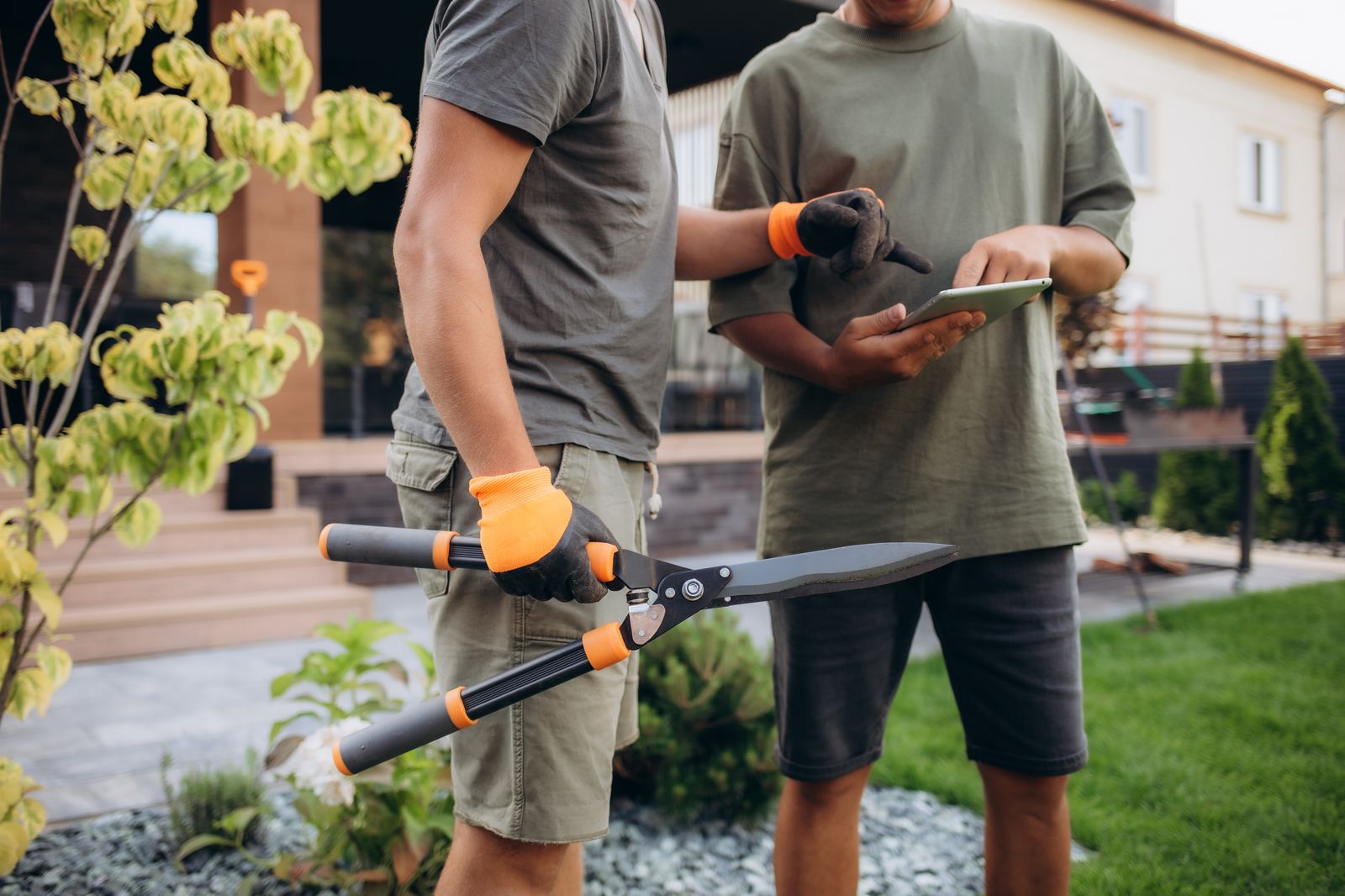
Crew leads on larger commercial contracts are also picking up a supervisory dimension to the role: managing a fleet of autonomous machines across multiple properties means scheduling, monitoring battery and maintenance status remotely, and knowing when a machine’s error code needs a technician rather than a quick manual fix.
Why traditional horticultural knowledge has not become optional
No commercially deployed system today can substitute for a trained eye assessing plant stress, disease symptoms, or soil compaction on sight. Automation handles repetitive, measurable tasks well, cutting grass to a set height, delivering a calculated volume of water, but it does not replace the judgment calls that experienced landscapers make constantly: whether a struggling shrub needs less water or more shade, whether a lawn’s yellowing pattern points to a nutrient gap or a drainage problem. Training programs that drop plant science in favor of equipment operation would be solving the wrong problem.
How training providers are responding, and where the gaps remain
Most of the retraining happening right now is informal and employer-led rather than delivered through a standardized curriculum. Equipment manufacturers run their own certification programs for their specific machines, which is useful but creates a patchwork: a technician certified on one brand’s robotic mower fleet management software has no guarantee that certification transfers to a competitor’s system.
Community colleges and horticultural trade programs are beginning to add automation modules, but adoption is uneven across regions, and there is no single industry-wide credential yet that functions the way, for example, an electrician’s certification does. This gap is worth naming honestly rather than glossing over: a crew member trained thoroughly on one automation system today may still need to relearn substantial pieces of that training when their employer switches equipment suppliers.
Cost is a real factor behind that patchwork. Manufacturer certification is usually free or bundled into an equipment purchase, which makes it the path of least resistance for a small landscaping business, but it also ties a worker’s credential to a single brand rather than a transferable industry standard. Larger firms with training budgets can afford to send staff to independent horticultural technology courses when they exist locally, while smaller operations tend to rely almost entirely on whatever training comes packaged with the equipment they already bought.
Comparing the skill profile of a traditional and an automation-era landscaper
| Skill area | Traditional role | Automation-era role |
|---|---|---|
| Plant and soil knowledge | Core requirement | Still core, unchanged |
| Equipment operation | Manual mowers, trimmers, hand tools | Robotic mowers, sensor-based irrigation, fleet apps |
| Data interpretation | Rarely required | Basic sensor and usage data reading |
| Design tools | Hand sketches, paper plans | 3D landscape design software, increasingly common |
FAQ
Will automation eventually make traditional gardening skills obsolete?
There is no evidence pointing that way today. Automation handles repetitive tasks; the judgment-based work, plant health assessment, design, and client consultation, still depends entirely on human expertise.
What is the fastest way for an experienced landscaper to pick up automation skills?
Manufacturer certification programs tied to whatever equipment an employer already owns are usually the quickest, most directly useful route, ahead of general online courses that may not match the specific machines in use.
Do entry-level landscaping jobs now require prior tech experience?
Generally not as a hard requirement, but comfort learning new software quickly is increasingly valued during hiring, even for otherwise traditional maintenance roles.
Is there a recognized industry-wide certification for landscape automation skills?
Not yet, as of 2026. Training remains fragmented across individual equipment manufacturers and regional trade programs, which is a genuine gap the industry has not closed.
Should a small landscaping business prioritize hiring tech-savvy staff or retraining existing crew?
Retraining existing crew is usually the more practical route, since it preserves plant knowledge and client relationships built over years, skills that a newly hired but automation-fluent worker would still need time to develop on the job.
The honest summary is that automation has widened the job description without shrinking it. Crews that combine solid plant knowledge with basic equipment and data literacy are the ones best positioned as tighter labor markets push more companies toward automated tools. Businesses navigating this shift often ask a related question at the same time, namely how the roles automation eliminates compare with new roles automation is creating on landscaping crews, and several equipment makers now offer VR-based training for automated equipment as one answer to the certification gap described above.
Sources: Aspire, “Top Landscaping Industry Statistics” and 2026 Commercial Landscape Industry Report; NALP, landscape industry statistics.
Last updated: July 29, 2026.