
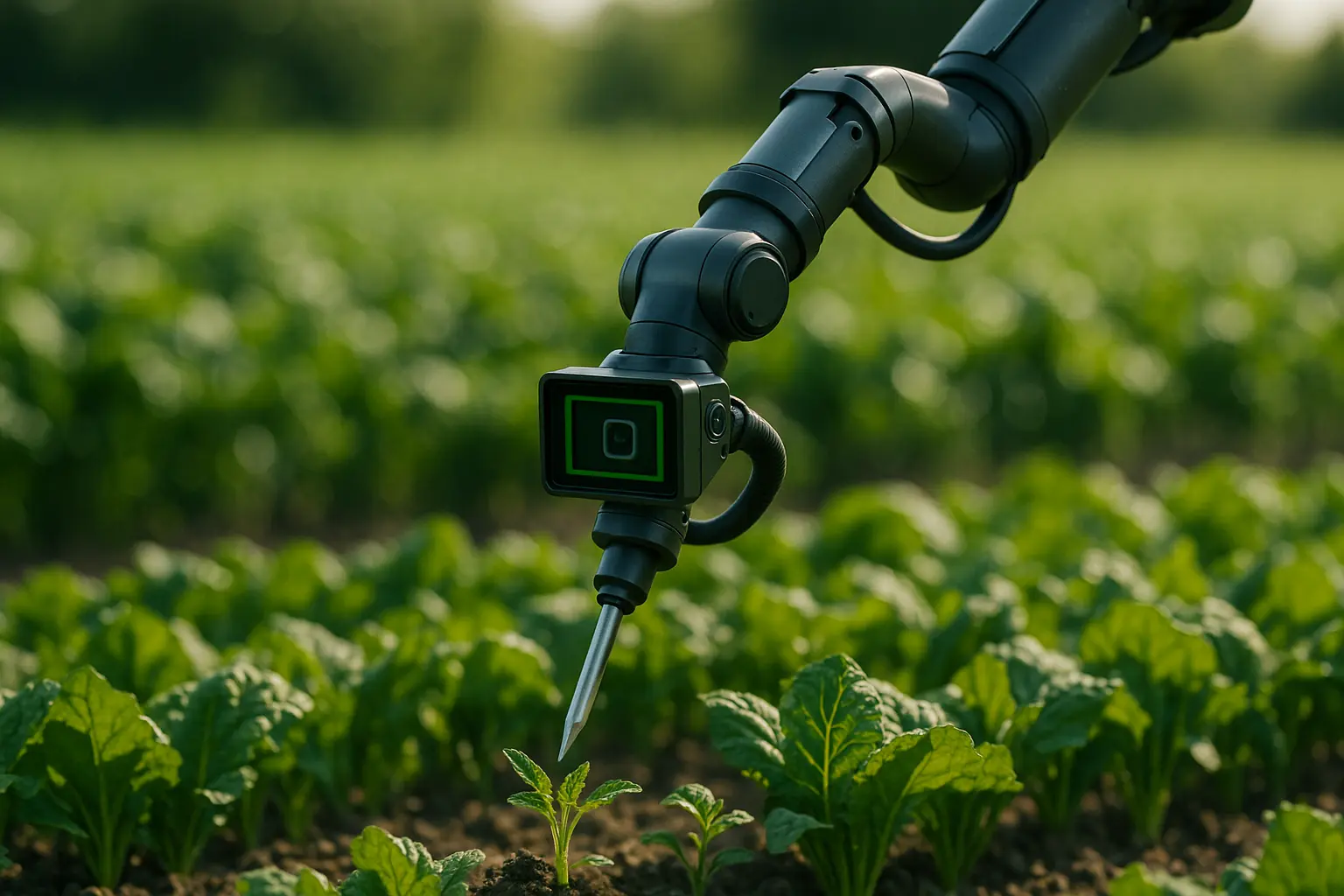
How does a camera tell a weed from a crop when both are the same shade of green and growing three centimeters apart? That question sat at the center of agricultural computer vision research for years, and the answer, deep learning models trained on thousands of labeled field images, has moved from research paper to working field equipment faster than most people in the industry expected.
Computer vision for weed recognition uses cameras mounted on tractors, drones, or dedicated robots, paired with trained image-recognition models, to distinguish weeds from crop plants in real time and trigger a targeted response, mechanical removal or a precise spray, only on the weed itself. This is what “selective weeding” means in practice: acting on individual plants instead of treating an entire field uniformly.
In brief:
- Field trials report herbicide savings ranging from around 28% to as high as 95%, depending on the crop, the detection system, and the weed density.
- The core technology (RGB cameras plus convolutional neural networks such as YOLO variants) is commercially deployed today on selective sprayers and robotic weeders.
- Accuracy still drops in dense weed pressure, overlapping foliage, and inconsistent field lighting, three conditions researchers flag as ongoing challenges.
- Multispectral sensors and LiDAR are increasingly paired with standard cameras to improve detection in difficult conditions.
How the recognition system actually distinguishes a weed from a crop
The system answers this by comparing what it sees against patterns it learned during training, specifically leaf shape, color variation, and texture extracted from thousands of labeled reference images. A convolutional neural network processes each camera frame, flags pixel regions that match “weed” patterns rather than “crop” patterns, and passes coordinates to whatever tool is doing the physical work, a spray nozzle or a mechanical cultivator arm.
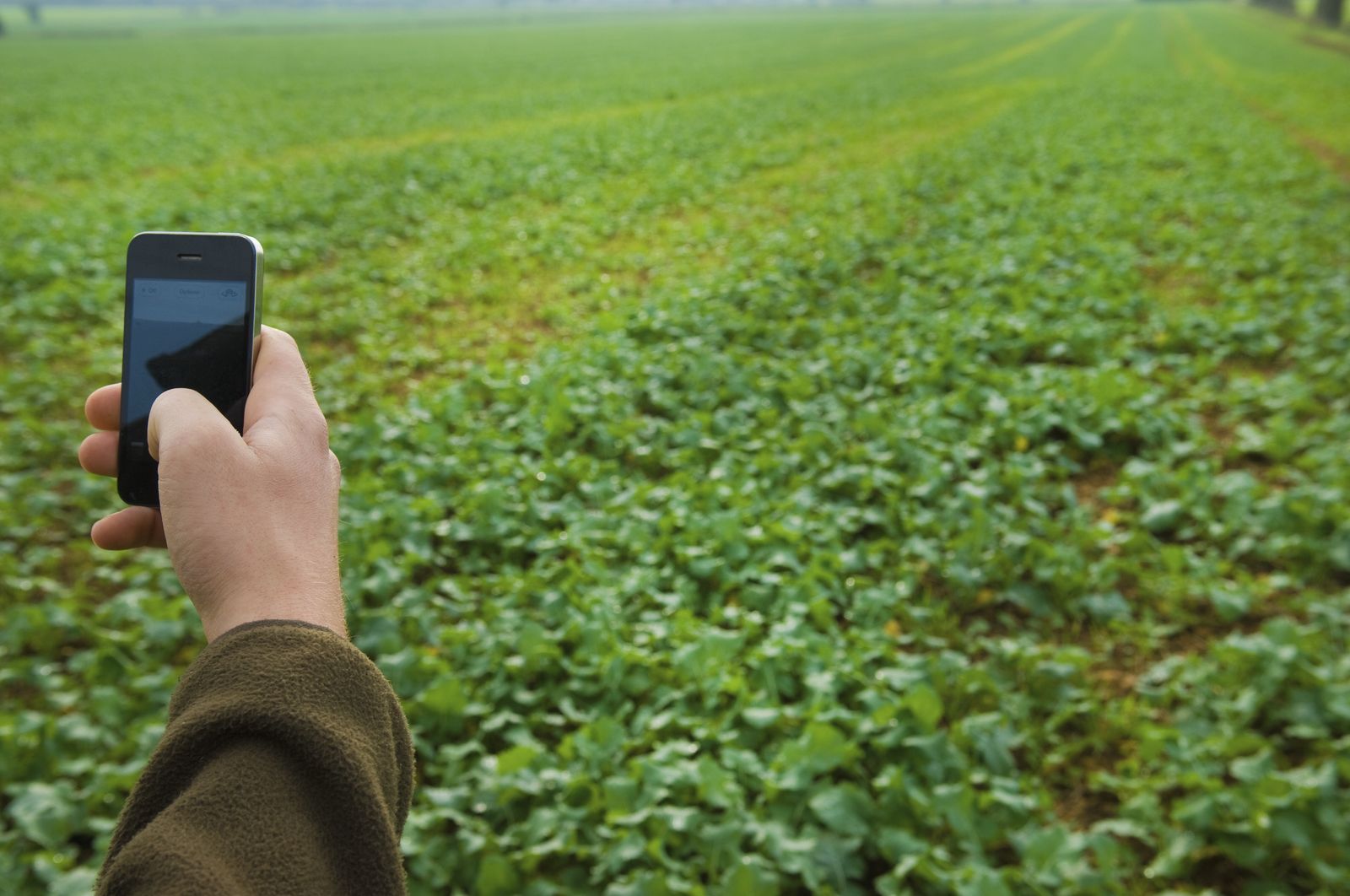
A University of Arkansas field study found that machine-vision-guided targeted spraying cut postemergence herbicide use by between 28.4% and 62.4% compared with broadcast application across the fields tested, a range that illustrates how much the result depends on how weedy the field is to begin with. Sparse infestations save the most percentage-wise simply because there is less to spray in the first place.
What accuracy looks like once a system leaves the lab
Peer-reviewed field research shows systems reaching high detection rates while spraying only a fraction of the field area. One study using modern vision methods reported that 93% of weeds present could be sprayed while covering just 30% of the total area, a substantial reduction in chemical volume without meaningfully missing target plants. Other published work on autonomous mobile weeders found herbicide volume reductions as high as 20 times compared with conventional broadcast spraying under controlled trial conditions.
These figures come from specific trial conditions and crop types, and they should not be read as a universal guarantee. Independent researchers writing in Frontiers in Plant Science note that detection accuracy still degrades in dense canopy overlap, variable outdoor lighting, and fields with many co-occurring weed species, conditions that remain an active area of model development rather than a solved problem.
What sensor hardware is actually doing the seeing
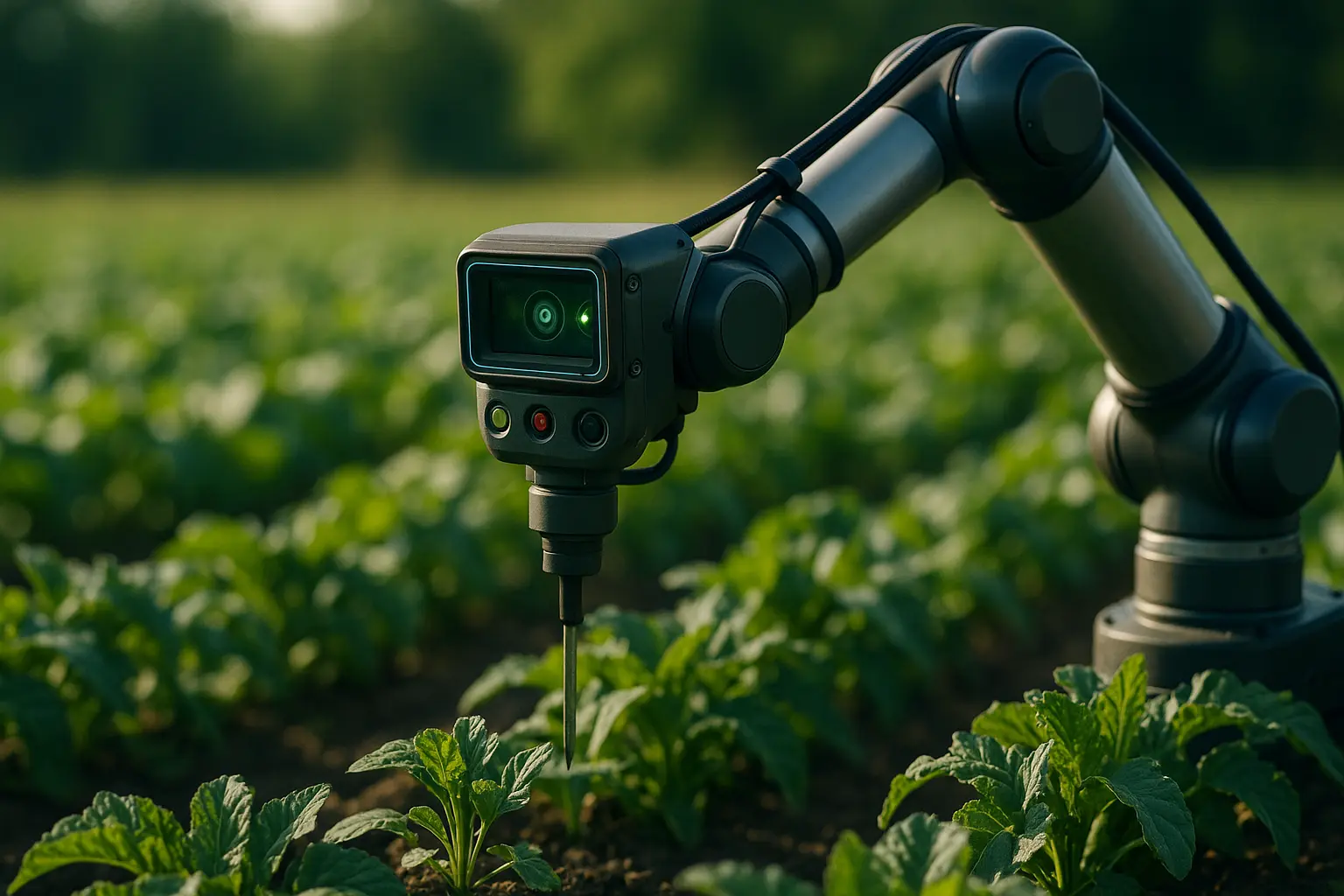
Most systems in commercial use rely on standard RGB cameras as the primary sensor, since they are inexpensive and sufficient for well-lit, well-separated plants. Multispectral sensors, which capture wavelengths beyond visible light, and LiDAR, which builds a 3D depth map of the canopy, are increasingly layered on top of RGB in higher-end systems specifically to compensate for the lighting and overlap problems described above.
This layered-sensor approach is a fairly recent shift, and it reflects an honest industry response to the limits of camera-only systems rather than a marketing add-on: a single RGB camera genuinely struggles in shadow-heavy rows at midday or in fields with heavy morning dew.
Selective weeding and its effect on soil and biodiversity
Targeting only weeds rather than broadcasting herbicide across an entire field reduces chemical runoff into surrounding soil and waterways and leaves more of the field’s incidental plant life undisturbed. This is a direct, mechanical consequence of spraying less area, not a projected or modeled benefit, and it is the main reason FAO’s guidance on sustainable mechanization treats precision weed management as a genuine tool for reducing agriculture’s chemical footprint rather than only a cost-saving measure.
FAQ
Is computer vision weed detection accurate enough to fully replace manual scouting?
Not entirely. It handles high-volume, routine detection well, but agronomists still perform manual field checks, particularly for new or unusual weed species the model was not trained to recognize.
Does this technology work the same way in a home garden as on a commercial farm?
The underlying principle is the same, but commercially available systems today are built almost exclusively for row-crop agriculture. Consumer-scale garden robots with true weed-versus-plant recognition remain far less developed.
How much does herbicide use typically drop with selective weeding?
Published field studies report a wide range, from roughly 28% to over 90% reduction, depending heavily on weed density and the specific detection and spraying system used. Any single figure quoted without those conditions should be treated as incomplete.
What weather or lighting conditions cause the most detection errors?
Strong midday shadows, overcast flat light that reduces color contrast, and heavy dew that changes leaf reflectivity are the conditions researchers most frequently cite as reducing accuracy.
The technology has clearly moved past the experimental stage for row-crop agriculture, with commercially available sprayers and robotic units already running these models in working fields. What has not changed is the need for realistic expectations: accuracy figures are trial-specific, hardware still struggles in difficult light, and the systems complement rather than eliminate human field judgment. Landscaping and market-garden crews curious about the mechanical side of this shift can look at robotic weeders that act on what the camera sees, while growers dealing with plant health issues beyond weeds may find AI models trained to spot plant disease a natural next read.
Sources: University of Arkansas field research on machine-vision herbicide reduction (cited via Phys.org, 2024); Frontiers in Plant Science, deep learning weed detection review (2025); Nature Scientific Reports, UAS imagery weed spraying study; FAO, sustainable agricultural mechanization publications.
Last updated: July 29, 2026.