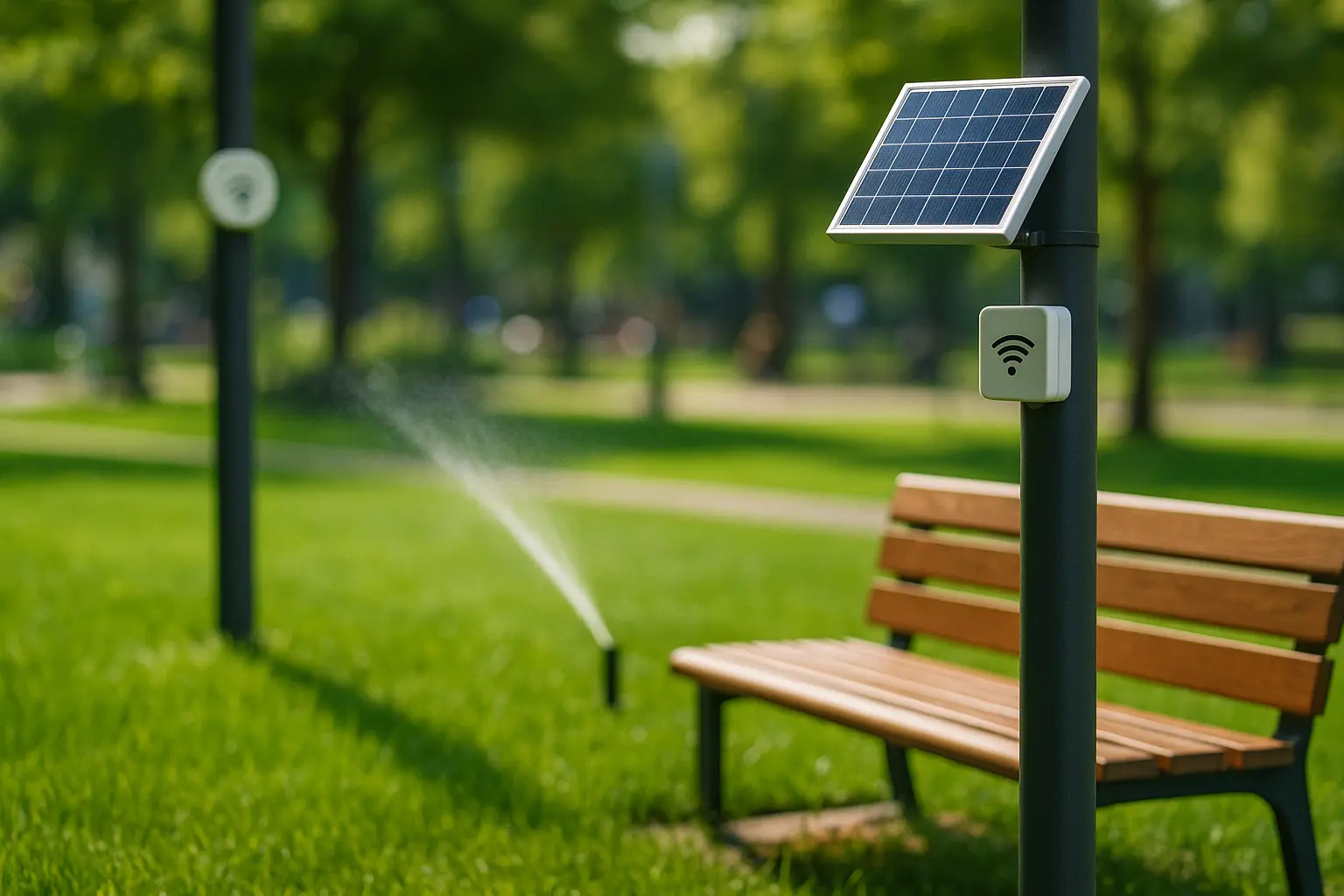
Walk through a city park on a hot afternoon and the grass near one bench looks scorched while the bed thirty feet away is waterlogged. That kind of uneven care is exactly what a network of environmental sensors is designed to fix, quietly, without anyone needing to notice the technology at all. This is where the Internet of Things (IoT) has found one of its most practical, least flashy applications: keeping the plants in a public or commercial green space alive with less guesswork.
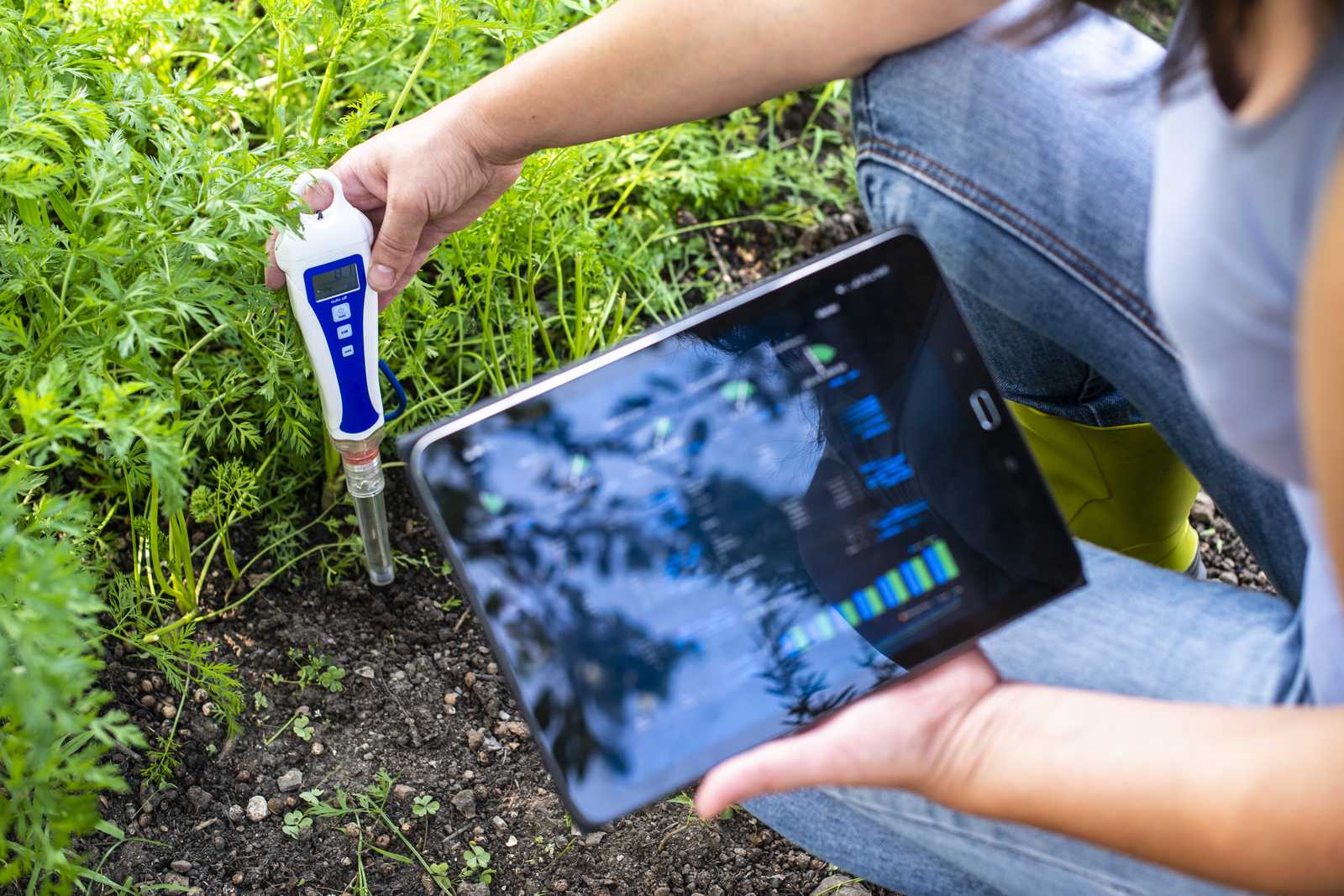
IoT sensor networks for green space management use small, connected devices, typically measuring soil moisture, temperature, light, and sometimes pH, to feed real-time data to a central system that adjusts irrigation, flags stress, or informs maintenance planning. The global smart irrigation market, the segment where this technology is most commercially mature, is projected to grow from roughly 1.6 billion dollars in 2025 to 2.65 billion dollars by 2030 (MarketsandMarkets, 2025).
Covered in this article:
- The main sensor types used in connected green space management
- Why smart irrigation is the clearest, most mature use case
- How the same sensor data helps with heat islands and foot traffic planning
- The security and interoperability issues that come with more connected devices
The sensor types doing the actual work
| Sensor type | What it measures | Main use in green space management |
|---|---|---|
| Soil moisture sensor | Water content in the root zone | Triggers or delays automatic irrigation |
| Temperature sensor | Ambient and soil temperature | Identifies urban heat islands for planning |
| Light sensor | Sunlight exposure by zone | Informs plant placement and lighting schedules |
| pH sensor | Soil acidity or alkalinity | Guides fertilization and amendment decisions |
Smart irrigation: the use case with the clearest return
Of all the applications sensors enable, automated irrigation shows the most mature, best-documented results. A moisture sensor buried in the root zone tells the irrigation controller exactly when a bed actually needs water, rather than running on a fixed timer that waters a shaded corner as heavily as a sun-baked one. The cost of entry has also dropped sharply: the average commercial-grade soil moisture sensor fell from around 185 dollars in 2019 to roughly 68 dollars in 2025, a decline driven largely by manufacturing scale and increased competition among sensor makers. That price drop is a big part of why non-agricultural applications, including commercial landscaping, golf courses, and municipal parks, are now the fastest-growing segment of the smart irrigation market, expanding at close to 13.4% annually.
What sensor data reveals beyond watering schedules
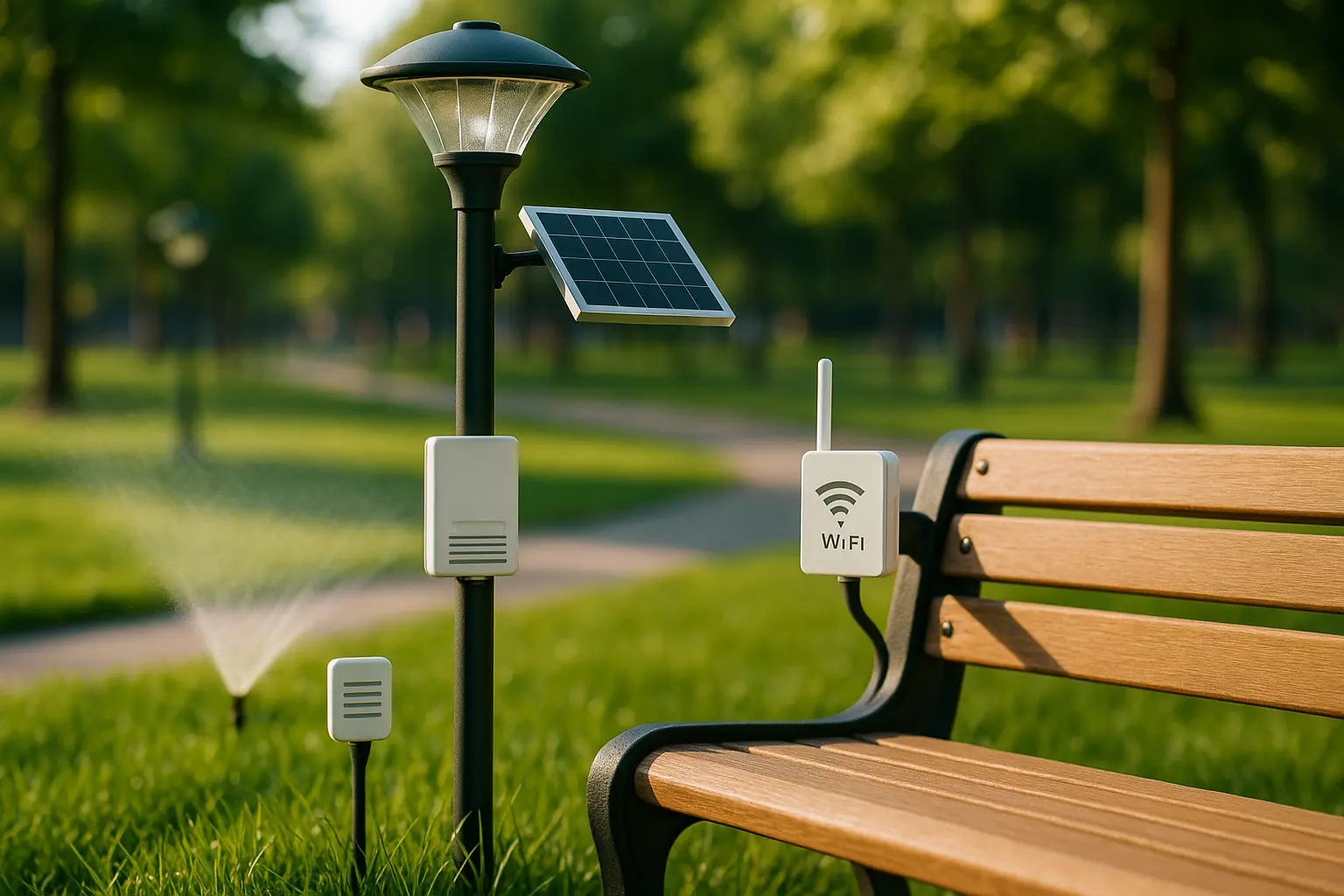
Temperature sensors distributed across a city reveal urban heat islands, the pockets where pavement and buildings trap heat far above surrounding green areas. Once city planners can see exactly where those hotspots sit, they can target interventions like expanded tree canopy or reflective surfaces where the data shows the sharpest need, rather than spreading a limited budget evenly across a district. Foot traffic data collected through the same sensor networks tells a related but separate story: which paths and benches see heavy use and which corners of a park sit empty, information that shapes where a redesign budget should actually go.
The security and interoperability problems nobody advertises
Every connected sensor is a potential entry point for a cyberattack, and a park or municipal green space running dozens or hundreds of devices multiplies that exposure. Data protection and device security need to be part of the initial deployment plan, not an afterthought bolted on after the system is already live. The second recurring problem is interoperability: sensors from different manufacturers often use different data formats and communication protocols, which makes it genuinely difficult for a city or a landscaping company to combine devices from multiple vendors into one coherent dashboard without a costly integration layer.
These sensor networks pair naturally with irrigation systems that adjust themselves from sensor readings, since the sensor is only useful once something downstream actually acts on its data. On the plant selection side, native plant choices that lower the maintenance load these sensors are tracking can reduce how much irrigation and monitoring a space needs in the first place, which is often a cheaper long-term fix than adding more sensors.
Starting small: a realistic first deployment
A municipality or a landscaping company does not need to wire an entire park at once. A sensible first step is instrumenting the highest-value or highest-risk zone first, a newly planted bed, a section prone to drought stress, or a high-visibility entrance planting, and using that limited pilot to validate whether the data actually changes maintenance decisions before expanding further. This staged approach also surfaces the interoperability and connectivity issues discussed above on a small, manageable scale, rather than discovering them only after committing budget to a citywide rollout.
Measured this way, the return on a modest sensor pilot becomes easy to communicate to a budget committee or a client: fewer plant losses, lower water bills, and a maintenance log that shows exactly where resources went, rather than a vague promise of a smarter park somewhere down the line.
FAQ
How much does it cost to add IoT sensors to an existing garden or park?
Costs vary by scale, but individual soil moisture sensors have become significantly more affordable, dropping to roughly 68 dollars on average by 2025, making small pilot deployments realistic for many budgets.
Do IoT sensors actually reduce water use?
Yes, when properly calibrated and connected to an automated controller, since irrigation runs based on measured soil moisture rather than a fixed schedule that ignores real conditions.
What is the biggest barrier to citywide sensor deployment?
Ensuring reliable network connectivity across an entire green space and managing the technical expertise needed to maintain the system over time, alongside the interoperability issues between different sensor brands.
Is this technology mature enough for a small landscaping business to offer as a service?
Smart irrigation specifically is commercially mature and increasingly common. Broader sensor networks for heat mapping or foot traffic analysis remain more common at municipal scale than for individual residential clients.
The unglamorous truth about IoT in green space management is that its biggest win so far is also its simplest: watering the right amount, in the right place, at the right time. Everything else, from heat-island mapping to foot-traffic analytics, builds on that same foundation of sensors feeding real data to a system that finally has enough information to act on it.
Sources: MarketsandMarkets, Smart Irrigation Market report, 2025-2030; sensor cost trend analysis, 2019-2025; industry data on non-agricultural smart irrigation segment growth.