
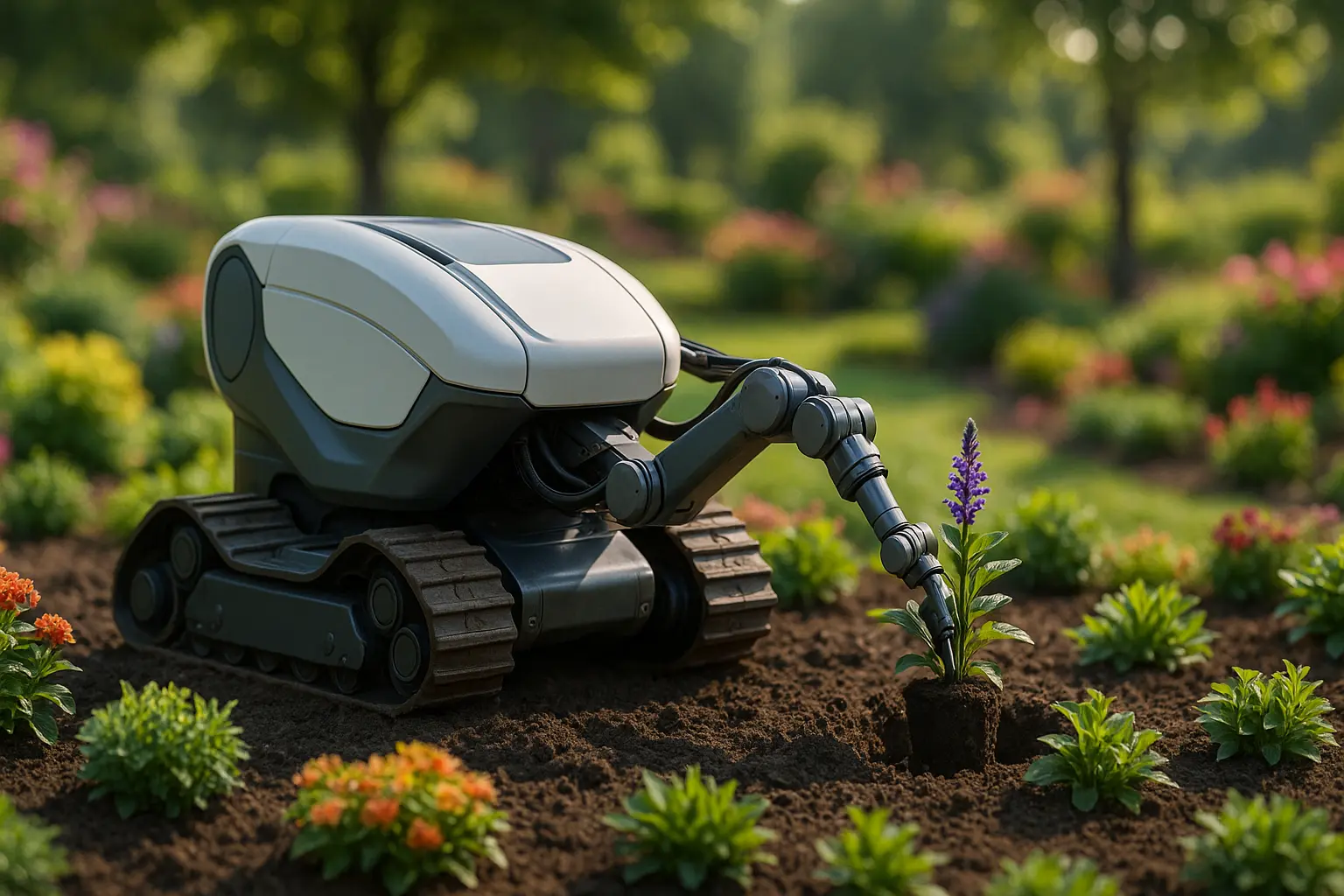
Ask any landscaper who has spent a full day on their knees installing bedding plants across a large commercial site, and physical strain, not creativity, is what they remember most about the job. Research on landscape workers backs this up directly: one peer-reviewed study found work-related musculoskeletal disorders affecting 85.5% of landscape workers surveyed, with the shoulder, neck, and lower back most commonly affected. Autonomous planting machines exist largely to take that physical toll off human bodies, not to replace the design and horticultural judgment that still drives the work.
Autonomous planting machines use sensors, GPS guidance, and in some models artificial intelligence, to plant seeds or seedlings at a set depth and spacing with minimal human operation, automating one of the most repetitive and physically demanding tasks in both large-scale agriculture and commercial landscaping. Adoption is currently concentrated at the larger end of the market, where fields or sites are big enough to justify the investment.
In brief:
- Musculoskeletal disorders affect an estimated 85.5% of surveyed landscape workers, a major reason automation of physically repetitive planting tasks is being pursued at all.
- AI-driven farm machinery, including autonomous planters, is estimated to be operational on roughly 10% to 15% of commercial farms in leading agricultural markets as of 2025, a meaningful but still minority share.
- Precision placement (depth and spacing) is where these machines outperform manual planting most consistently.
- Upfront cost and the risk of over-relying on automation at the expense of traditional planting knowledge remain the two most cited concerns.
How much of the planting job these machines actually cover
Current systems handle seed and seedling placement, spacing calculation, and basic navigation across a field or site with limited need for continuous human oversight. GPS guidance keeps rows consistent, and depth sensors adjust placement based on soil conditions detected in real time rather than a fixed setting applied uniformly regardless of variation across a site.
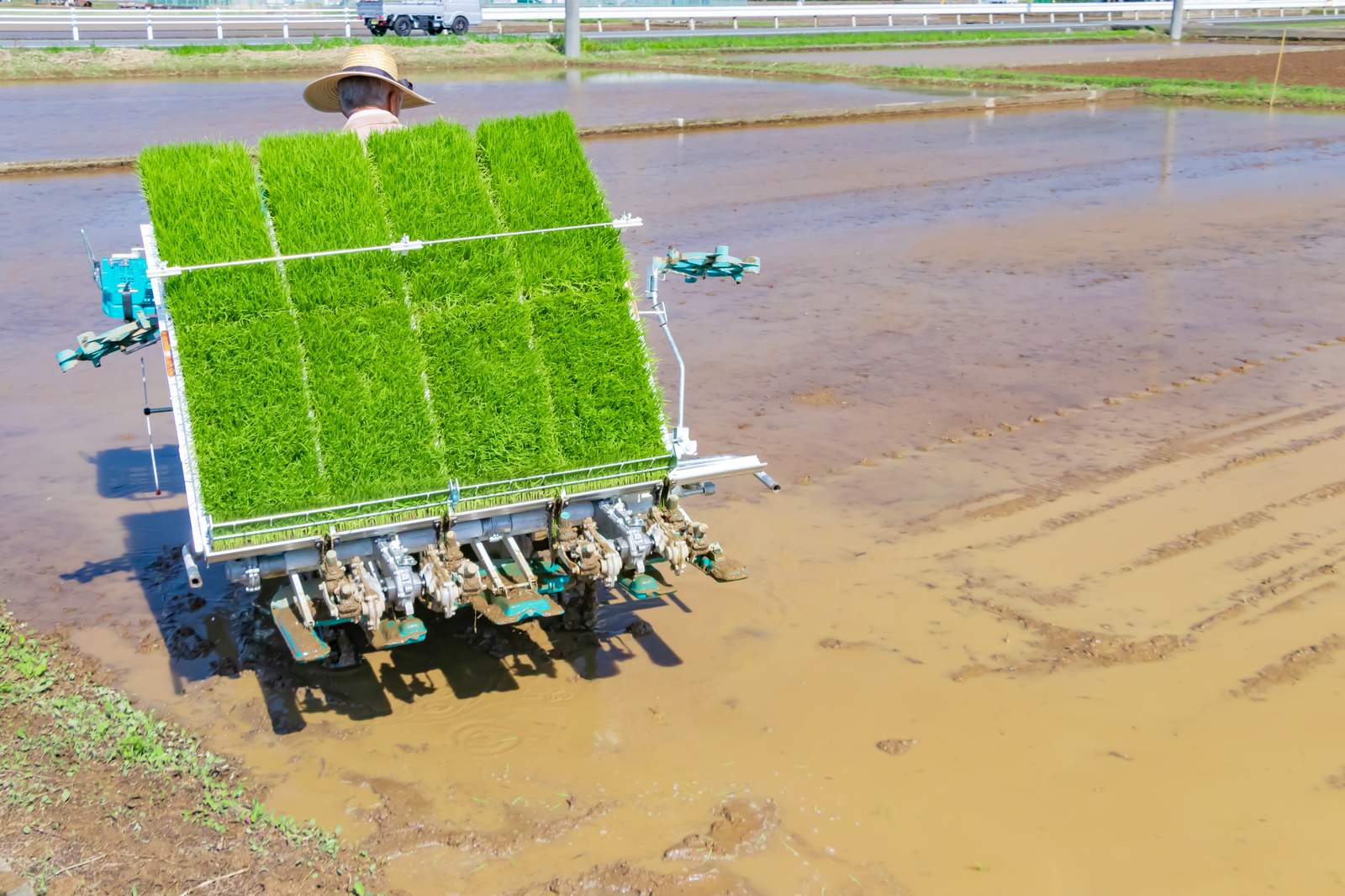
What these machines do not yet handle well is judgment-based placement decisions, choosing where a specimen tree anchors a design, adjusting spacing around an existing mature planting, the kind of site-specific decisions that still require a landscape designer’s eye rather than a programmed grid pattern.
Why precision placement is the strongest, most consistent benefit
Minimizing human error in depth and spacing has a direct, measurable effect on plant survival and growth uniformity, since both agricultural crops and landscape plantings establish more reliably when placed at consistent, appropriate depth. This is the benefit least disputed across the sources reviewed: precision placement is a mechanical advantage inherent to how these machines operate, not a marketing claim requiring the same scrutiny as broader productivity promises.
How widely these machines are actually deployed today
Adoption estimates place AI-driven autonomous farm machinery, including planters, harvesters, and tractors, on roughly 10% to 15% of commercial farms across leading agricultural markets including the United States, Brazil, and the European Union as of 2025. That figure sits well below the broader precision agriculture category, where over 60% of United States farmers already use some form of precision technology such as GPS guidance or variable-rate application, a distinction worth holding onto: widespread use of precision tools does not mean widespread use of fully autonomous planting specifically.
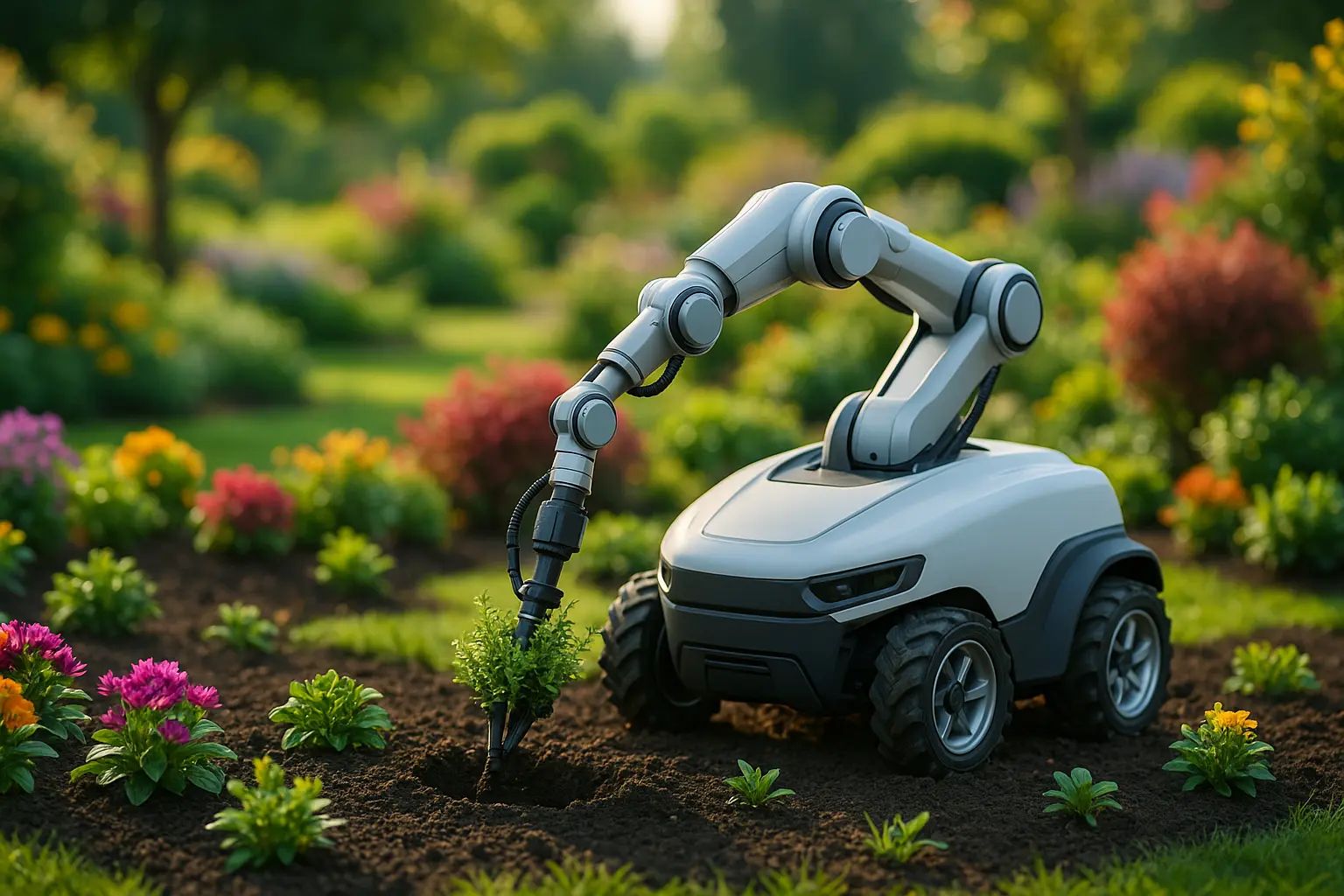
In commercial landscaping specifically, rather than row-crop agriculture, adoption is even more limited and concentrated among large-scale contractors handling extensive planting projects, such as public infrastructure greening or large residential developments, where the volume justifies the equipment cost.
What still holds smaller operations back
Cost remains the dominant barrier, and it compounds with a second, less discussed issue: technology literacy. Operating and troubleshooting these machines requires training that smaller landscaping businesses and farms often cannot easily fit around already tight schedules and thin margins. A third concern raised consistently across agricultural research is the risk of over-reliance, losing traditional planting knowledge, timing based on soil and weather observation, that has been refined over generations and that a machine’s programming does not automatically preserve.
Financing structures are starting to soften the cost barrier for mid-sized operations. Equipment leasing and pay-per-acre service models, where a contractor brings the machine to a site rather than a business buying one outright, let smaller landscaping companies access the precision-placement benefit without the full capital outlay. This remains a developing part of the market rather than a widely available standard, so terms and availability vary considerably by region and supplier.
Manual planting against autonomous planting machines
| Factor | Manual planting | Autonomous planting machines |
|---|---|---|
| Physical strain on workers | High, linked to documented musculoskeletal disorder rates | Minimal, machine performs the repetitive motion |
| Depth and spacing consistency | Variable, depends on operator fatigue | Consistent across an entire site or field |
| Design-level judgment | Full human control | Still requires human input, machine executes only |
| Upfront cost | Low, labor-based cost only | High, main barrier to wider adoption |
FAQ
Are autonomous planting machines only useful for large farms?
Adoption today is concentrated among larger operations where volume justifies the cost, but scaled-down versions are increasingly reaching commercial landscaping contractors handling large planting projects.
Do these machines eliminate the need for skilled planting labor?
No. They reduce the physical repetition involved, but design decisions, site-specific judgment, and quality oversight still require trained staff.
Can autonomous planters handle uneven or sloped terrain?
Many are engineered for varied terrain with adaptive mobility features, though performance still declines on very steep or rocky ground compared with flat, open sites.
What is the environmental trade-off of using these machines?
Precision placement can reduce fertilizer and water waste through better plant establishment, though the machines themselves carry a manufacturing and energy footprint that should factor into any full sustainability comparison.
Are leasing or rental options available instead of buying a machine outright?
Some equipment providers and contractors now offer leasing or pay-per-acre planting services, which can make the technology accessible to smaller operations, though availability still varies significantly by region.
The clearest, best-supported case for autonomous planting machines is reducing physical strain and improving placement consistency, not replacing the people who decide what gets planted where. For landscaping businesses considering this investment at a smaller, more domestic scale, productive kitchen gardens planted at a domestic scale offer a lower-stakes starting point, and crews weighing physical strain reduction more broadly may also want to look at exoskeletons designed for the same physical strain as a complementary, lower-cost alternative to full automation.
Sources: PMC, “Landscaping Work: Work-related Musculoskeletal Problems and Ergonomic Risk Factors” (2021); Farmonaut, AI agriculture adoption statistics (2025); Grand View Research, precision agriculture adoption data.
Last updated: July 29, 2026.