
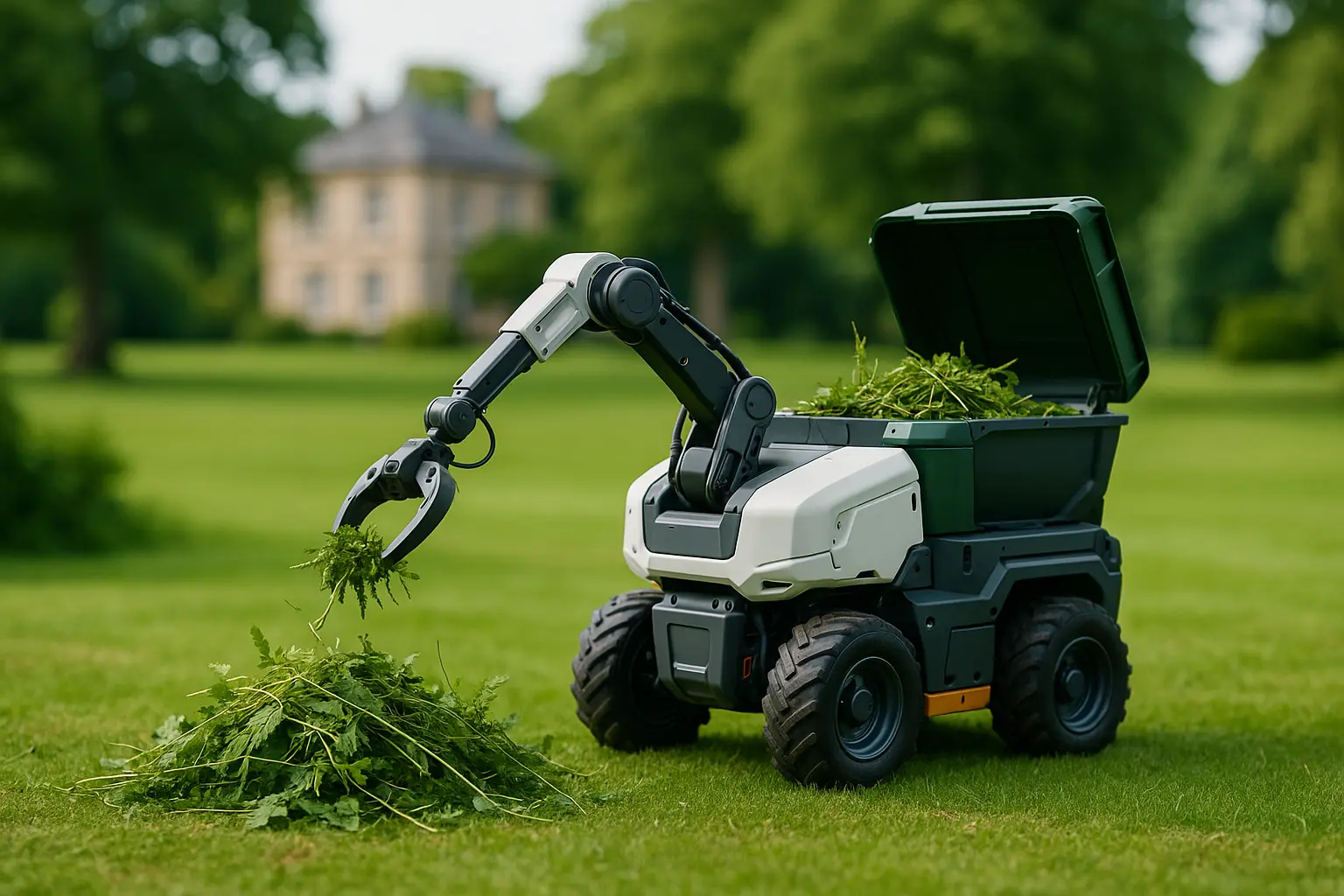
A large private estate or public park can generate more green waste in a single autumn than most residential neighborhoods produce all year, fallen leaves, grass clippings, pruned branches, all needing collection, sorting, and hauling on a schedule that does not pause for a short-staffed week. That volume, more than any abstract enthusiasm for robotics, is what is pulling mobile robots into green waste management on the largest properties first.
Mobile robots are being introduced to green waste collection on large estates and public green spaces to reduce the labor hours needed for repetitive collection tasks, using sensors and route-optimization software to cover ground more consistently than manual crews. This remains an early-stage application: general waste-sorting robotics has grown into a genuine commercial market over the past two years, but deployments specific to green waste on private and semi-private estates are still mostly pilot projects rather than a standard, off-the-shelf offering most grounds management companies can simply purchase today.
- The broader waste-sorting robotics market is projected to grow at roughly 12 percent annually through the mid-2030s, according to market research, reflecting rising investment across the category.
- North America and Europe have seen multiple pilots and new facilities announced in 2024 and 2025, described by industry sources as the sector moving from proof-of-concept toward mainstream deployment.
- Green waste-specific robotic collection on large estates remains a narrower, earlier-stage niche than municipal waste sorting more broadly.
- Robots in this category are generally designed to work alongside human crews, handling repetitive collection while people manage sorting judgment calls and irregular waste types.
What a green waste collection robot on a large estate actually does
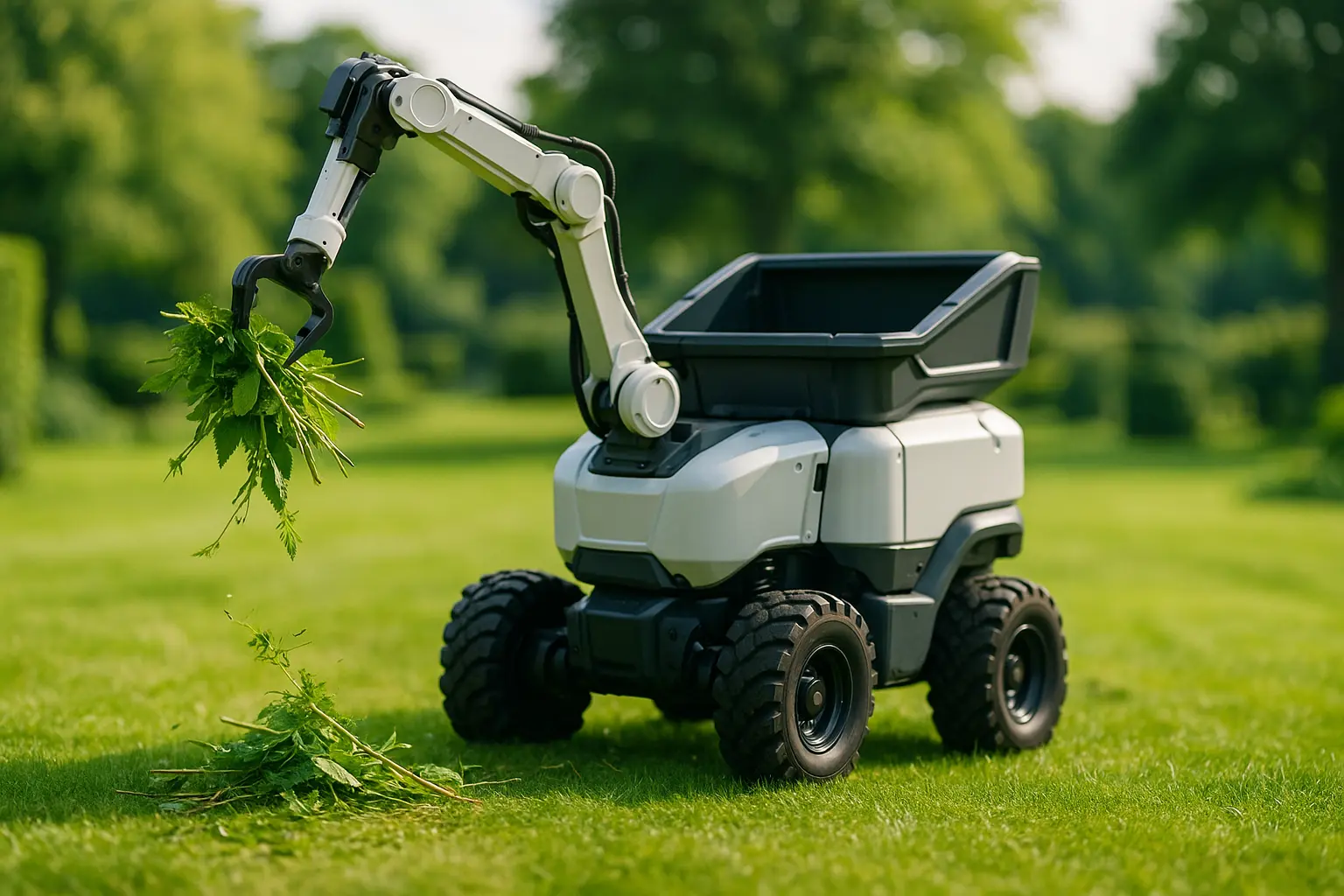
Mobile robots deployed for green waste collection typically combine navigation sensors with route-planning software to move across a property, identifying and collecting specific types of organic debris, fallen leaves, grass clippings, small fallen branches, while leaving other landscape features untouched. This is a meaningfully different task from general municipal waste sorting, which usually happens at a fixed facility rather than roaming across open grounds, and it requires the robot to navigate uneven terrain, avoid plantings and hardscaping, and operate near people and pets without supervision at all times.
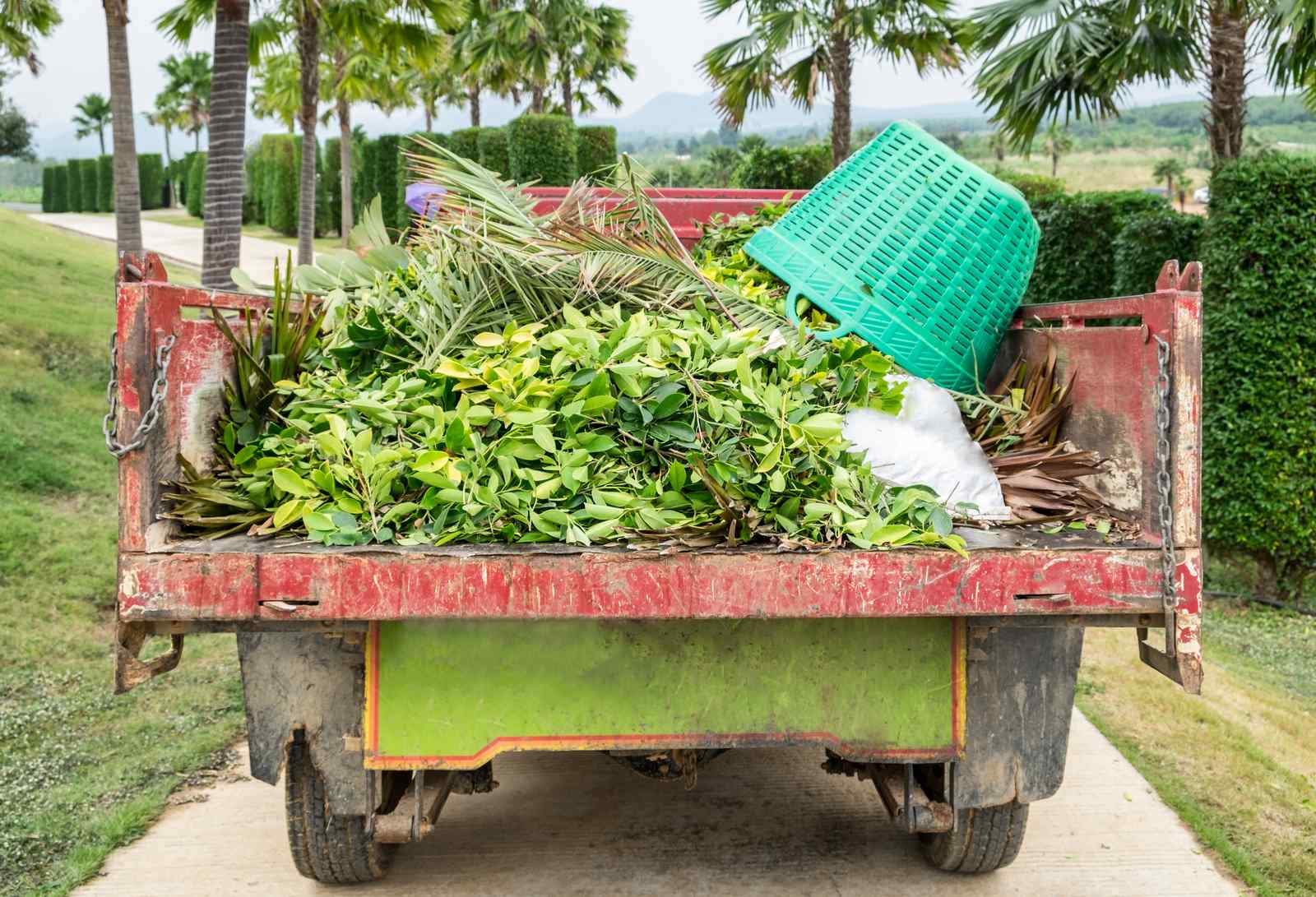
Route optimization is where the clearest, most immediately useful gains show up. Software mapping a property’s layout can plan collection routes that minimize backtracking and fuel or battery use, a genuinely practical improvement over a manual crew working without a pre-planned path. This part of the technology, digital route planning, is considerably more mature and lower-risk than the physical collection mechanism itself, and estates adopting only the routing software, paired with conventional equipment, can capture part of the benefit without waiting for fully autonomous collection hardware to mature.
How far along this technology actually is, and where the hype gets ahead of it
General waste-sorting robotics has crossed a real threshold recently, moving from isolated proof-of-concept projects to commercial facilities in North America and Europe through 2024 and 2025. That progress is genuine and worth noting. It would be misleading, however, to present green waste collection specifically on large private estates as having reached the same maturity. Most of what exists for that narrower application today sits closer to pilot deployment: systems demonstrated on specific properties or in trials, rather than a mature product category with multiple established vendors competing on price and reliability the way, for example, robotic mowers now do.
This distinction matters for a grounds manager actually budgeting for equipment. Waiting for a fully autonomous green waste collection robot to become an affordable, proven purchase is a reasonable position given where the specific technology stands today, whereas adopting the route-optimization software and sensor-assisted collection carts already commercially available is a lower-risk way to capture part of the benefit now.
| Application | Current maturity | Typical setting |
|---|---|---|
| Municipal waste sorting robots | Commercial, expanding facilities 2024 to 2025 | Fixed sorting facilities |
| Route-optimization software for collection | Commercially available and mature | Any large property with regular collection needs |
| Autonomous mobile green waste collection on estates | Early pilot stage | Large private estates, select public parks |
Why these systems are designed to work alongside people, not instead of them
Every credible source describing this technology positions robots as handling the repetitive, physically taxing part of the job, moving across large ground repeatedly, while people continue to manage the judgment calls: distinguishing debris types that need different disposal, handling anything unusual a sensor was not trained to classify, and responding to safety situations a robot cannot resolve on its own. That division of labor, rather than a wholesale replacement of ground crews, matches what industry sources describe as the realistic near-term model for this application.
Connectivity between multiple units on a large site, where more than one robot may be working simultaneously, depends on the same reliable wireless network infrastructure that supports other automated equipment on a property. Estates already investing in connected sensor networks for irrigation or mowing have a head start here, since the network backbone for one automated system generally supports others added later.
Green waste collection also connects naturally to two adjacent parts of estate automation. Robots handling repetitive planting tasks face a similar physical-strain and labor-scarcity logic, and reviewing how autonomous planting machines reduce physical strain for landscapers shows a parallel, somewhat more mature application of the same underlying idea. Once collected, green waste also has to move somewhere, which is where automated logistics platforms for managing inventory and material delivery pick up the process after a robot’s collection route ends.
FAQ
Are green waste collection robots already commercially available for private estates?
Full autonomous collection systems designed specifically for large estates remain mostly at the pilot stage. Route-optimization software and sensor-assisted collection tools are more commercially mature and available today.
Do these robots replace human ground crews?
Available evidence points to robots handling repetitive collection tasks while humans continue to manage sorting judgment, irregular waste, and oversight, rather than a full replacement of ground staff.
What is the realistic cost consideration for adopting this technology now?
Full autonomous collection hardware remains an early-stage, higher-risk investment. Route-planning software paired with existing equipment offers a lower-cost way to capture part of the efficiency gain sooner.
How do these robots avoid damaging plants or garden features?
Sensor-based navigation and pre-mapped property layouts are used to keep the robot within defined collection zones, though this capability varies significantly between different systems and remains an active area of development.
Mobile robotics for green waste collection on large estates sits genuinely at an early stage of its development curve, even as the broader waste-robotics market around it matures quickly. The honest picture for anyone managing a large property today is a mix: real, usable gains available now through routing software and connected sensors, and a fully autonomous collection robot that remains, for the moment, closer to a pilot project than a purchase order.
Published 29 July 2026.
Sources: Dataintelo, Smart Waste Collection Robots Market Research Report; Springwise reporting on robotic waste collection for green spaces; industry analysis of North American and European waste robotics deployment through 2025.